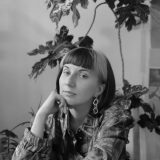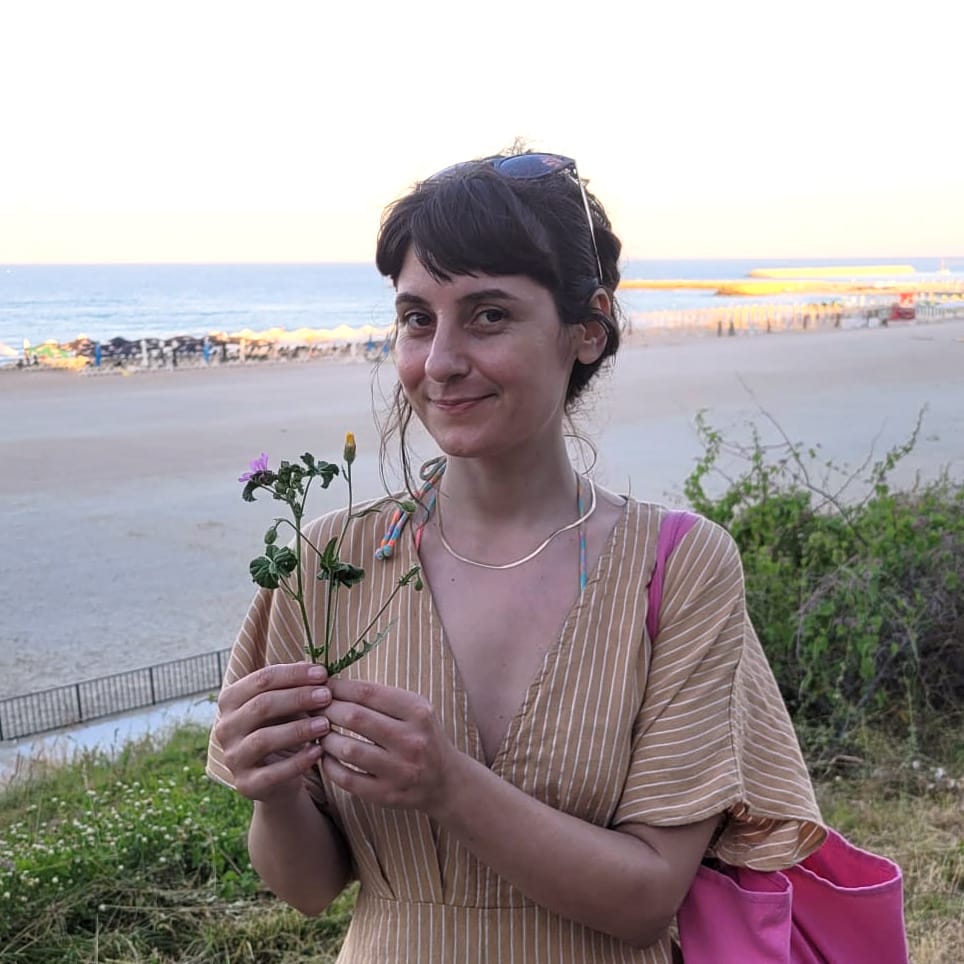
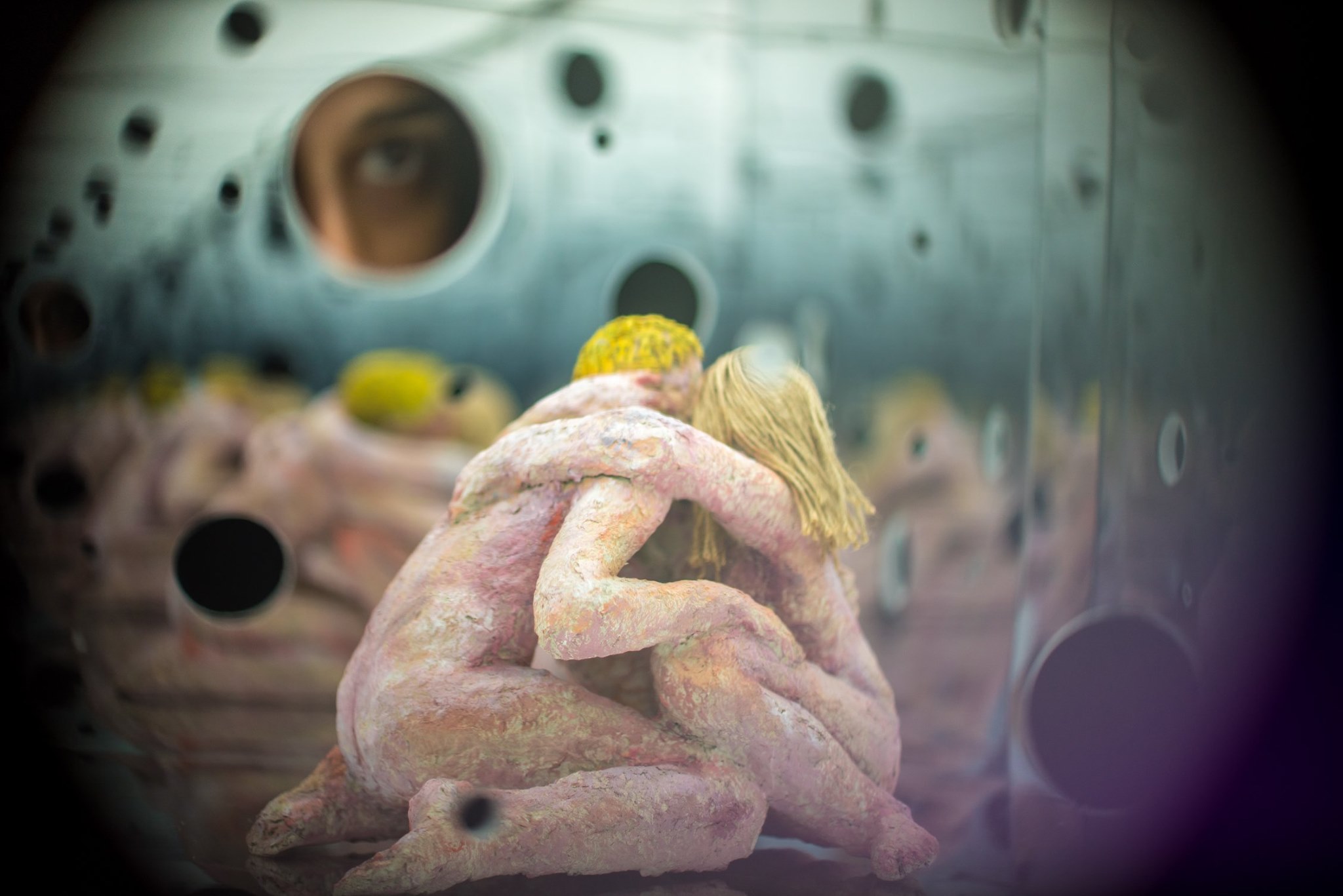
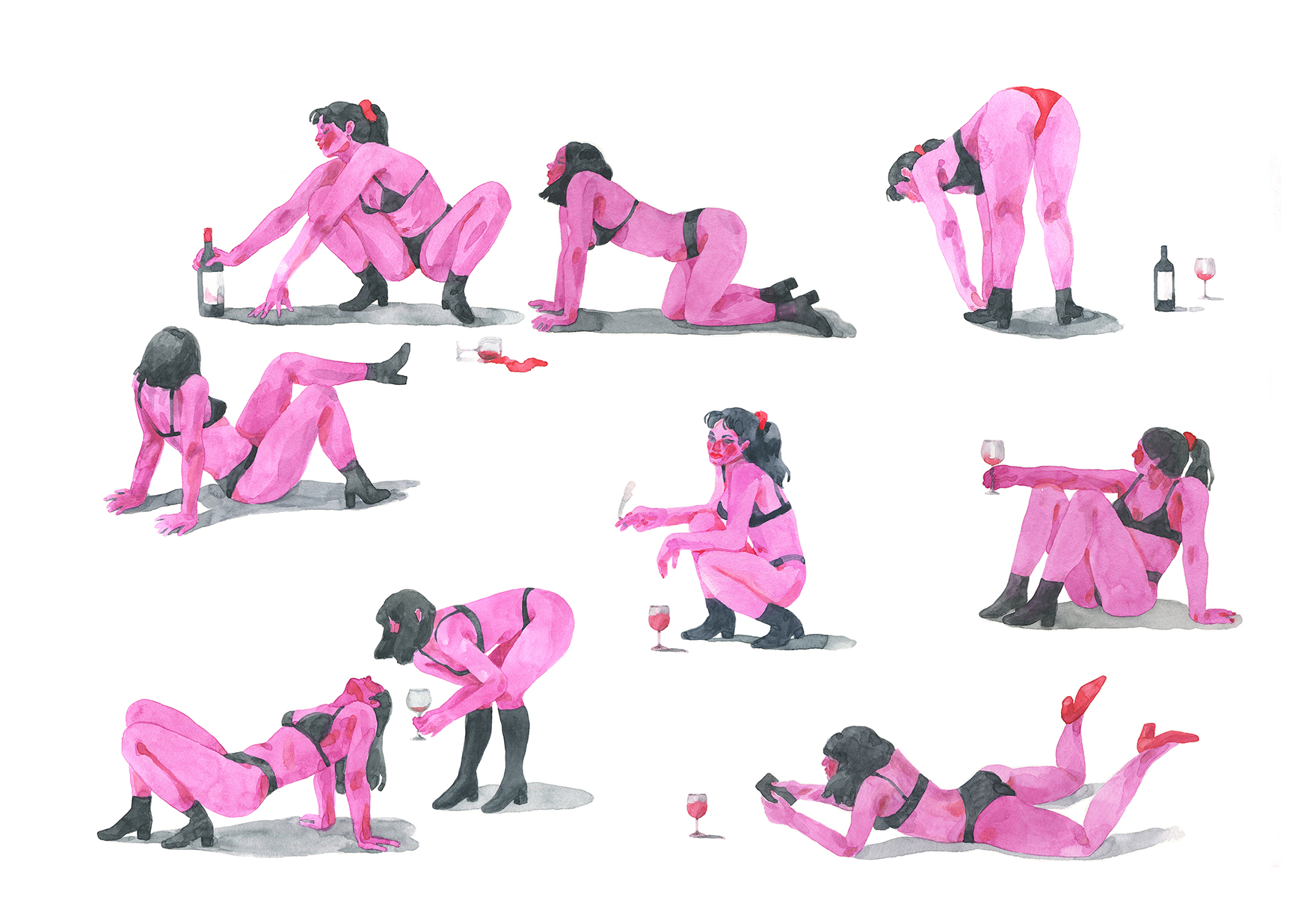
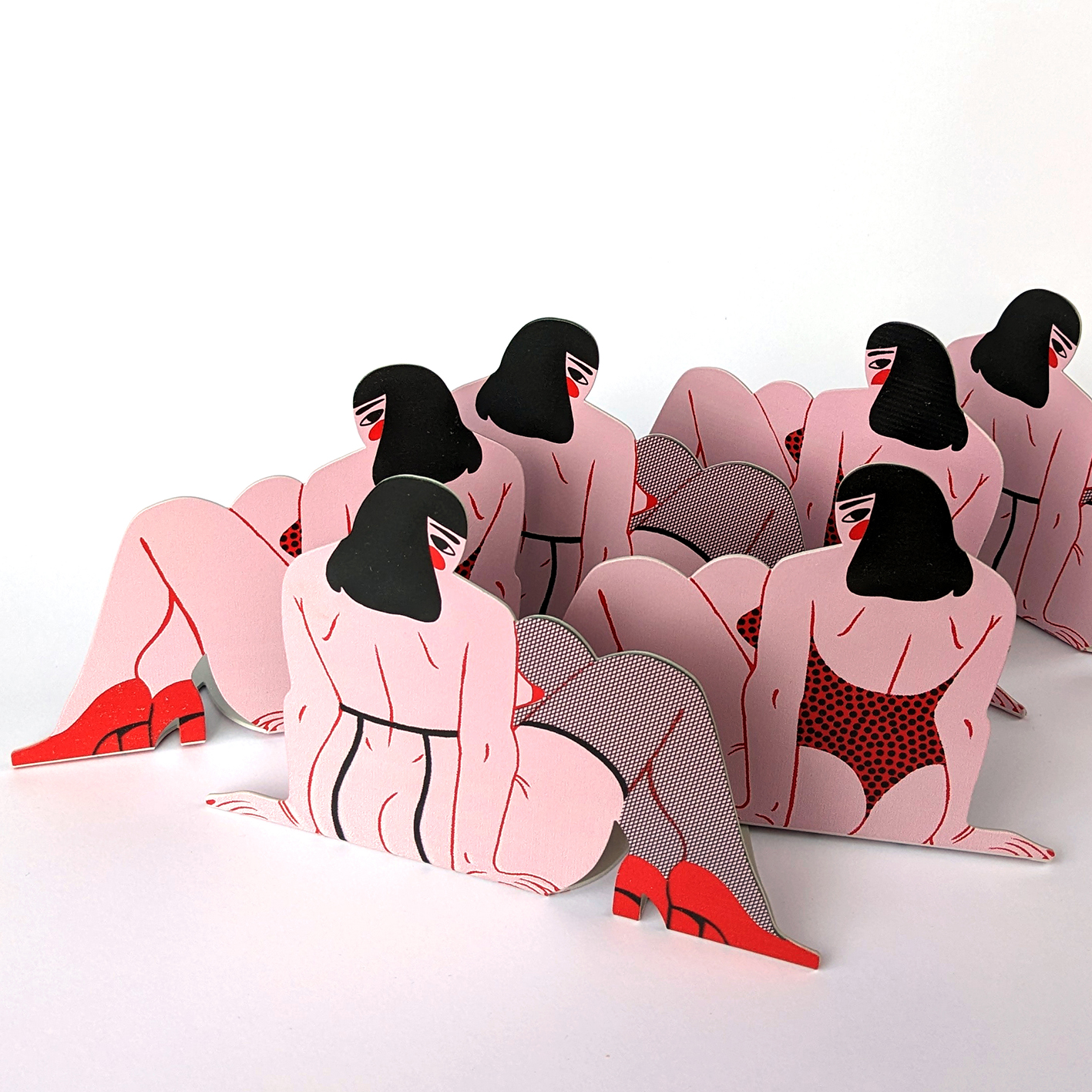
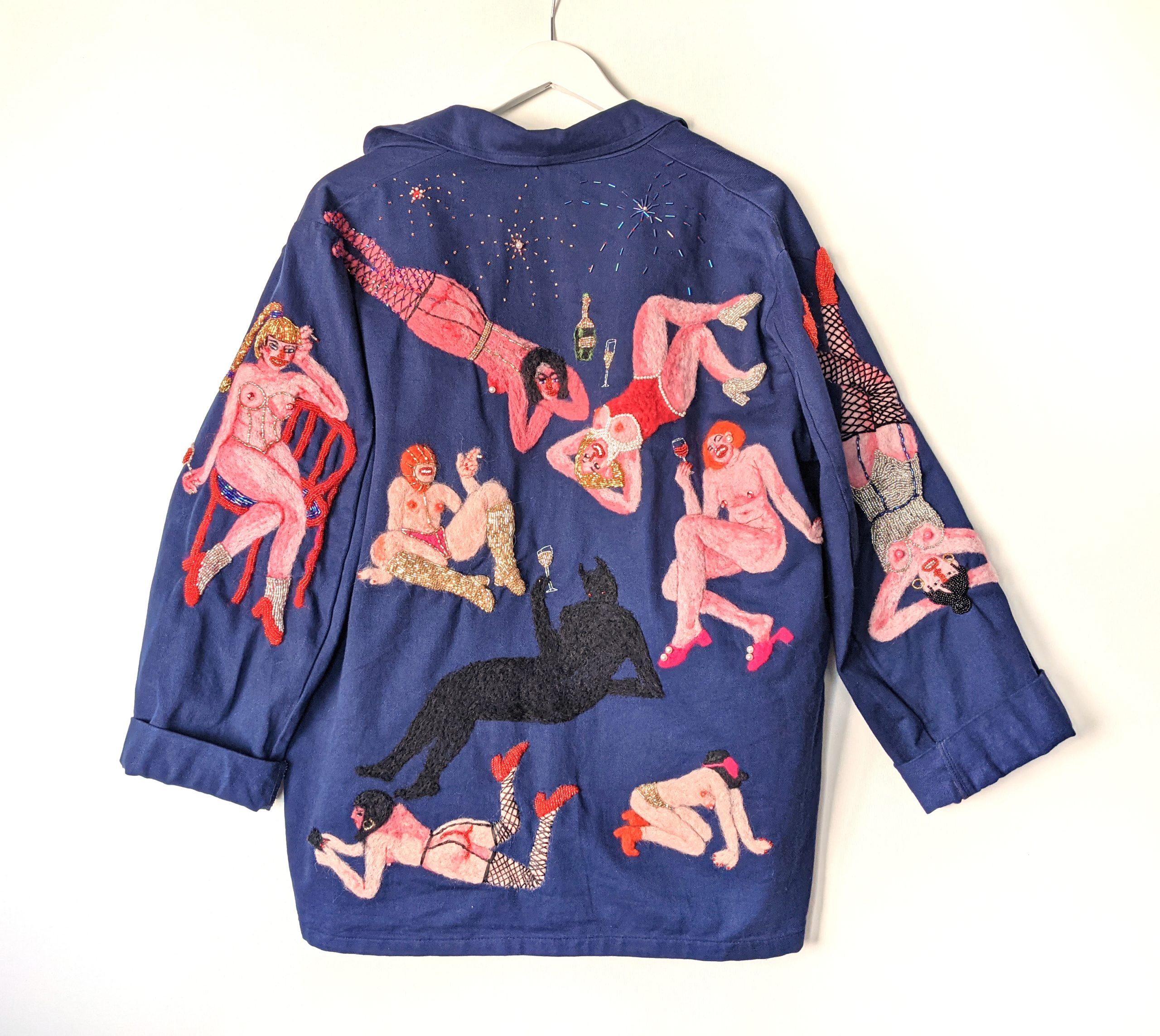
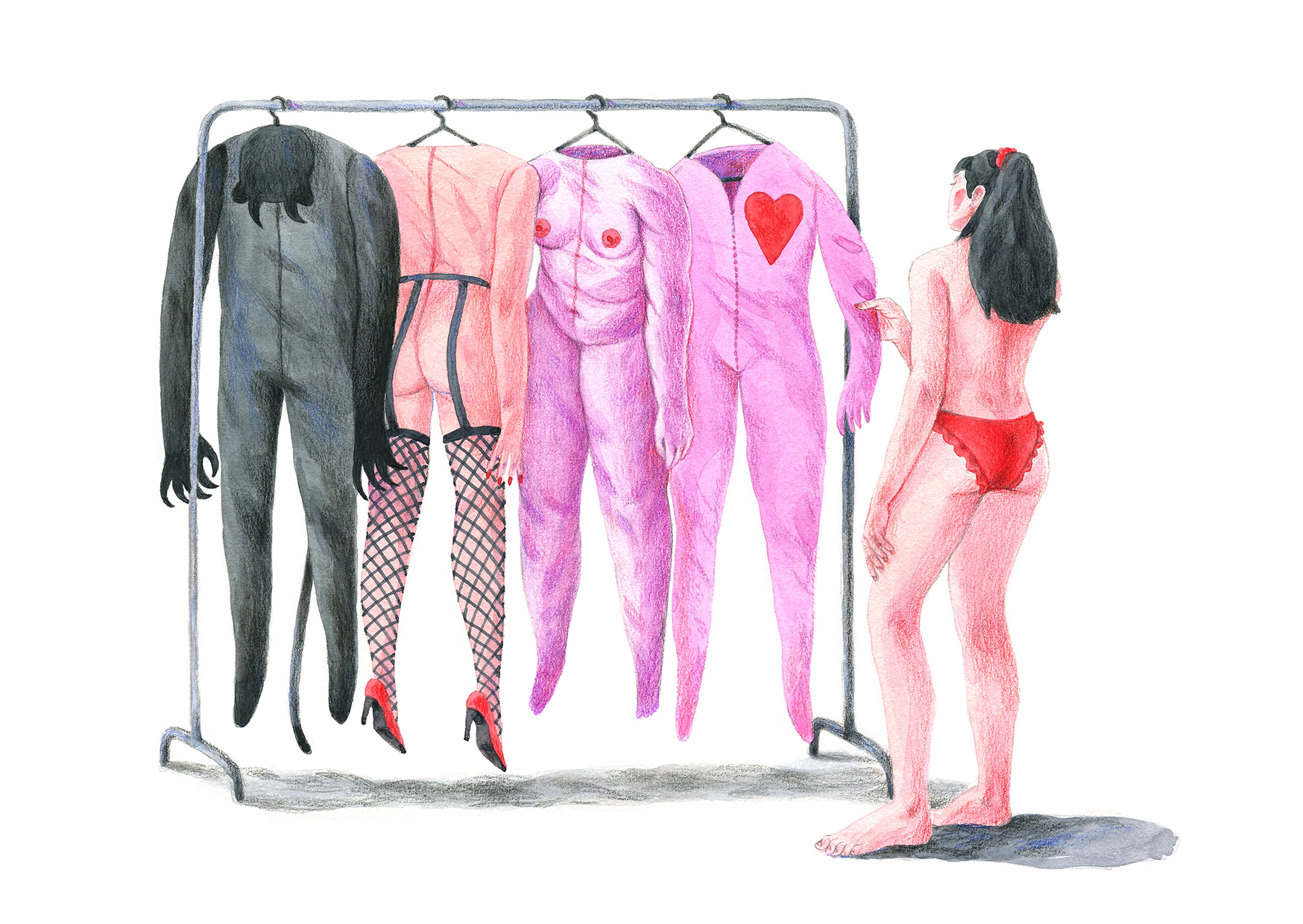
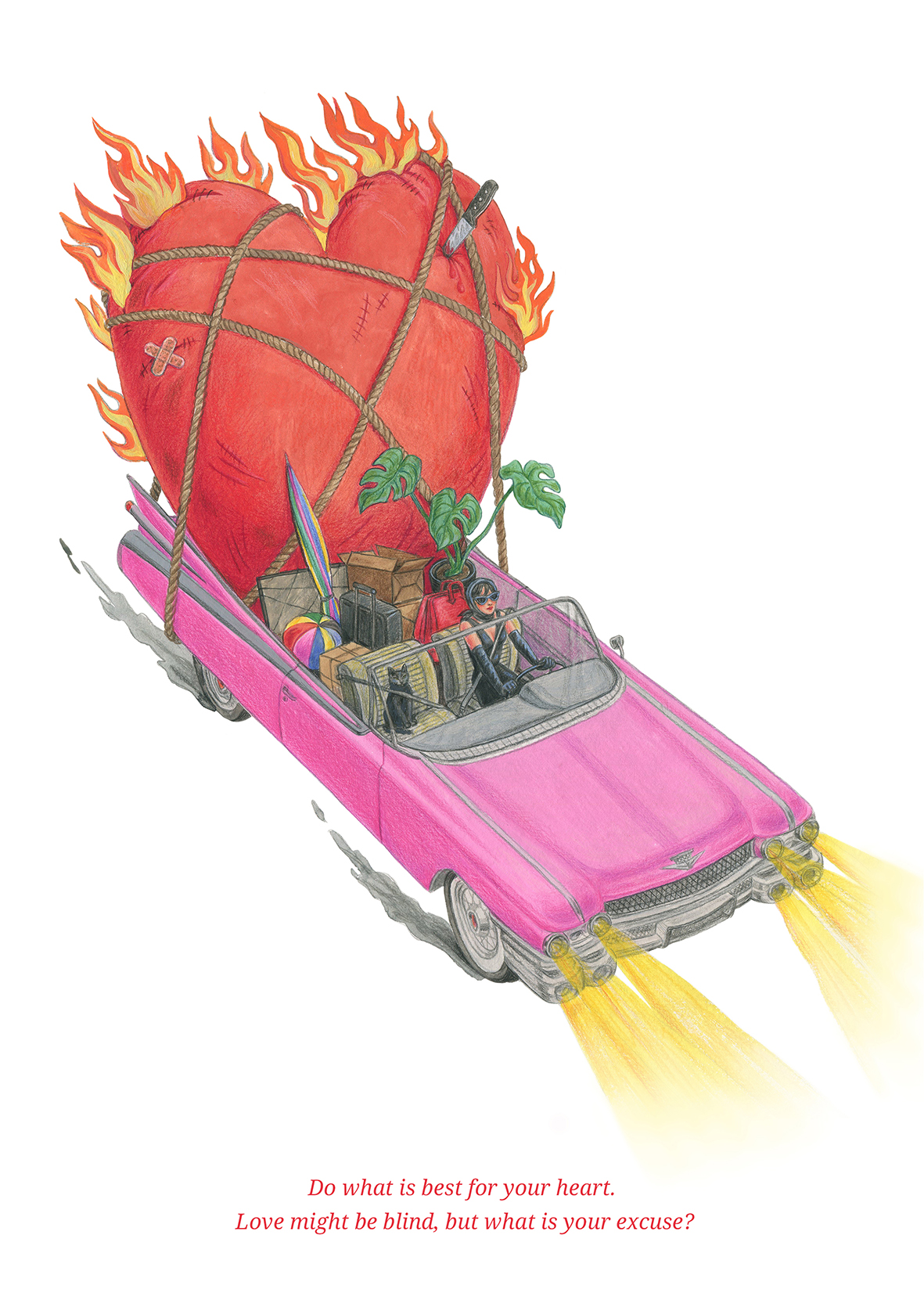
In her artistic practice, Alina Marinescu investigates the relationship between body, emotion and identity through a figurative visual language, built at the intersection of vulnerability and personal expression. Her creative path starts from a constant exploration of process as a form of knowledge, whether working with traditional media such as drawing and illustration, or experimenting with three-dimensional forms, textiles or installations. To this end, the artistic act functions as a space for reflection and self-analysis, in which emotions are translated visually with honesty, and vulnerability becomes a tool for articulating human experience.
In this interview, Alina Marinescu discusses how she constructs her visual discourse in relation to the demands of the editorial context, the role of the body as a universal symbol, and the importance of addressing sensitive topics such as depression, relationships, or femininity. Her artistic approach does not aim to formulate definitive conclusions, but to open spaces for dialogue and reflection, both for the artist and the public. Art thus becomes a medium of mediation between personal and collective experience, in which the visibility of emotions and marginalized subjects contributes to a form of awareness and empathy.
Ada Muntean: When did you start creating images and how has your artistic practice developed over time?
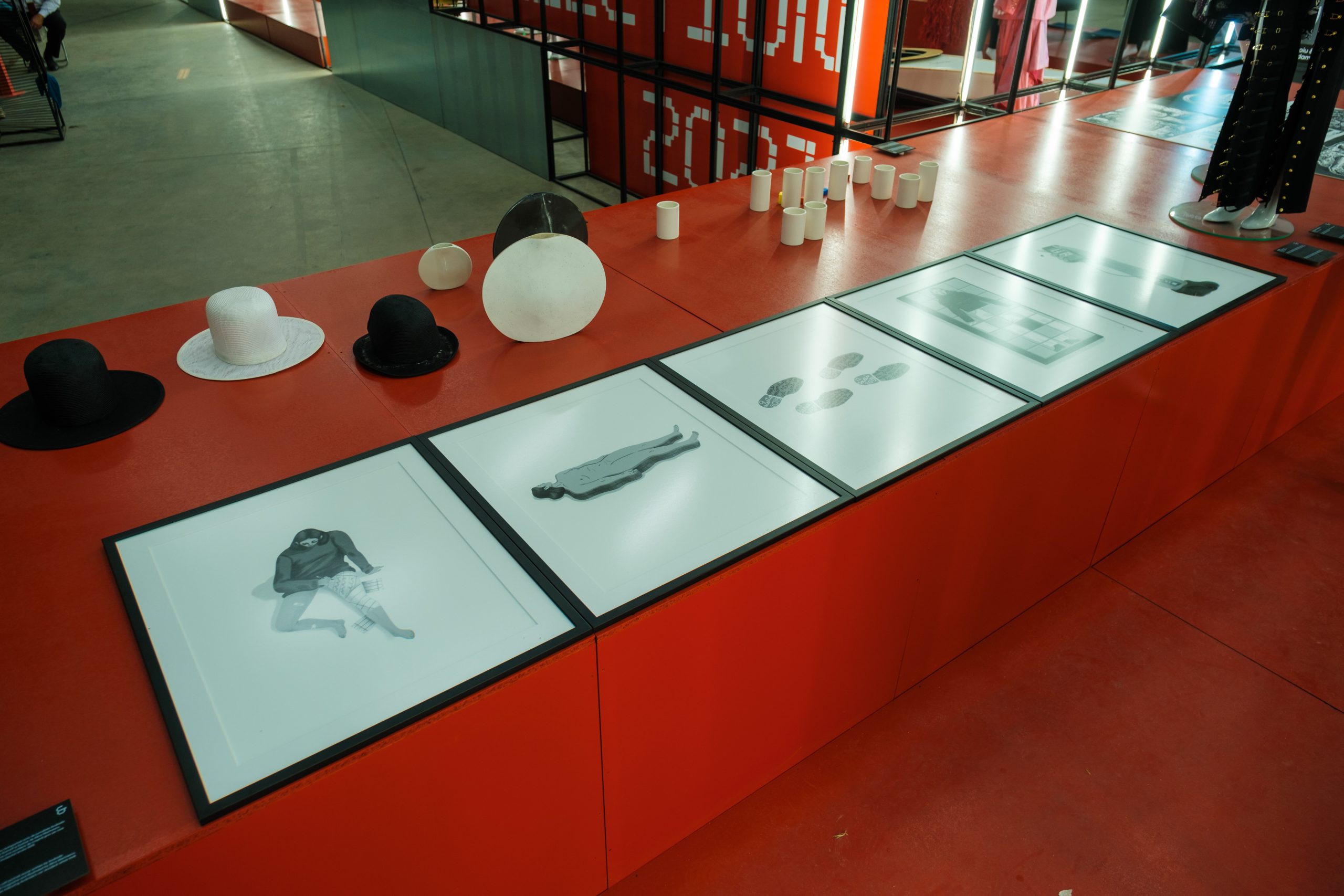
Alina Marinescu: I have always loved drawing, but I started doing it more consciously when I entered art high school. I think what shaped me into the way I am now was the desire to show that I exist, to do things as well as I can, to experiment and enjoy what I do, both the process and the result. I have always felt drawn to experiment and, in this way, I have explored several techniques, from 2D media — drawing, illustration — to three-dimensional — object, textile, installation.
A.M.: You work in both traditional and digital techniques. What is the process by which you choose the visual medium or techniques for each project you develop?
A.M.: I usually like to work traditionally on my personal projects, because I have total control over the process, both in terms of technique and time. For commissioned projects I work digitally, and the only reason for this choice is the production time, which is imposed by the client and is usually limited, and the digital environment gives me more freedom for possible changes.
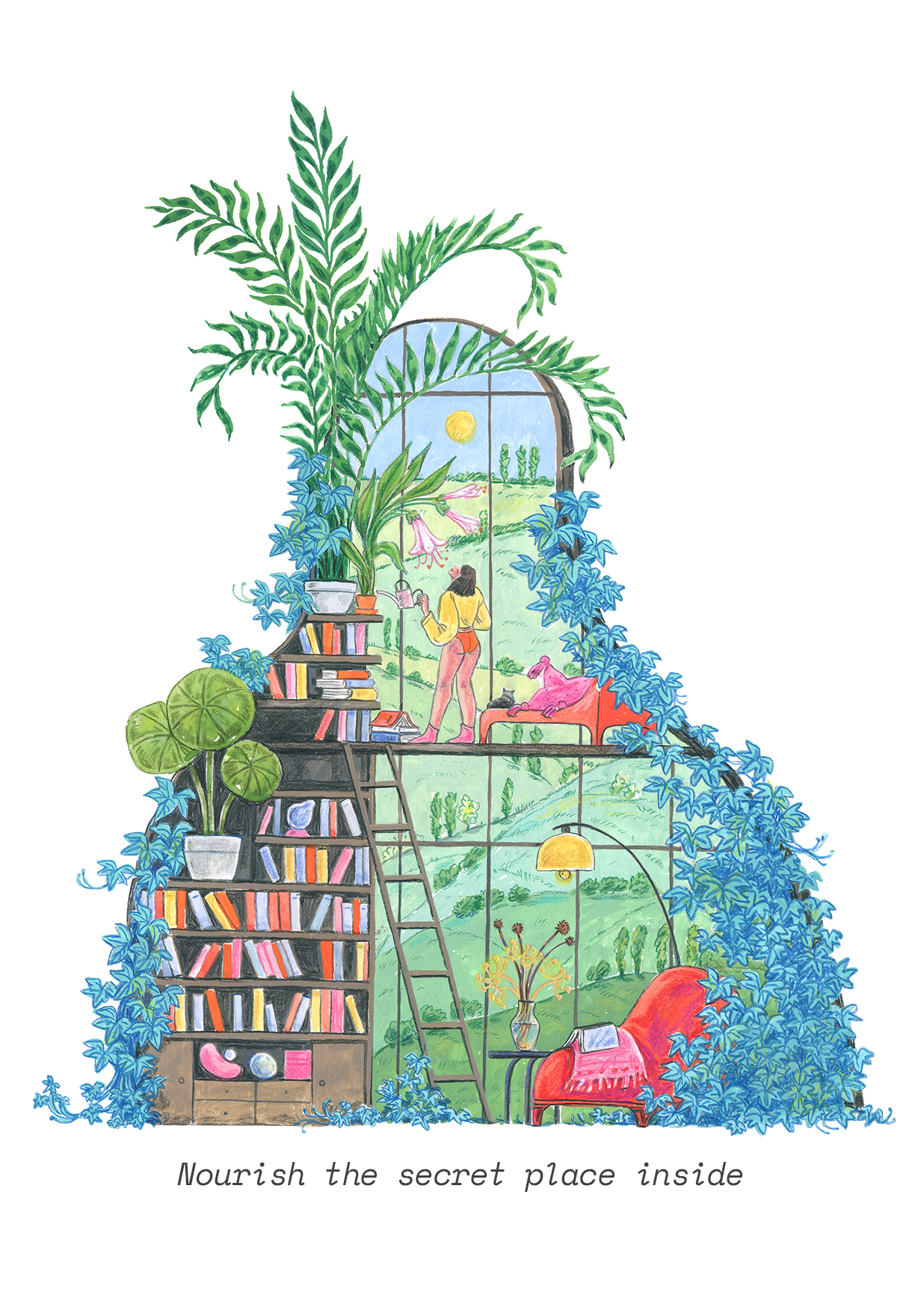
A.M.: Editorial illustration often involves collaborations with publications or specific briefs. How do you maintain your individual artistic voice when working for an editorial context that has client/audience requirements?
A.M.: I don’t worry about the artistic voice anymore, it seems to me that it is intrinsically present in everything an artist does. I am more interested in finding common ground between myself and the requirement, things in the texts/briefs that I can somehow resonate with, that help me rearrange them in a visually relevant way. In general, it helps me if I look at the more difficult projects as challenges, trying to solve them as best I can with the data I have.
A.M.: In your portfolio there are illustrative projects related to delicate themes (depression, relationships, femininity). How do you find the balance between vulnerability and strength in your works?
A.M.: I think that over time I have discovered that it is empowering to be honest and open with all emotions, so I try not to shy away from vulnerability.
A.M.: What does it mean to you to “make visible” the invisible — to bring taboo or marginalized topics into the spotlight? How does the audience react and how do you relate to different reactions?
A.M.: I usually explore topics that I want to understand, to explain to myself. I try to do this with honesty and openness, first for my own interest, and then I also think about how I can present the data obtained in an explicit way, in such a way that I can share my conclusion with others. The audience generally reacts positively, but even if they react negatively, that is not something negative in itself. It seems to me that the purpose of art is communication — a work is a starting point, a proposal, an invitation to reflection, not an unshakable conclusion.
A.M.: I noticed that you frequently work with themes related to the body, identity, change and vulnerability. What role does the body play in your practice — as a subject, as a symbol, as a visual material?
A.M.: I have always found it easy to express myself through a figurative visual language. For me, the human body is the universal raw material with which each of us can easily identify.
A.M.: How much does the local context (Romanian society, Romanian visual culture) matter to you in formulating your themes? Have you ever felt any restrictions or freedom in approaching themes considered sensitive/taboo in Romania?
A.M.: I have never felt constrained not to approach a certain theme, I have always gone in whatever direction I felt like. At most, there have been some requests in this area, almost amusingly innocent, in some commissioned projects, like: “please, if possible, not to draw naked girls.”
A.M.: If you had to summarize your artistic approach in one word, what would it be?
A.M.: It is quite difficult in one word, I oscillate between joy and therapy, but I will say therapy.
A.M.: If you had to choose a new thematic territory or media to explore — something you haven’t done yet — what would tempt you to experiment with (e.g. animation, interactive digital art, installation, performance, interdisciplinary collaborations, etc.)?
A.M.: I would like to explore the installation area more deeply.
A.M.: In the context of the exhibition “Breaking the Silence: A Visual Narrative on Emotions Left Unspoken”, you participated alongside other artists who discuss depression, pain and healing. How did you develop your artistic intervention and how does it dialogue with those of the other participants?
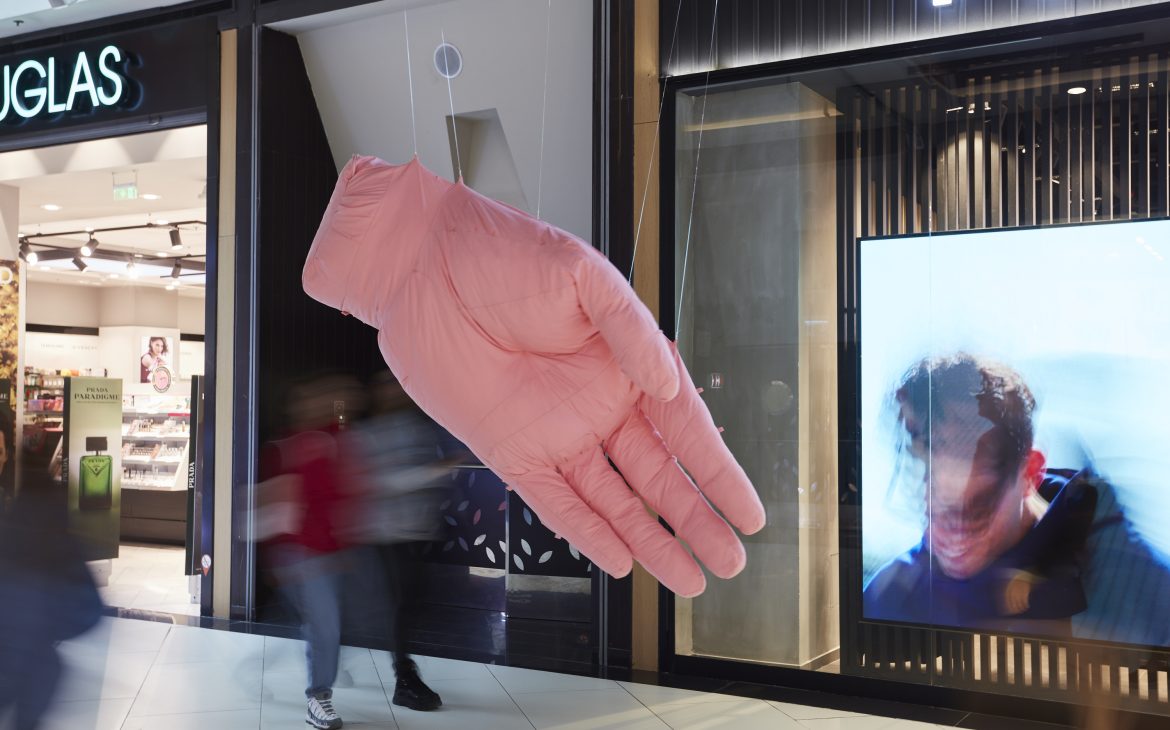
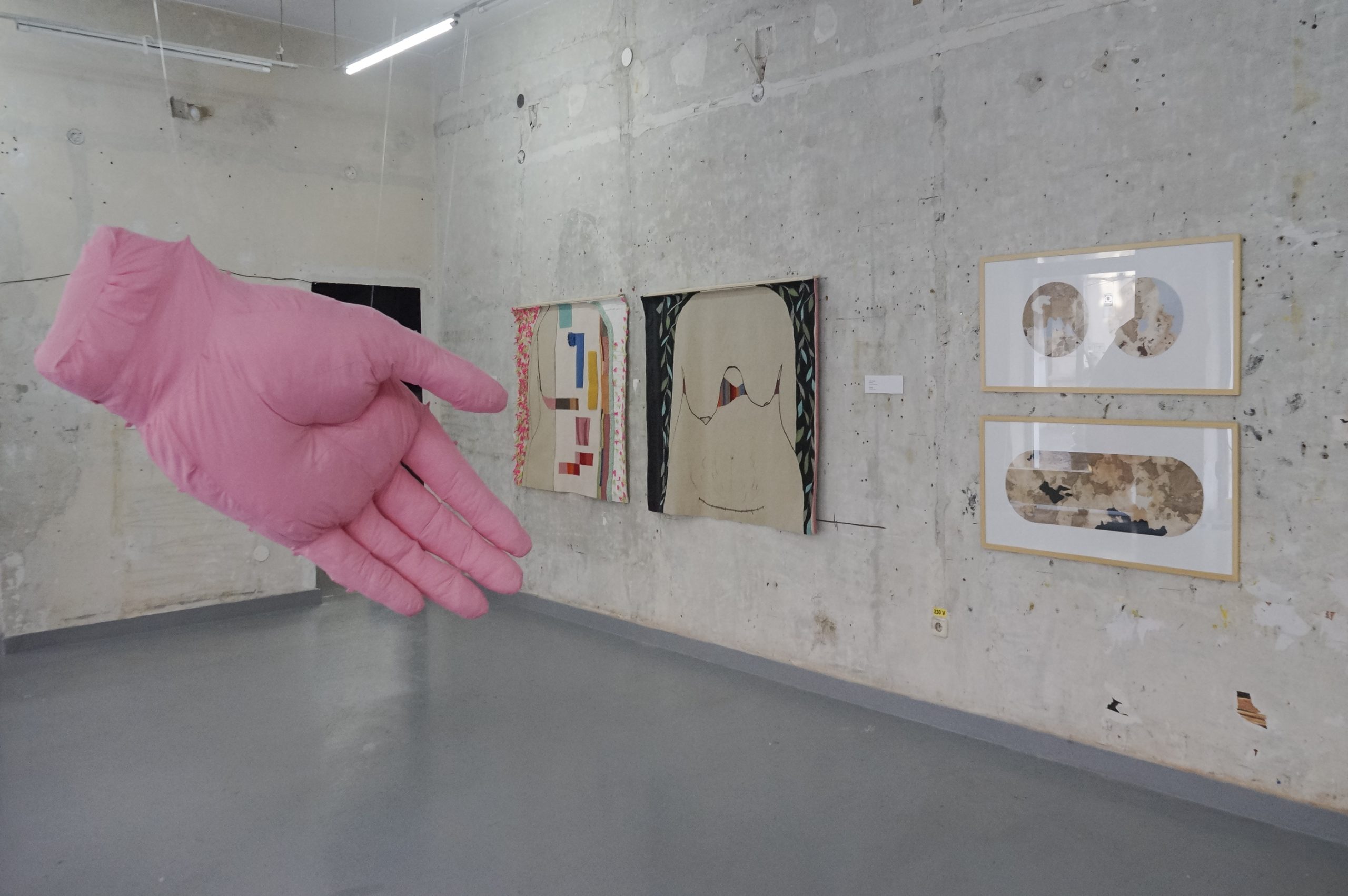
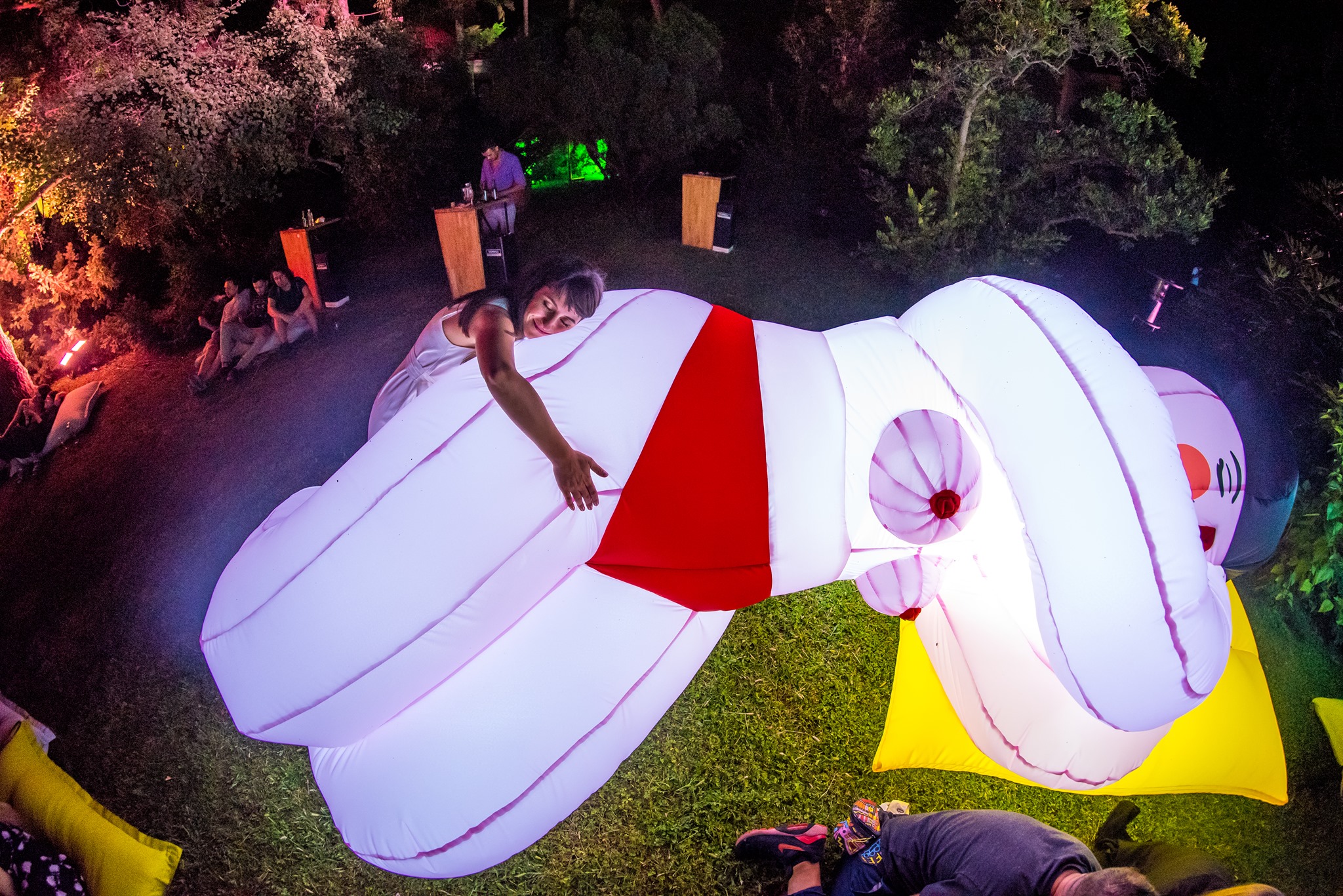
A.M.: I conceived my work as an oversized hand-pillow that symbolizes the people who took care of us in childhood. I wanted people to feel small again in relation to this symbol of authority. Depending on the context of each of us, if we imagine that the hand came to life, how would it interact with us? Would it be protective or threatening? I think a common point of the works in this exhibition is that they aim to be like a mirror for the viewer, an incursion into the personal space of both the artist and the one interacting with them.
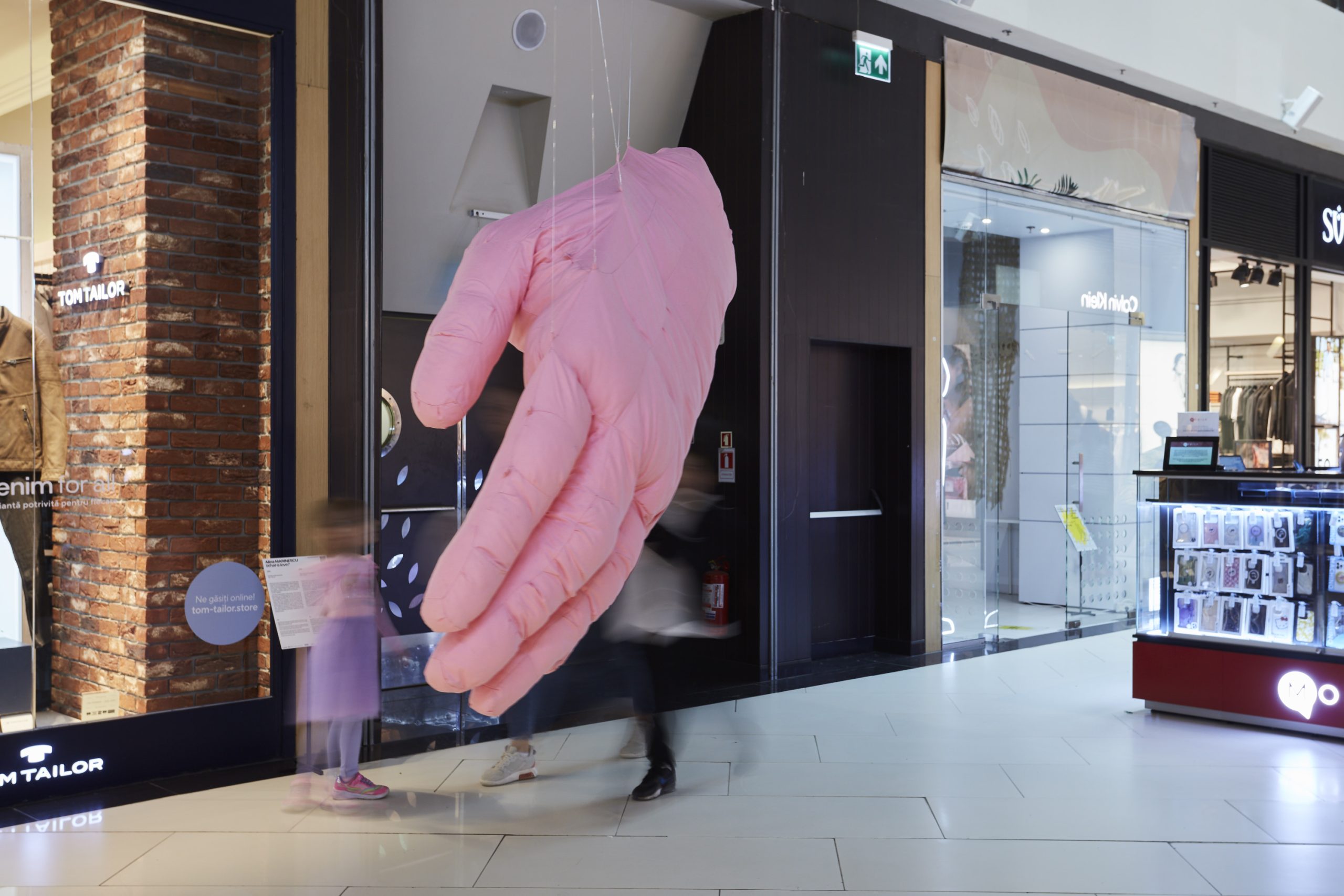
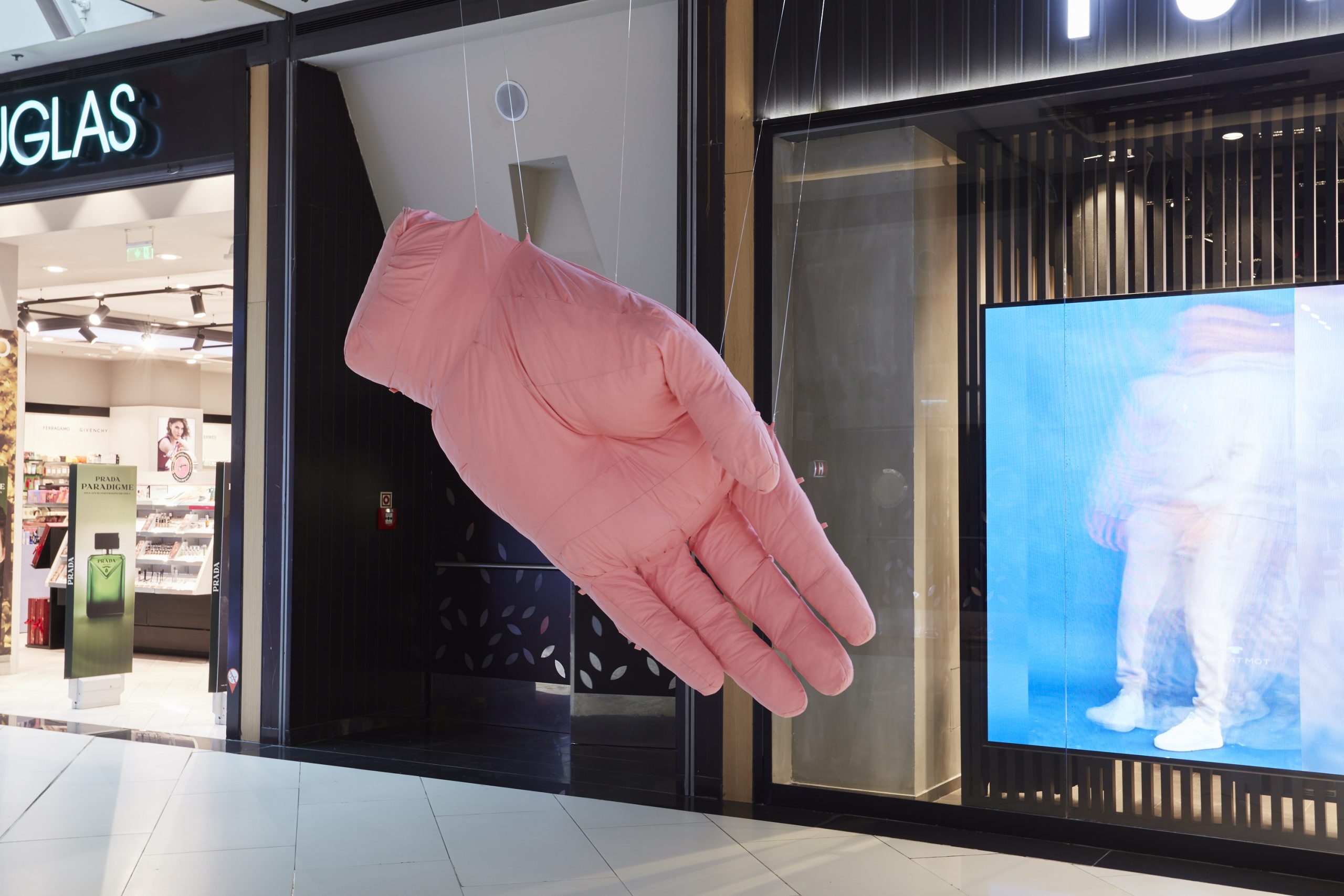
Alina Marinescu, What is Love?, group exhibition “Breaking the Silence: A Visual Narrative on Emotions Left Unspoken”, ParkLake Mall, Bucharest, 2025
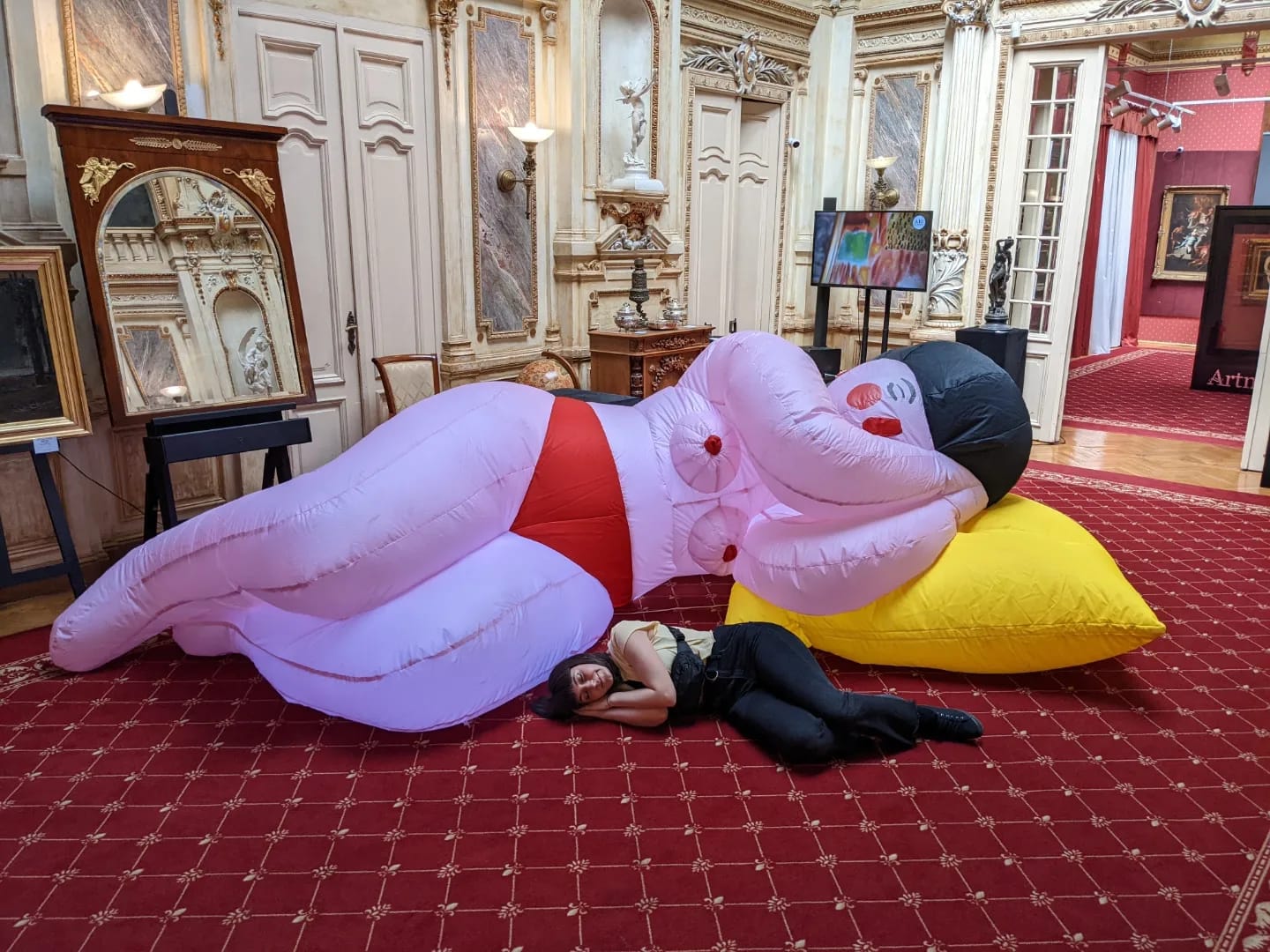
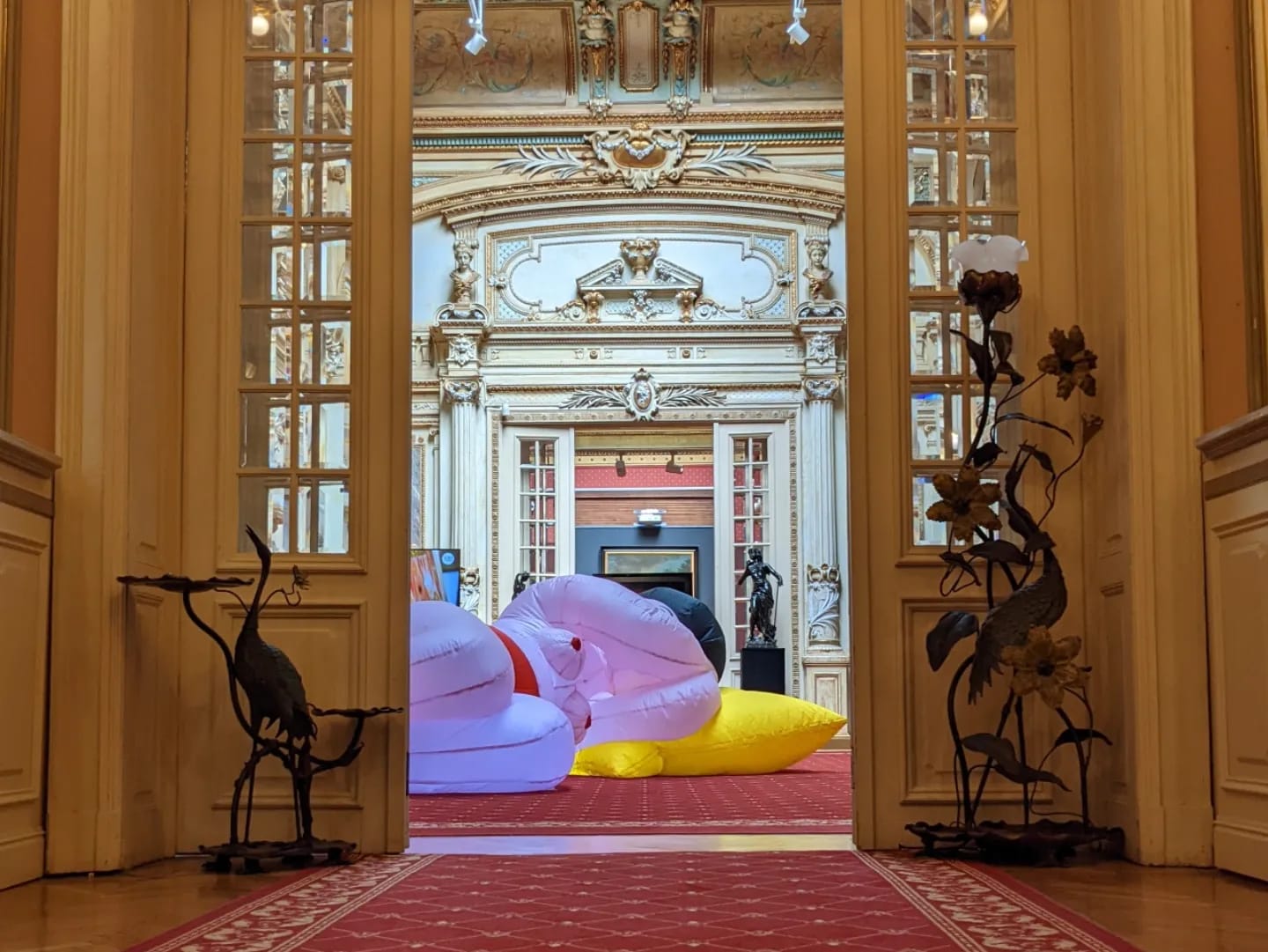
The interview was conducted as part of the cultural project “Breaking the Silence: A Visual Narrative on Emotions Left Unspoken”, co-financed by the Administration of the National Cultural Fund (AFCN). The project does not necessarily represent the official position of the Administration of the National Cultural Fund. AFCN shall not be held liable for the project’s content or any use to which the project outcome might be put. These are the sole responsibility of the beneficiary of the funding.