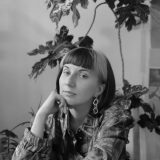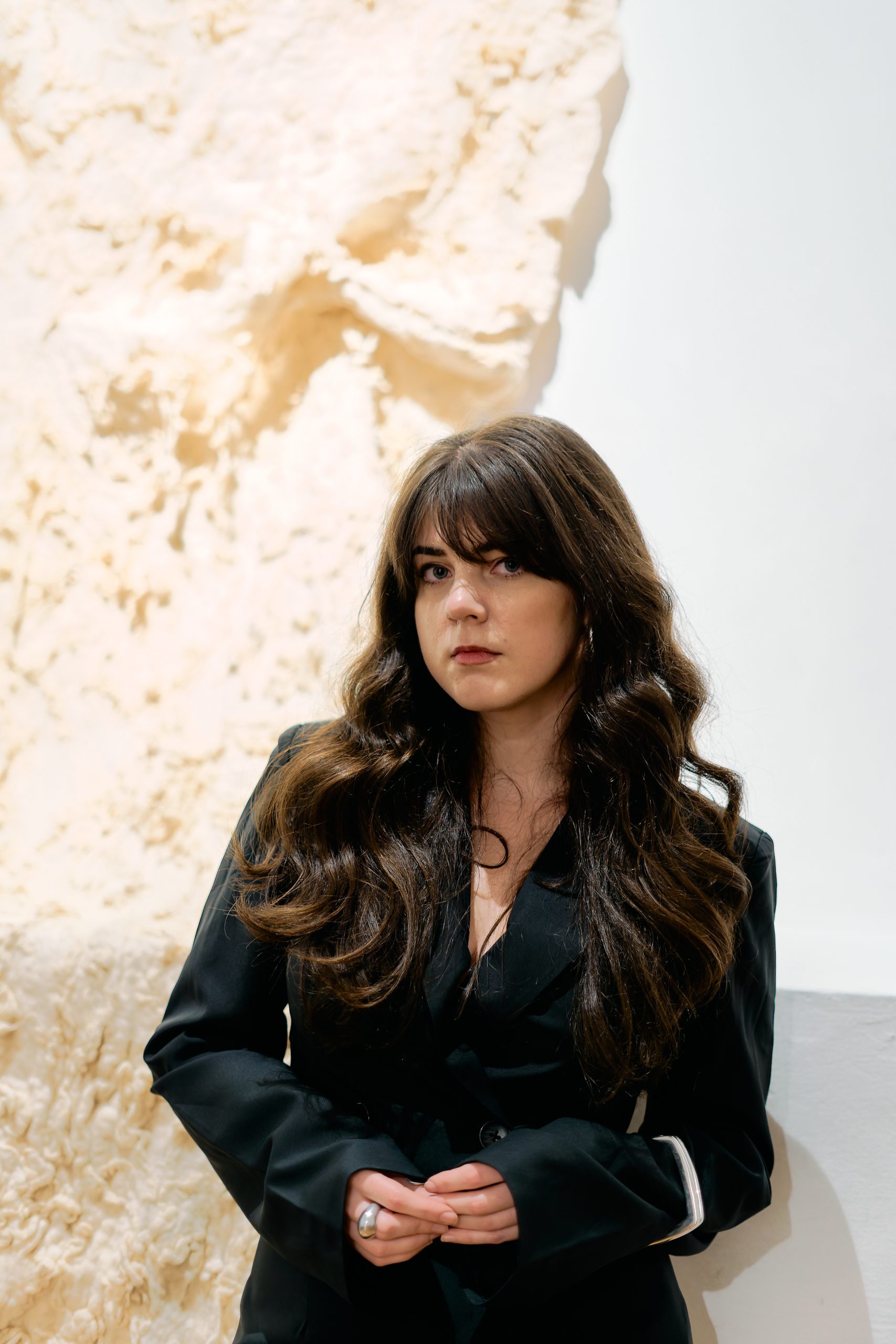
The artistic practice of Larisa Petcuț unfolds along the fluid boundary between textile, performance, sculpture, and video—a meeting ground between corporeality, memory, and ritual gesture. Beginning from an extensive research into the Eastern European textile heritage, the artist builds her discourse in a deeply feminist and political way, exploring how traditional crafts, often marginalized and “feminized,” can become instruments of resistance, empathy, and identity reclamation.
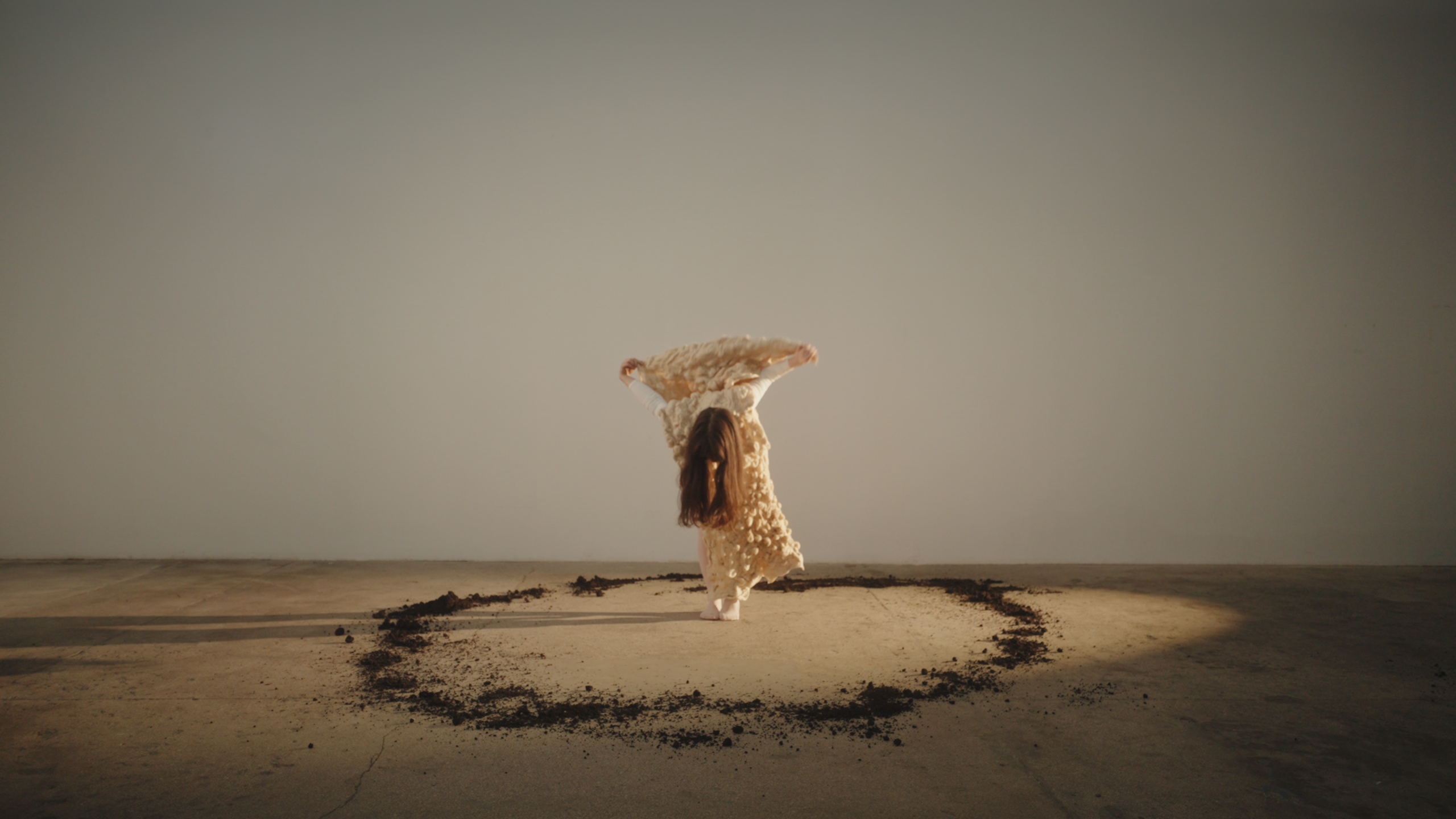
In her works, textiles are not only materials but living bodies that carry memory and affect. Felting, embroidery, the repetitive gesture, or the act of care become ways of re-signifying the labor of women from the Eastern European rural space and, at the same time, contemporary gestures of reconnection with the self and the family heritage. Through interactive textile sculpture and video performance, Larisa Petcuț constructs “contemporary rituals” in which the traditional is brought into the present without nostalgia, but with critical lucidity and compassion. In the interview below, Larisa Petcuț speaks about her artistic process, about the relationship between body, textile, and memory, and about the ways in which art becomes for her an act of reclamation and reconnection.
Ada Muntean: Your artistic practice is situated at the intersection of textiles, performance, sculpture and video. How did you arrive at this interdisciplinary approach and what does each of these mediums offer you in the construction of your discourse?
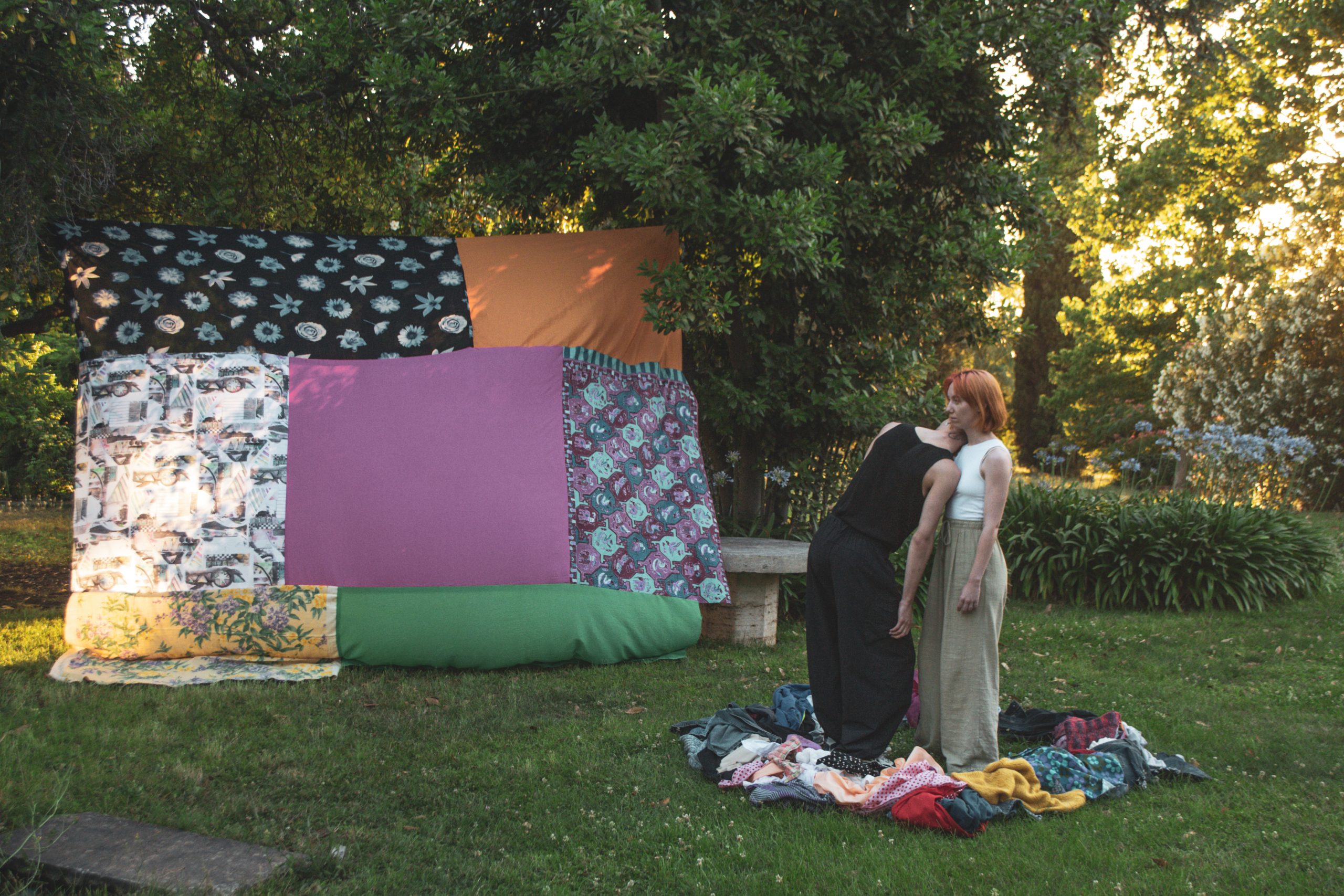
Larisa Petcuț: My artistic research began with textiles, and interdisciplinarity emerged gradually and organically as new curiosities arose and as I carried out experiments over the years. During my master’s studies, my interest focused on the theme of corporeality in contemporary textile art and design. That was when I became fascinated by the almost primordial connection between the body and textiles—which I began to explore through movement, performance, and wearable pieces created for interaction with the body. This is how these sculptural textile works came into being, through which I investigated how the human body can be influenced, reconstructed, or even become an integral part of a work.
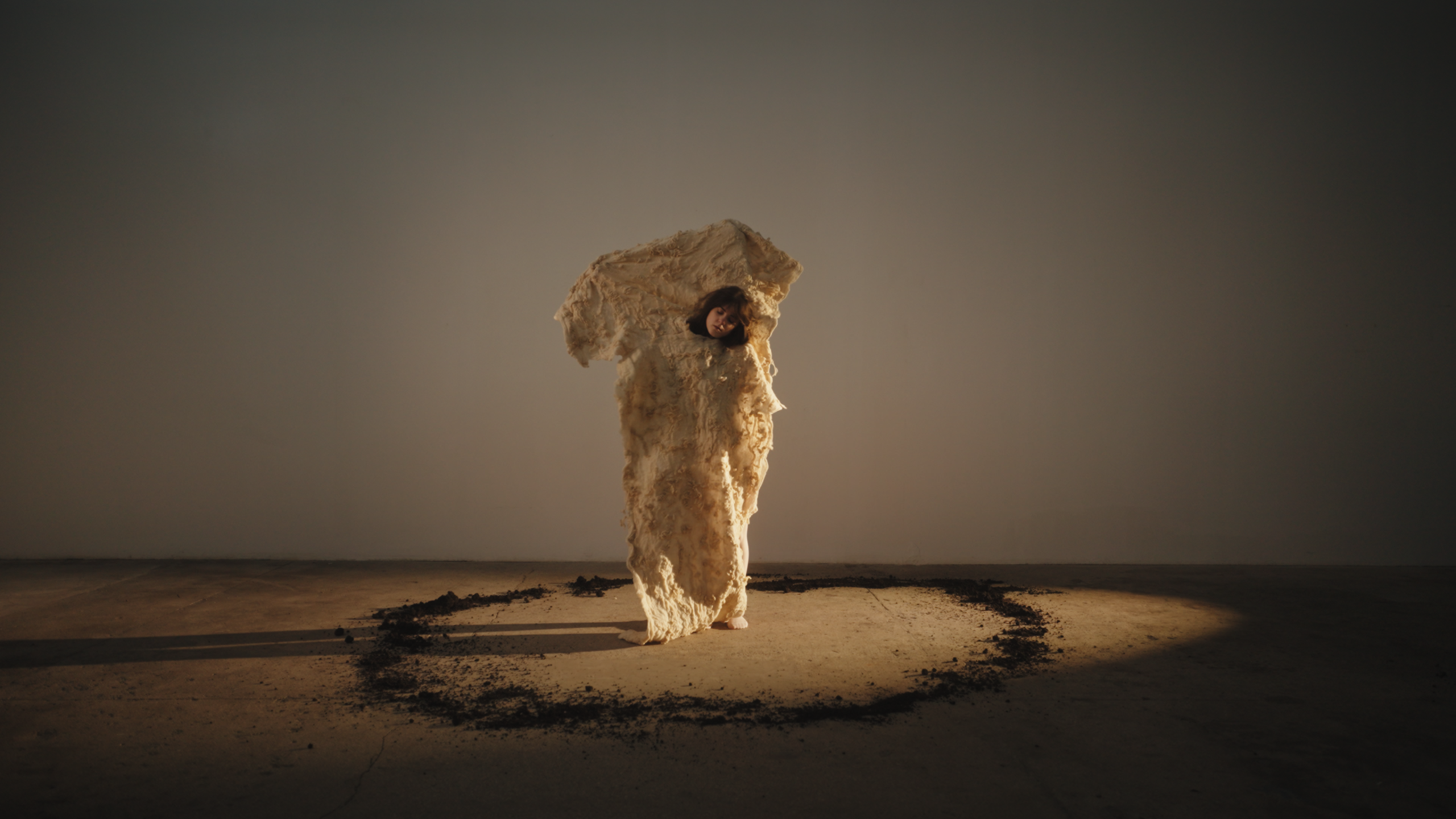
Later, during my PhD, I became curious about video as well, when I began searching for ways to revitalize traditional resources and rituals through a contemporary approach. For me, video performance functions as a contemporary ritual, in which the textile and body mindfulness are captured through technology. I believe that this proximity between traditional techniques and technological media does not create dissonance; instead, it amplifies the timeless character of the traditional, offering it continuity within a contemporary visual language.
A.M.: Vernacular textile techniques, such as felting, play a central role in your work. What does this return to traditional methods mean to you, and how do you bring it into dialogue with a contemporary, often conceptual, aesthetic?
L.P.: My interest in using these traditional techniques stems from a desire to reclaim resources that have long been underrated within the artistic and academic spheres. In the Eastern European context, we speak about the feminization of textile labor, which meant that these textile techniques were practiced exclusively by women in domestic spaces, with knowledge passed down orally from mother to daughter. Their domestic character placed them in the category of “craft,” separate from the realm of “high art,” a space dominated by men from privileged backgrounds. This underrating, together with the increasing vulnerability of these resources, made me explore ways of revitalizing these traditional resources within my doctoral research. For me, returning to these methods represents a feminist gesture of making them visible again. The solution to their contemporaneity that I propose comes precisely from placing ethnographic references in a dialogue with interactive sculpture and video-performance. This interdisciplinary framework allows me to reposition the traditional in a current aesthetic with new values.
I also believe that the conceptual layer behind my works helps make them relevant to a contemporary audience. My conceptual direction takes a political stance, through which I aim to re-politicize these textile techniques from a progressive, feminist, and inclusive perspective. In a context where far-right discourse in Romania uses references to tradition as propaganda tools to promote nationalist and discriminatory messages, I find it important to show that textile heritage can become a space of empathy and resistance.
A.M.: Your works often have an autobiographical character, but also a ritualistic dimension. In what way does art become for you a space of reconnection, of healing?
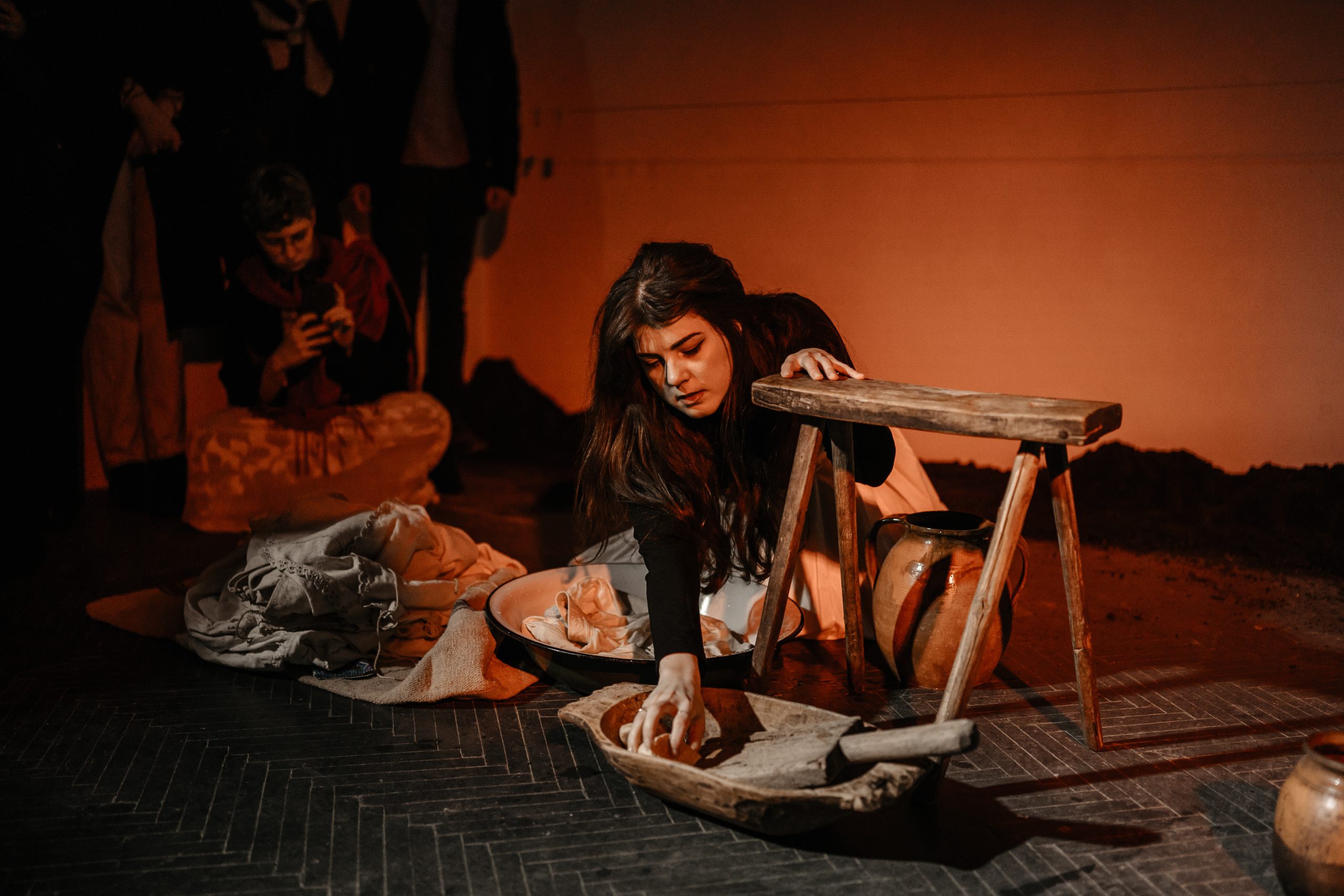
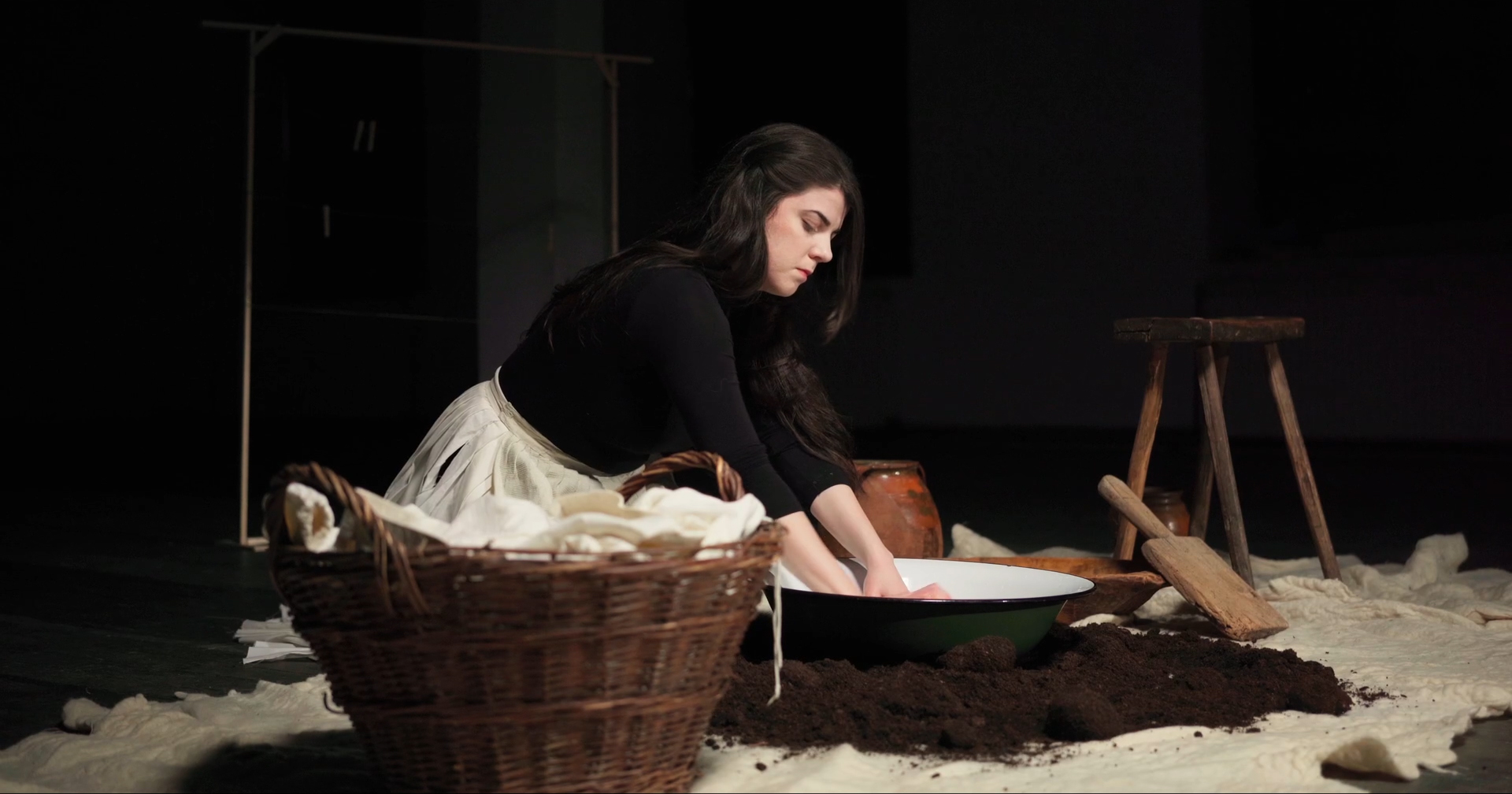
L.P.: The autobiographical side of my works has become increasingly present in recent years. Alongside the social themes I explore, I’ve felt the need to get closer to an intimate, self-referential territory in which art becomes a process of reconnecting with my identity and my family’s memory. My relationship with textiles begins with the history of the women in my family. My grandmothers worked with traditional textiles to create objects needed in the household. Through the textiles I create, I aim to pay tribute to their labor and existence, giving this textile heritage a new meaning in which everyday feminine experiences are valued as valid sources of knowledge.
In this sense, my works create contemporary rituals that heal these cultural inheritances and collective histories, disenchant them out of patriarchal prejudices that have diminished the value of these gestures. At the same time, on a more personal note, this return to the traditional began precisely from my desire to reconnect with the memory of my grandmothers — my way of transforming memory into a living territory through the resources and stories I explore.
On the other hand, the ritual I construct through art is also an individual one. Through my works, I speak about healing and reconnecting with my own self. Through materiality, repetitive gesture, and body mindfulness, I give form to my experiences and transform them into something comprehensible. I reclaim my identity by passing it through these rituals of reconstruction and rediscovery of the self.
A.M.: A recurring element in your research is the connection between local textile heritage and feminist discourses. How do you reinterpret, in a contemporary way, the roles and gestures associated with women’s work in rural Eastern Europe?
L.P.: In my research, I explore how local textile heritage can be revisited through a feminist approach, without idealizing the past and without dissociating it from the historical conditions that shaped it. My interest stems from the idea that the work of women in the East European rural environment, although often carried out in contexts marked by patriarchal norms, represents a valuable form of knowledge and cultural continuity. Paradoxically, any marginalization of these forms of artistic expression—on the grounds that they were produced in a domestic or oppressive context—risks perpetuating the very strategies of neglect and underappreciation.
Contrary to the possible assumption that these two directions are in complete opposition, my artistic approach aims precisely to demonstrate their potential for coexistence. For me, feminism does not imply distancing from these practices, but actually reclaiming them. I approach them as gestures of resistance, care, and community, even if they manifested within a restrictive social framework.
I consider the act of reclamation to be emancipatory in itself. More precisely, their reinterpretation and recontextualization occurs precisely through discussing and questioning these roles and gestures in contemporary artworks. At the same time, their placement and visibility in public spaces and artistic institutions opens up the possibility for a new perception of the role of women and of textile heritage in Eastern Europe. Through this approach, local heritage becomes a tool through which we can rewrite narratives, recognize contributions that became invisible, and imagine a feminist continuity in the present.
A.M.: Ethnographic field documenting seems to play an essential role in the construction of your works. How do you integrate the collected material – visual, narrative, tactile – into your artistic process and which criteria guide your selection?
L.P.: Ethnographic documenting is essential for my practice because I want my works to stay connected to current reality and to the experiences of women in the rural Eastern European teritorry. In particular, I have focused on areas of Romania, with stops in Serbia and Bulgaria, exploring regions with rich textile traditions or places I reach through artistic residencies.
My priority is to document and archive the knowledge still held in the memories of elderly women, as they represent the last repositories of a heritage transmitted orally and through practice. The collected material first enters my theoretical research and then becomes a direct source for artistic works. Sometimes I adopt traditional techniques or materials; other times I translate fragments of interviews into new conceptual works.
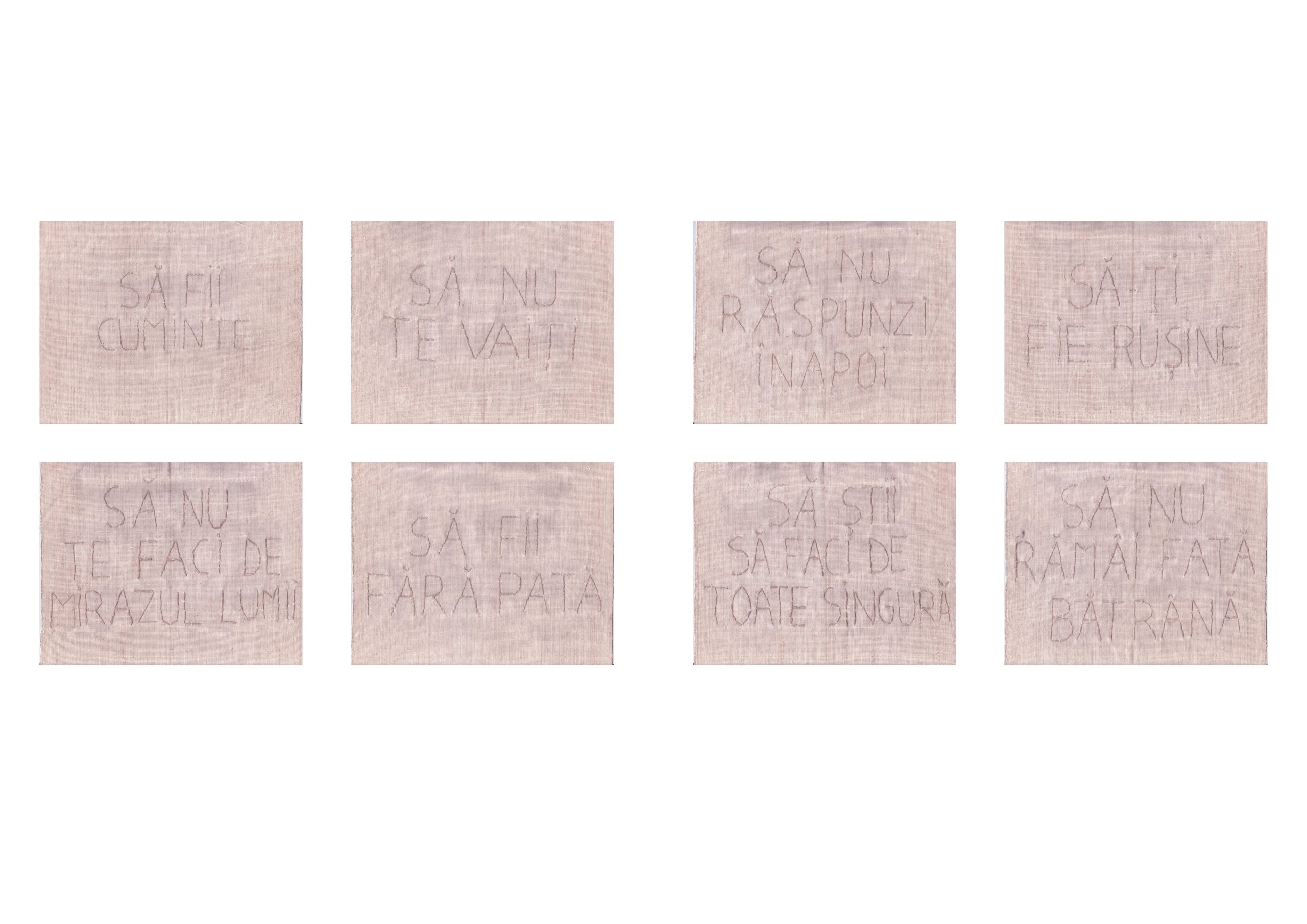
An example is the work “Rules”, which consists of a series of manually embroidered textile interventions exploring the trauma of feminine social inheritance in the Eastern European space. The work stemmed from a series of interviews with local women from the village of Viișoara (Mureș County), which revealed internalized gender norms that constitute a complex emotional and social landscape of the female condition. Visually and on the tactile level, this influence is present in the manual embroidery on hemp, and narratively, in the embroidered texts through which I sought to critically rewrite these “rules” that shape female identity in a normative and often repressive manner.
A.M.: You have been present in numerous national and international exhibitions, as well as in residency programs and European scholarships. How do these contexts contribute to your professional development and how do they influence your artistic vision?
L.P.: Participating in exhibitions, residencies, and international programs has played an important role in my professional development. These contexts have allowed me to engage in dialogues with artists from diverse cultural backgrounds and to expand my artistic perspective. I firmly believe in interdisciplinary collaboration, I consider it can bring immense complexity and contribution to our work. Some of my most important pieces have emerged precisely from collaborations with close friends and dear colleagues.
However, the deepest influences come from direct dialogue with the communities I encounter during residencies and mobilities. Encountering people, their stories and realities, constantly shapes the way I think and create. In recent years, this process has drawn me closer to community art, where the community is not just a subject of research but becomes a co-author of the work. Experiences such as the residency in Rome, where I worked with Romanian diaspora communities discussing migration and identity, or the interviews with female weavers from rural areas, have been decisive moments for me, both as an artist and as a person.
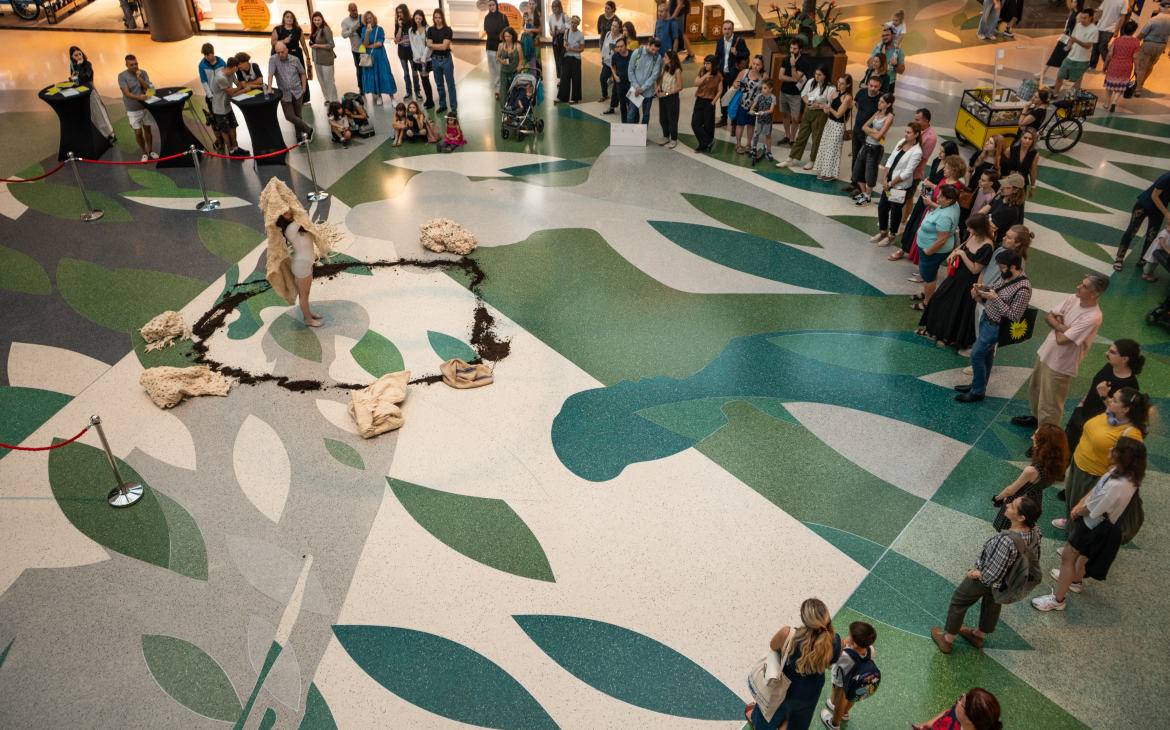
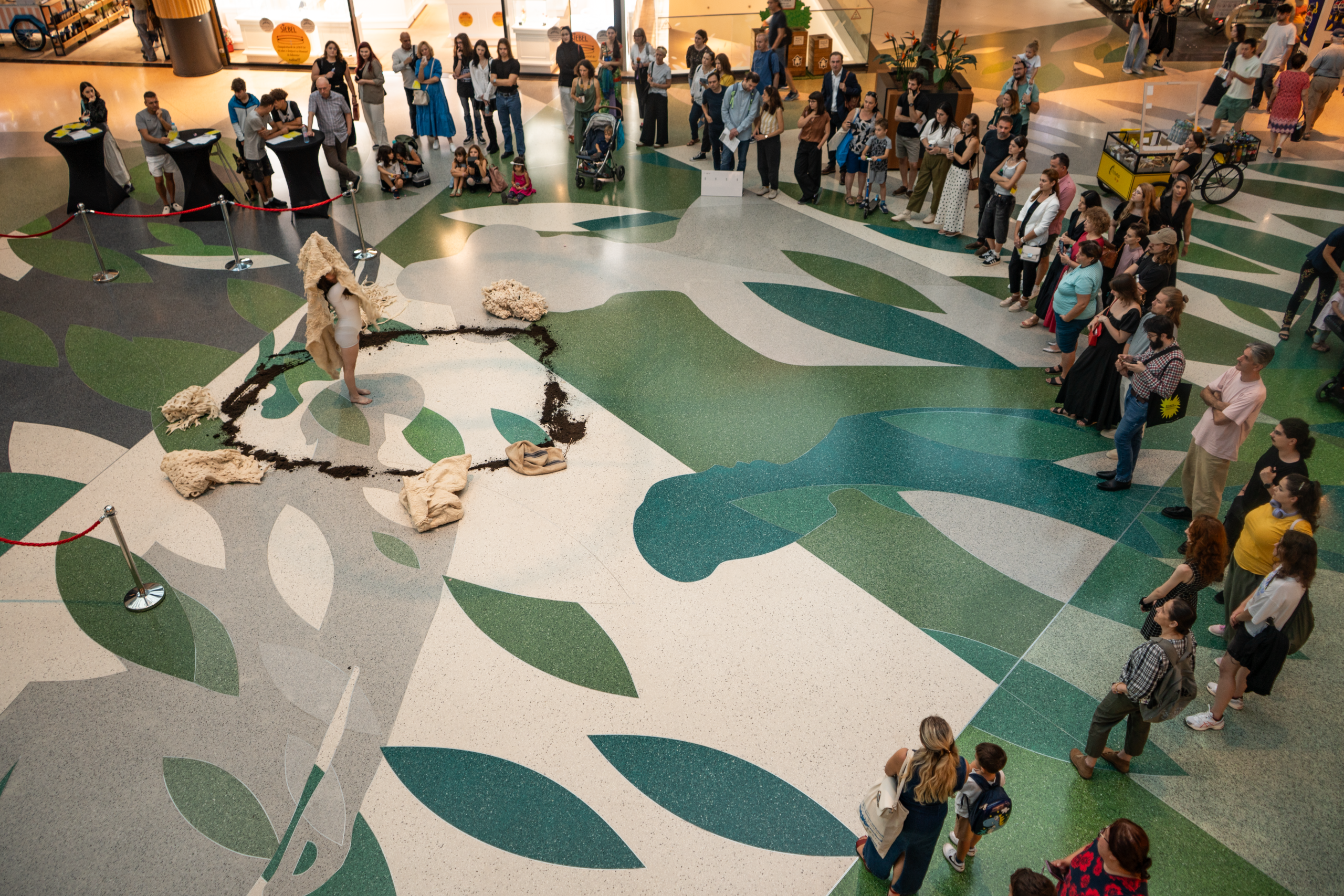
Emotions Left Unspoken”, ParkLake Mall Bucharest, September 16, 2025.
A.M.: What are the themes, visual mediums, or types of projects that you would like to deepen in the near future?
L.P.: Currently, my artistic practice is strongly influenced by the current political situation. As I mentioned earlier, I believe that tradition can be an important resource for developing a contemporary discourse capable of recontextualizing cultural heritage in a progressive, inclusive, solidary, and empathetic way. I want to continue focusing on themes that are as inclusive as possible, aiming to challenge deeply problematic and discriminatory messages. At present, I am working on a series that focuses on the fundamental human right to housing and shelter. I am seeking to collaborate with vulnerable immigrant minorities, who have been targets of the recent extremist discourse. My artistic practice has been and continues to be rooted in activism, driven by the conviction that everything is political, and therefore art should play a role in raising and reshaping collective awareness toward social change.
Regarding visual media, I want to continue exploring the direction of interactive textile sculpture and video performance. At the same time, I am curious to further explore other textile techniques, such as weaving or knitting, as well as ceramic materials, such as clay and sandstone, as an extension of my interest in ritual gestures and the connection to the earth.
A.M.: If you had to summarize your artistic practice in one word, what would it be?
L.P.: Reclamation.
A.M.: How do you relate to the concept of the exhibition “Breaking the Silence: A Visual Narrative on Emotions Left Unspoken” and how did you develop your artistic intervention in this project?
L.P.: I resonated deeply with the theme of the exhibition, particularly with the intention of addressing depression and mental health—subjects that are still stigmatized in Romania. I believe it is essential to open spaces where emotional vulnerability can be expressed, where art can engage with the audience, become a tool for introspection, and encourage viewers to look beyond potential societal taboos. For me, participating in this project was an opportunity to bring out a personal episode into the public space.
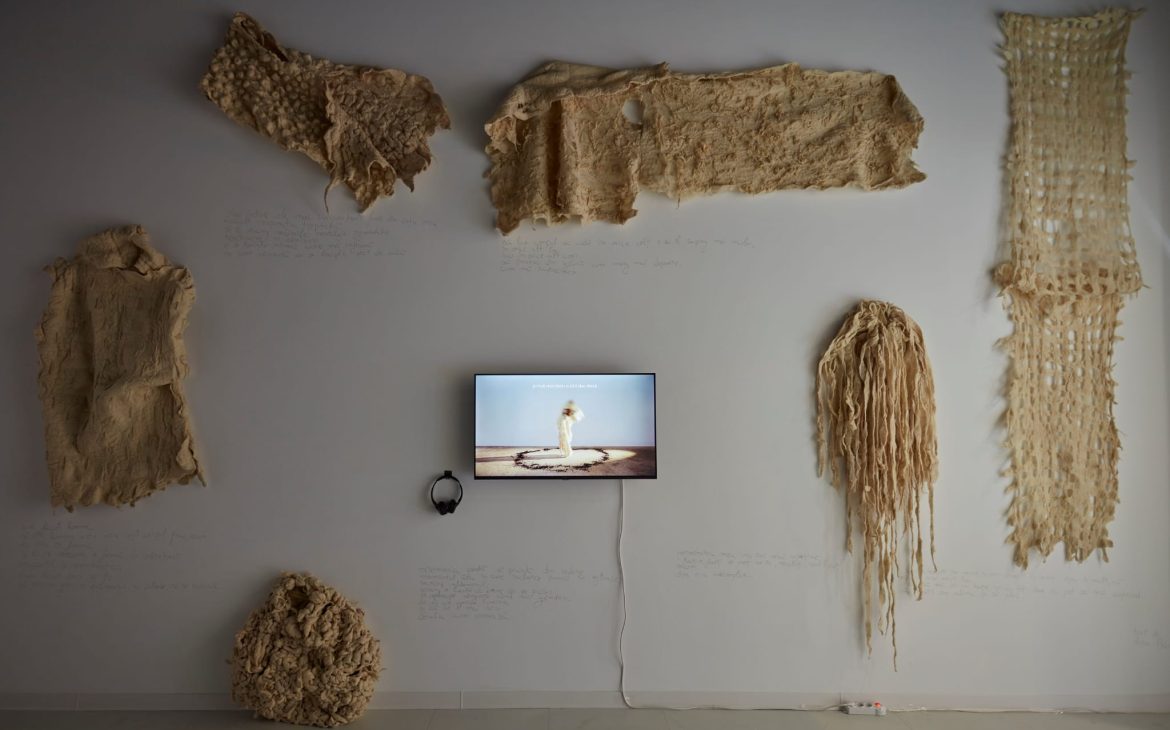
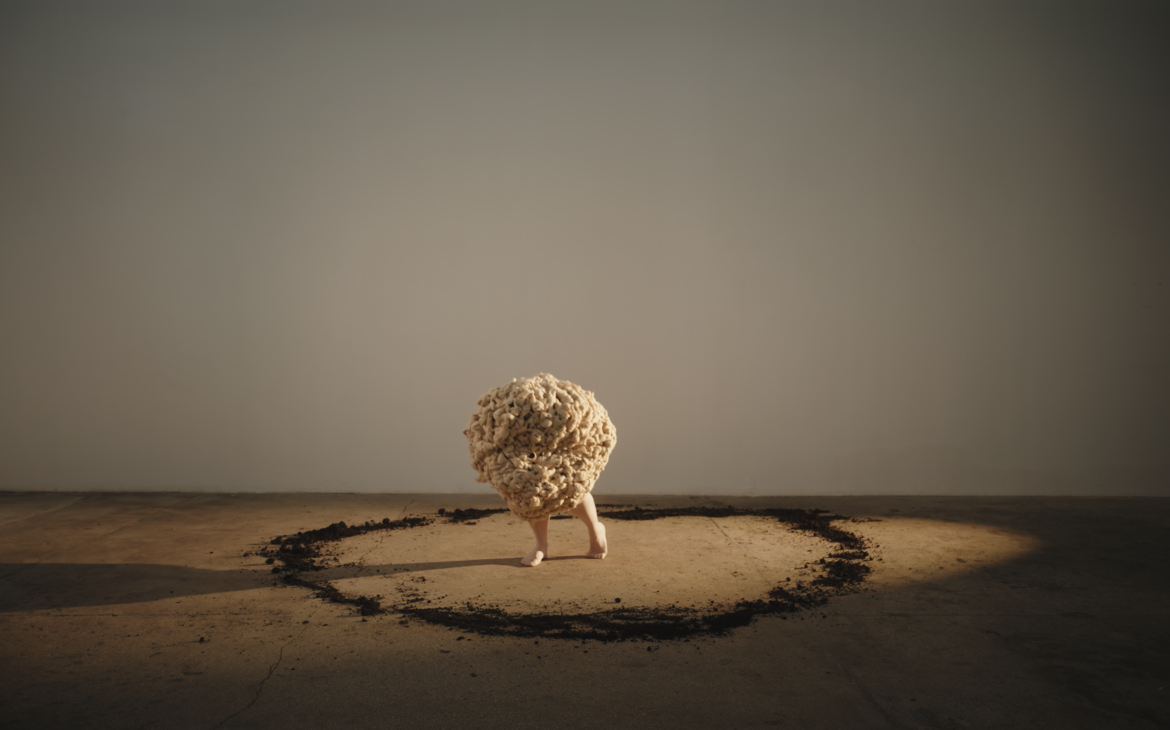
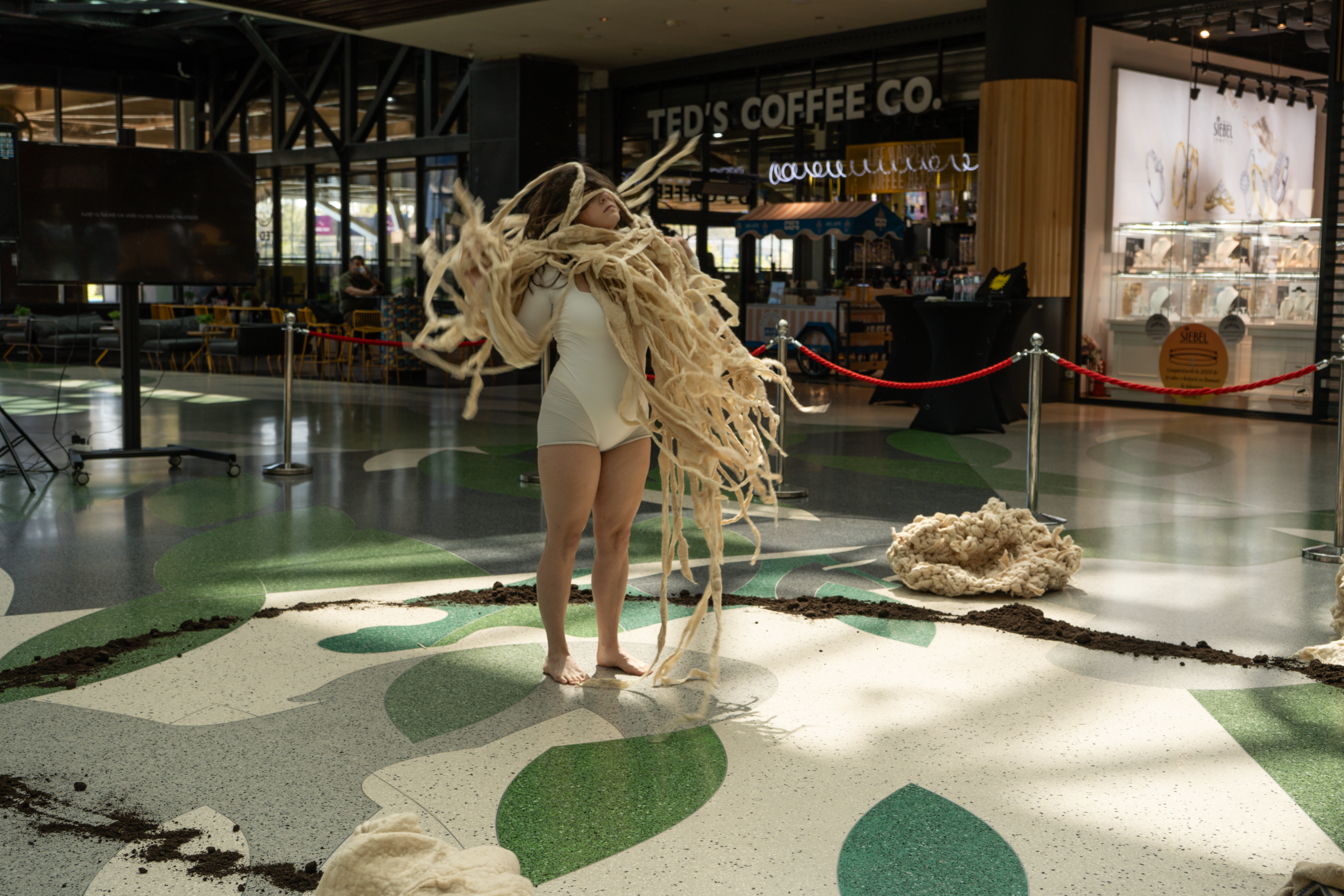
“Euri”, the work presented, included both a series of textile sculptures and a live performance. I worked with the body, the textile sculptures, text, and sound to convey that state of emotional presence, search, and rediscovery of identity. The performance aimed to create an atmosphere in which the audience could sit with their own emotions.
I greatly appreciated the accessibility of the broad audience to this type of artistic intervention, given that I am not a fan of elitist art and artistic spaces. I believe that the purpose of art is to reach people, to suggest themes that encourage reflection in order to create meaning, dialogue, and inner change. Considering this, I think that unconventional spaces can become very important tools for setting up places that do not intimidate but rather invite.
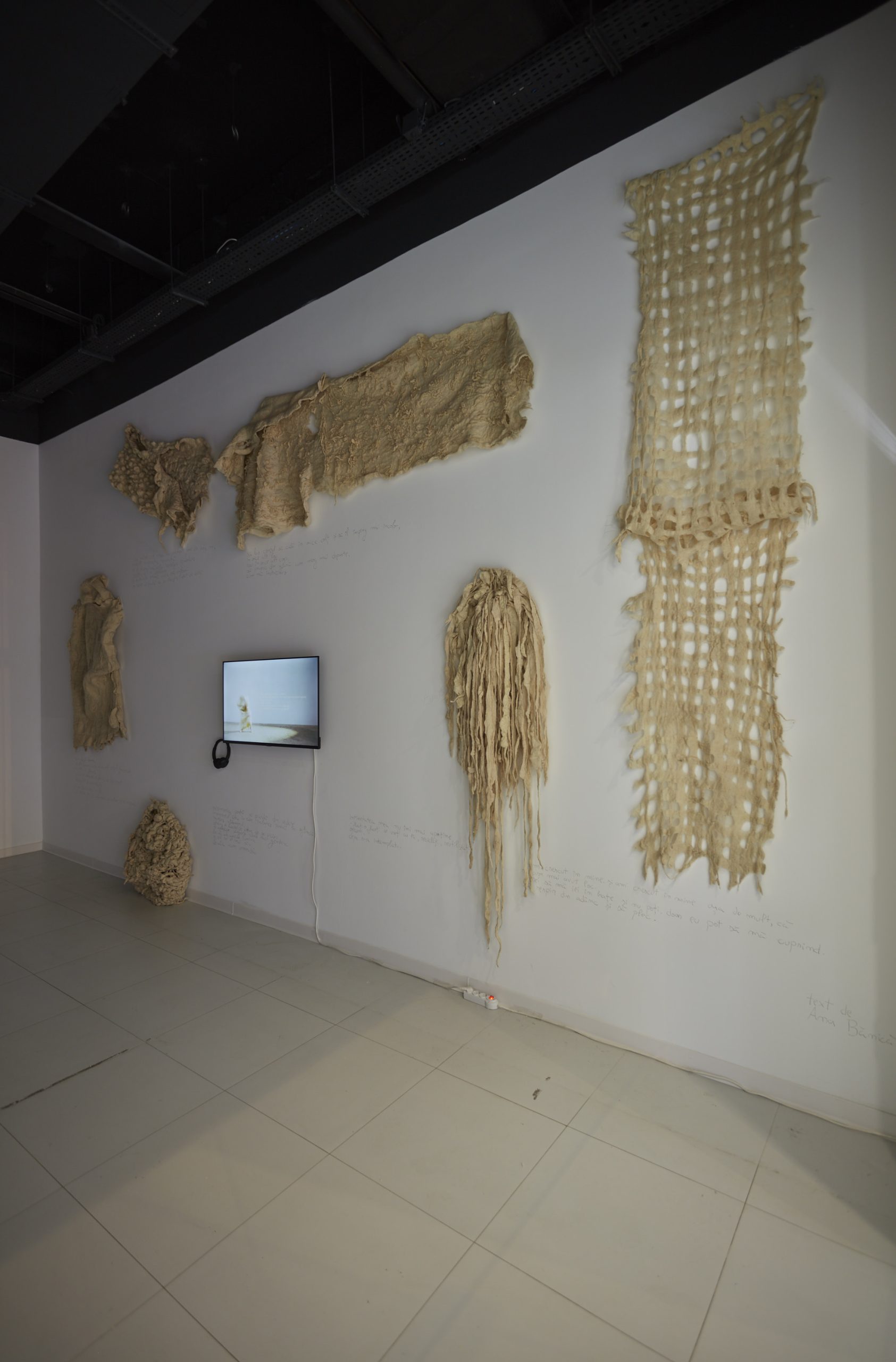
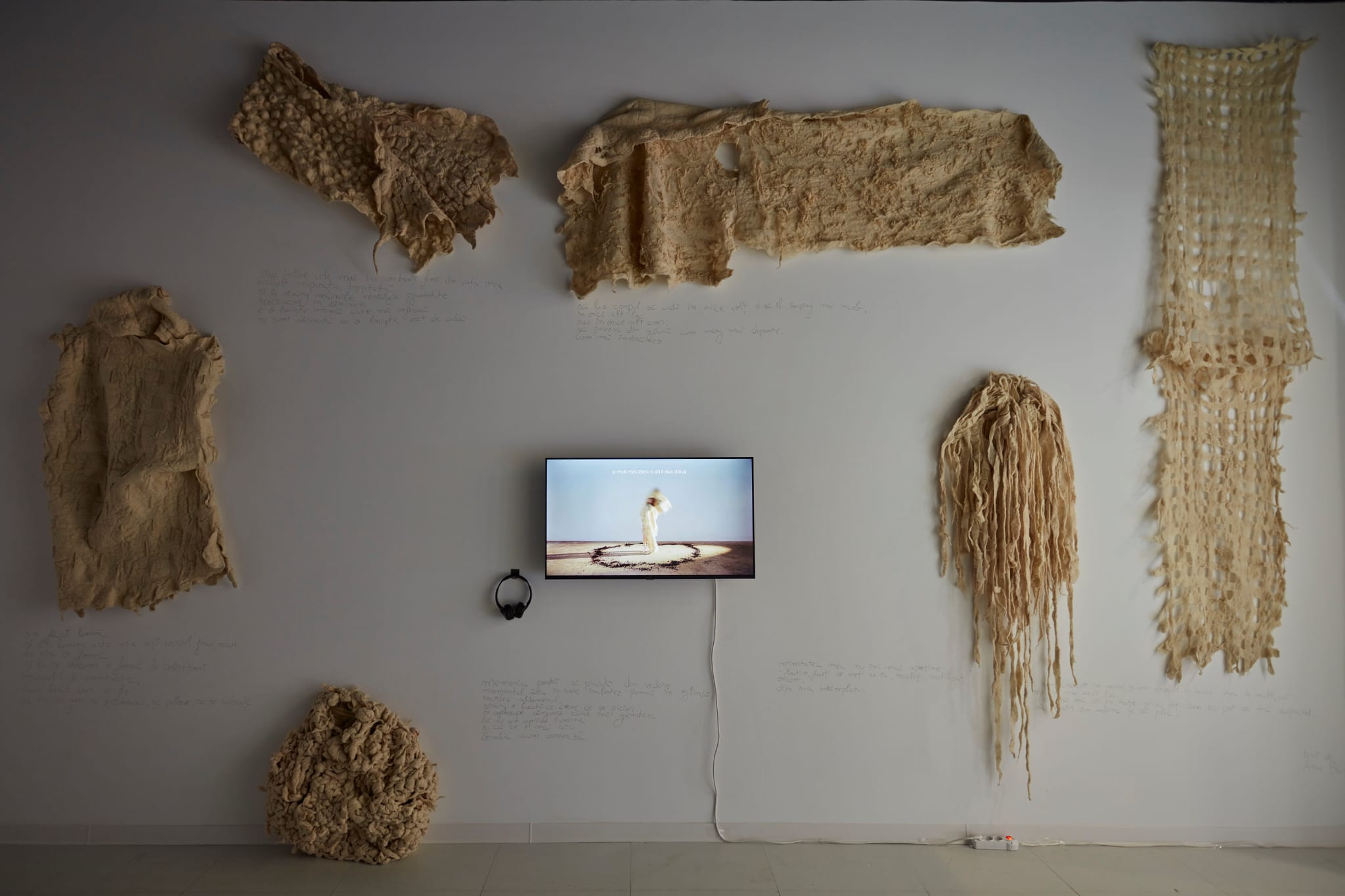
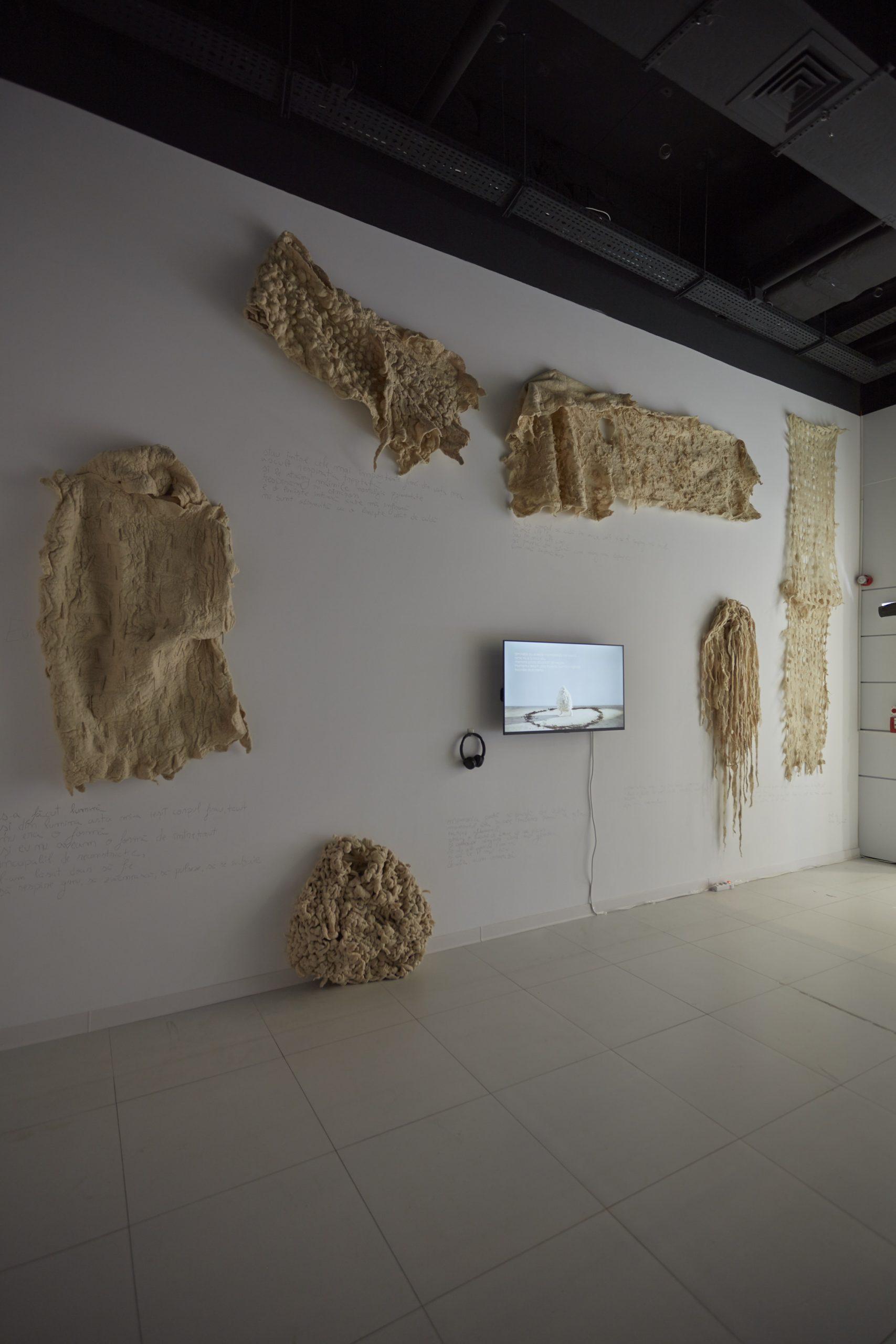
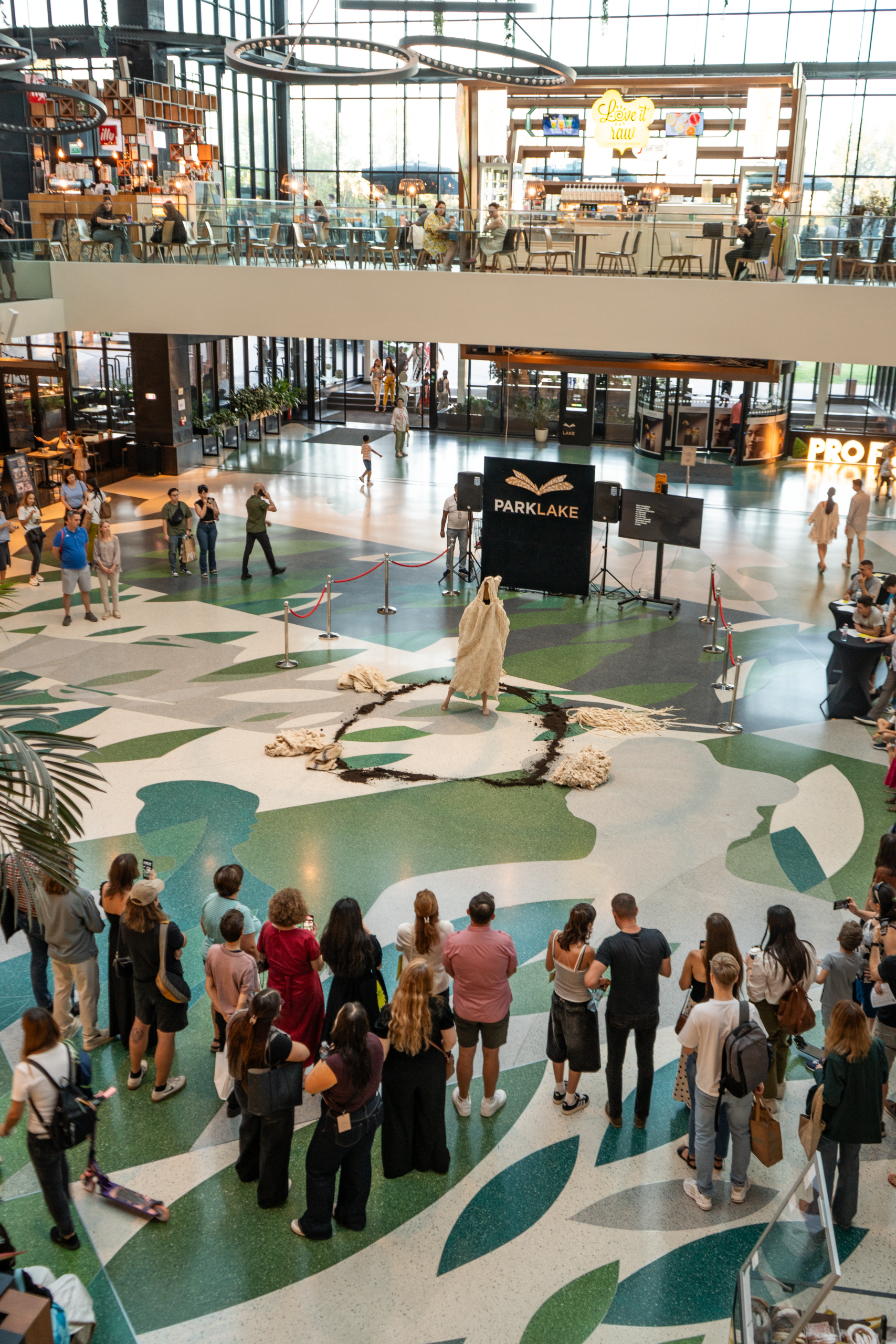
Emotions Left Unspoken”, ParkLake Mall Bucharest, September 16, 2025. .
The interview was conducted as part of the cultural project “Breaking the Silence: A Visual Narrative on Emotions Left Unspoken”, co-financed by the Administration of the National Cultural Fund (AFCN). The project does not necessarily represent the official position of the Administration of the National Cultural Fund. AFCN shall not be held liable for the project’s content or any use to which the project outcome might be put. These are the sole responsibility of the beneficiary of the funding.