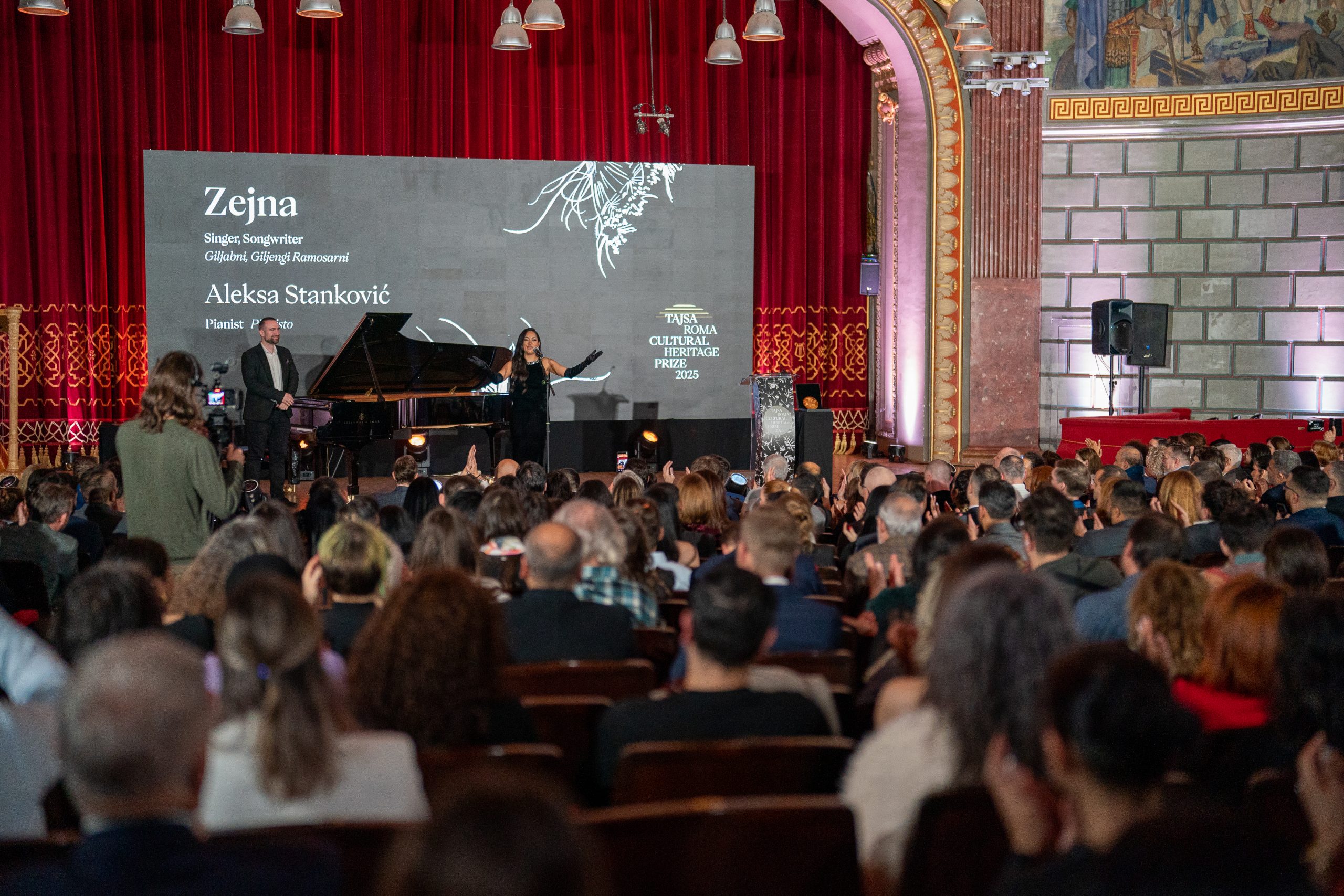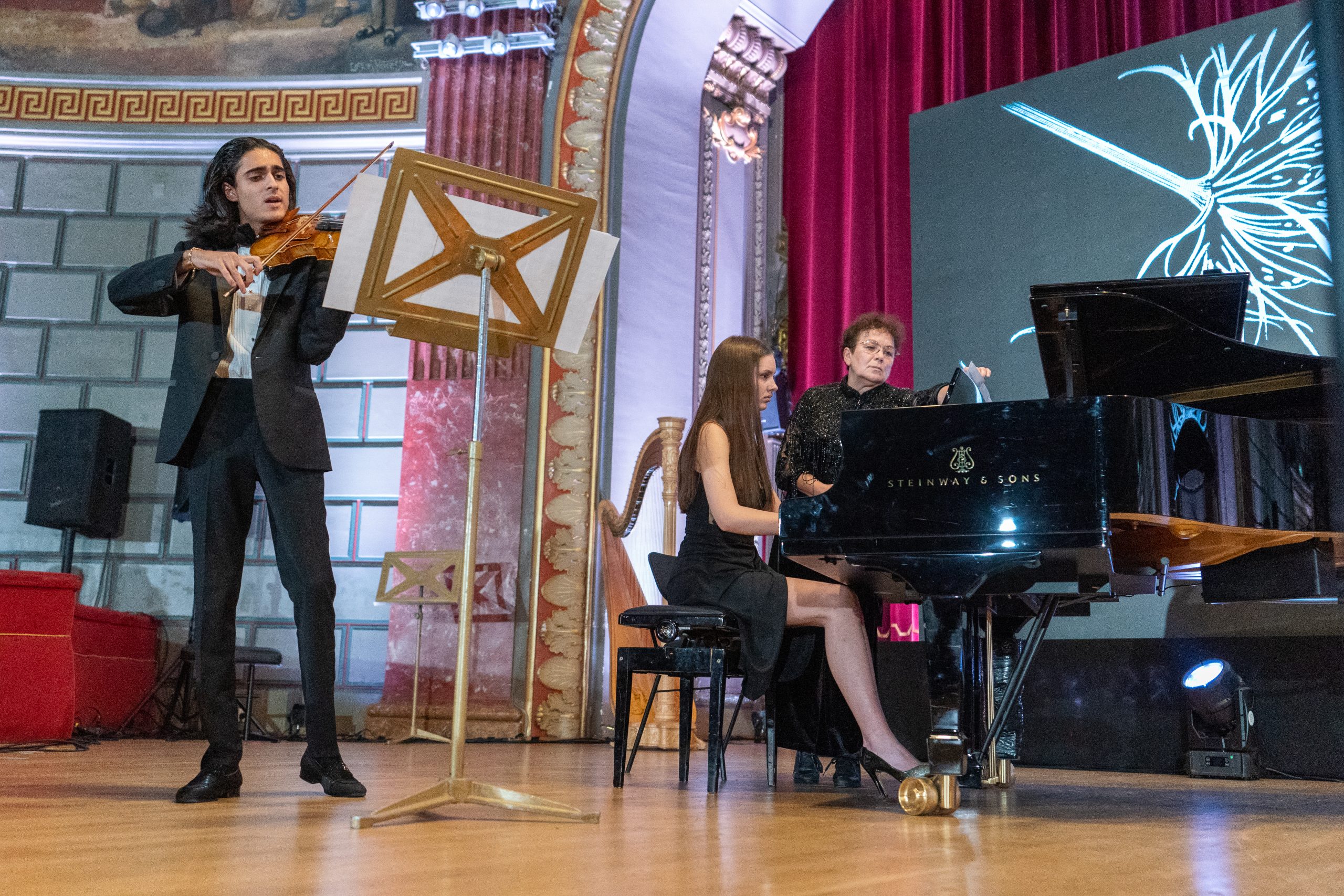
We spoke with Timea Junghaus, the Executive Director of ERIAC, about the significance of the Tajsa Prize for Roma Cultural Heritage and the role of Roma art in contemporary Europe. The Tajsa 2025 Gala took place on November 29, at the Romanian Athenaeum, in a warm and solemn atmosphere, bringing together artists, intellectuals and representatives of European cultural institutions. The event celebrated Roma artistic excellence and reaffirmed the importance of recognizing Roma cultural heritage as an essential part of the European cultural landscape.
Angela Izvercian: You are the Executive Director of ERIAC. Looking back — how has your involvement with ERIAC evolved, from your early work as a curator and researcher to your current role? What convinced you to take on this responsibility?
Timea Junghaus: My involvement with ERIAC has unfolded as an arc of deepening responsibility. I first entered its orbit as a curator and researcher committed to the epistemic reparation of Roma cultural history: understanding how our narratives were written out of Europe’s canon, and how Roma artists—often with extraordinary solitude—continued to generate powerful vocabularies of resistance, beauty, and futurity. Over time, this intellectual commitment transformed into something larger than a curatorial practice. ERIAC became not only an institution I contributed to, but a structure whose very survival felt inseparable from the integrity of Roma cultural self-determination. Accepting the role of Executive Director was not simply a professional decision; it was the recognition that our people needed an institution capable of acting with dignity, competence, and strategic clarity within European cultural politics. I stepped into this role because I understood that the Roma cultural movement required a steady, principled, and internationally literate leadership—one willing to defend the vision of our founders and to protect a space where Roma artists and thinkers can speak in the first person, without mediation.
A.I.: What is the significance of the “Tajsa Roma Cultural Heritage Prize 2025” Gala for ERIAC, as well as for the Roma community at the European level?
T.J.: The significance of the Tajsa Roma Cultural Heritage Prize Gala lies in its dual address. On one hand, it is an outward-facing moment in which Roma artistic excellence is presented to the European public with full dignity, professionalism, and authority, countering the long history in which Roma creativity has been marginalised or folklorised. On the other hand, it is an inward-facing gesture, from Roma to Roma, speaking to a community that does not merely endure but thrives, advances, and claims its rightful cultural space. For ERIAC, the Gala operates as a symbolic and institutional anchor: it is where our mandate of cultural self-determination becomes visible, where the labour of an entire year materialises as a public affirmation of Roma legacy, innovation, and continuity. For the Roma community across Europe, the Gala is an intergenerational signal that our heritage is not a static memory but a living, evolving force, offering younger generations a vision of a future in which Roma creativity stands at the centre rather than the periphery. This is Tajsa in its truest meaning: tomorrow as something collectively shaped, not imposed.

A.I.: What motivated you to organize this year’s edition in Bucharest?
T.J.: Bucharest is not a neutral geographic choice; it is a statement. Romania is home to one of the largest Roma populations in Europe, yet Roma cultural presence remains profoundly underrepresented in institutional spaces. By bringing the Gala to Bucharest—and specifically to the Romanian Athenaeum, a site associated with national cultural prestige—we are shifting the symbolic order. We are insisting that Roma creativity belongs at the centre, in the most respected halls, with full dignity. This choice is also an invitation to Romanian society to confront both its historical wounds and its contemporary possibilities. It is our gesture toward rewriting the cultural cartography of the region. We also found that this was a symbolic and beautiful first step to announce the opening of a new office and art space, ERIAC Romania.
A.I.: How were the finalists selected for the prize this year? What criteria are essential for a nomination — and what message do you wish to convey through the selection of the five finalists?
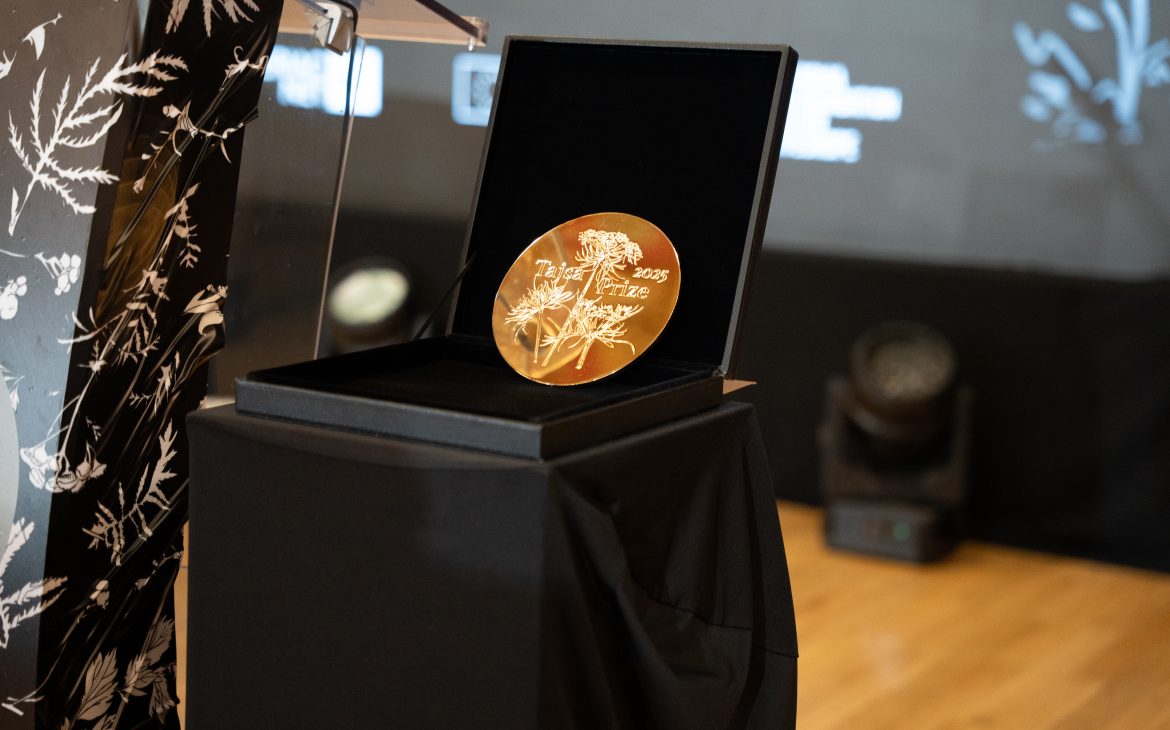
T.J.: The nomination and selection process for the Tajsa Prize begins with ERIAC’s broad associate membership, the Barvalipe Academy, and the ERIAC Board, who are invited to put forward candidates. This constitutes a diverse community of roughly 190 Roma and non-Roma individuals and organisations active in the fields of arts, culture, education, and human rights. After the close of nominations (53 wonderful individuals in arts and culture), ERIAC conducts an initial review and identifies five finalists whose artistic excellence, intellectual depth, ethical engagement, and societal impact reflect the founding principles of ERIAC. The final decision is then made by the Jury, composed of the 15 members of the ERIAC Barvalipe Academy, together with the ERIAC Board and one representative of the management. The identity of the winner remains confidential until the Gala, preserving the integrity and ceremonial gravity of the announcement. Through the selection of the five finalists, the message we intend to convey is that Roma cultural production is of the highest quality standards, innovative, and deeply anchored in contemporary thought, and that our heritage continues to generate new artistic languages capable of illuminating not only the Roma experience but the wider European condition.
A.I.: What impact do you hope the Gala will have —on the audience, on the Roma cultural scene, and on perceptions of Roma people in Romania and across Europe?
T.J.: I hope the Gala destabilizes the inherited hierarchies of perception. I hope that audiences, whether Roma or non-Roma, leave with a renewed understanding of Roma cultural production as intellectually formidable, emotionally resonant, and aesthetically sophisticated. For the Roma cultural scene, I hope it offers recognition, momentum, and the sense of belonging to a larger movement of artists and thinkers shaping Europe’s future. For Romanian and European publics more broadly, I hope it expands the categories through which Roma people are seen: not as subjects of policy, but as producers of culture, philosophy, and contemporary art. The Gala is an invitation to rethink who we imagine as authors of Europe.
A.I.: The artistic program appears to be very diverse (music, performance, visual arts, etc.). How did you conceptualize this diversity? What message are you sending by bringing together these different artistic expressions in the awards ceremony?
T.J.: The diversity of the program is not ornamental. It reflects a conceptual truth: Roma cultural heritage is inherently plurivocal. It lives across mediums, disciplines, geographies, and historical layers. By assembling music, performance, and visual art in a single evening, we are staging a panorama of Roma creativity, – a choreography of artistic lineages that often remain unseen or compartmentalised. The message is clear: Roma culture is contemporary, evolving. It refuses reduction. It speaks across genres and publics. And it demands to be read not as only ethnography, but as culture of the present.
A.I.: What has been the most challenging aspect of organizing this edition? Were there any obstacles — logistical, cultural, or financial — and how did you manage to overcome them?
T.J.: Organising Tajsa in a prestigious, nationally symbolic venue like the Romanian Athenaeum comes with layers of negotiation. There were logistical complexities, institutional sensitivities, and of course the constant challenge of mobilising financial and diplomatic resources across borders. The greatest challenge, however, was ensuring that the event would be executed with the dignity our artists deserve. Every decision, from seating to sound design, ad to counteract the long history of Roma cultural events being treated as secondary or improvised. We overcame obstacles through relentless preparation, strategic diplomacy, and the extraordinary commitment of our partners. ERIAC’s team worked with discipline, clarity, and a deep sense of responsibility to ensure that Tajsa would be a moment of affirmation, not concession.
A.I.: What does “Roma cultural heritage” mean to you in contemporary Europe? How do you think Roma identity and Roma art are changing in the current context?
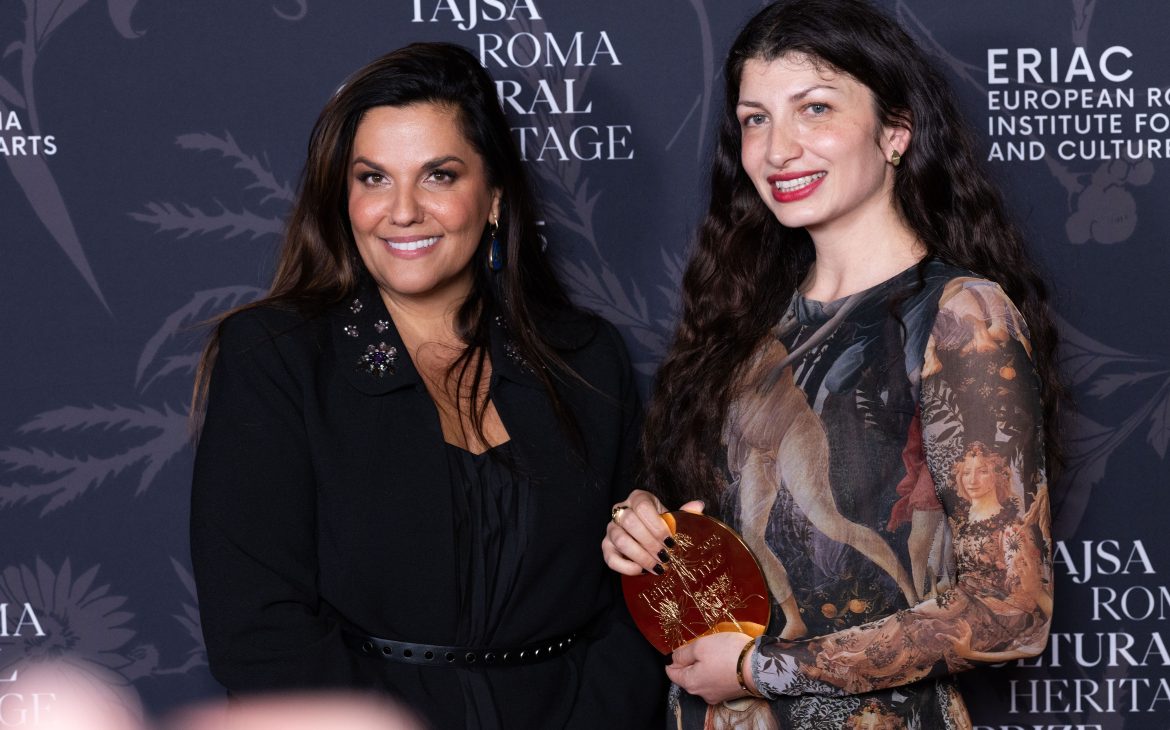
T.J.: Roma cultural heritage is not an archive. It is a living grammar. It encompasses the centuries-long resilience of a people who have navigated exclusion while continuing to create beauty, knowledge, and cultural forms that have shaped Europe itself. Today, Roma identity is undergoing a transformation. A new generation of Roma artists figures like Selma Selman, whose practice merges performance, materiality, and socio-political critique is articulating Roma subjectivity with unprecedented clarity. Their work refuses victimhood and constructs new ontologies of freedom, self-representation, and futurity. Roma culture is shedding external projections and speaking with its own theoretical force. This shift marks one of the most important cultural developments in Europe today.
A.I.: How can an institution like ERIAC contribute not only to promoting Roma art, but also to changing perceptions, attitudes, and intercultural dialogue?
T.J.: ERIAC operates at the intersection of art, policy, and identity politics. Its role is not simply to promote artists, but to build the cultural infrastructure through which Roma knowledge becomes visible, legible, and respected. By setting high standards, by insisting on excellence, by operating with institutional discipline, ERIAC challenges the low expectations that often accompany discussions about Roma inclusion. Our programmes create encounters, between Roma and non-Roma, between artists and policymakers, between local histories and European institutions. These encounters are the architecture of intercultural dialogue. Through them, perceptions begin to shift not through sentiment, but through cultural authority.
A.I.: If you were to send a message to politicians, artists, and the general public about the importance of this Gala and the recognition of Roma arts and culture, what would it be?
T.J.: I would say: The recognition of Roma culture is not a gesture of benevolence. It is an overdue correction of the European narrative. Roma creative talens are producing some of the most urgent, incisive, and conceptually rich work on this continent. Supporting them is not charity; it is an investment in Europe’s cultural future. Tajsa is a reminder that Europe cannot claim to be democratic, plural, or culturally advanced while excluding the creativity of its largest minority. The Gala is not a celebration of difference—it is an affirmation of belonging.
A.I.: How do you envision the development of ERIAC in the coming years?
T.J.: I see ERIAC growing into a fully-fledged European cultural institution with increased political weight, financial stability, and artistic authority. I envision stronger partnerships with governments, cultural institutions, universities, and communities. I see ERIAC establishing long-term residencies, commissioning new Roma scholarship, and shaping European cultural policy through expertise, not advocacy alone. Above all, I envision ERIAC continuing to guard the integrity of Roma cultural production, ensuring that our narratives are shaped by those who live them, and that Roma art occupies its rightful place in Europe’s cultural horizon.