Dana Pârvulescu initially studied psychology at the Faculty of Psychology in Iasi. In 2014 she initiated a series of collaborations with NGOs developing health or social protection programs, and in 2018 she started the Faculty of Art History and Theory (ITA), where she had been thinking of enrolling for more than three years.
The last year and a half of ITA were made online, an experience that, as she says, has helped her crystallize what she is doing now. During the pandemic, Dana initiated a Facebook group encouraging students at UNArte to create and promote their creations online. Subsequently, she co-founded Știrbei47, an alternative space that offers young artists a framework to exhibit and develop new projects.
She has organized two collective exhibitions at the National Museum of Contemporary Art (MNAC) within the framework of the Spațiului Dialog: “Declined Histories” (2021) and “Possible Interactions” (2021-2022), and at Știrbei47 she curated two solo shows: “Disguises” (2022) and “Matei la Ştirbei” (2022).
How did the “Artistic Laboratory” (Laborator Artistic) project start?
“Artistic Laboratory” started from a curiosity that I had during the quarantine period of 2020. I spent a lot of time at home and wondered what the students were doing in the workshops, as I understood that for the theoretical part it is not very complicated to migrate to the online environment, but I was convinced that for the colleagues who worked in the workshops, the establishment of the state of emergency could be a real challenge. Thus, I started a group on Facebook, where they could post their artworks. If I had done this project alone it would have definitely been much more complicated to gather so many people in such a short time – over 900 members in about a week – but I received support from the girls who were forming at that time the UNArte student association – Alexandra Drăgulinescu and Sandra Ungureanu – who reported on the establishment of this group and made the information spread on several channels. That’s how we started the group “Artistic Quarantine Laboratory?” the question mark at the end underlining my uncertainty not only about the name of the initiative but also about the impact it was going to have among the student community. In the weeks that followed, the students turned out to be very active on the page, each one uploading there the works they were doing, not only for the assignments received within the faculty; they were so active that for me the number of images they delivered had become overwhelming. In addition, many of the creations contained references to their vulnerabilities, becoming overwhelming through their emotional side as well.
You have seen the works of an impressive number of young people in a stage of formation and development. How has this experience influence you?
Many of the images that were uploaded on the page moved me and made me understand that the students needed a space where they could express themselves freely, where they could be vulnerable. During that time, I was taking a curating course at university with Călin Dan, the director of MNAC, which allowed me to propose to him a collaboration with the museum. We were still in the quarantine period, events were suspended, most cultural spaces and institutions communicated through social media platforms. Thus, my proposal was to create a UNArte student day every Friday, through which the museum would promote the works of young artists on its Facebook page. I also wanted to involve as many Art History colleagues as possible in this project, as I felt like they were missing in the workshops of the other colleagues. Those from Art History were to choose 3 students from the Artistic Laboratory community weekly, whom they would curate and whose works the museum would later post on its official Facebook page. About 8 students showed interest and we carried out 10 interventions of this kind with them in 10 successive weeks. It was a project received and approached with great enthusiasm by everyone.
Did you also manage to make an exhibition in a physical space with this project?
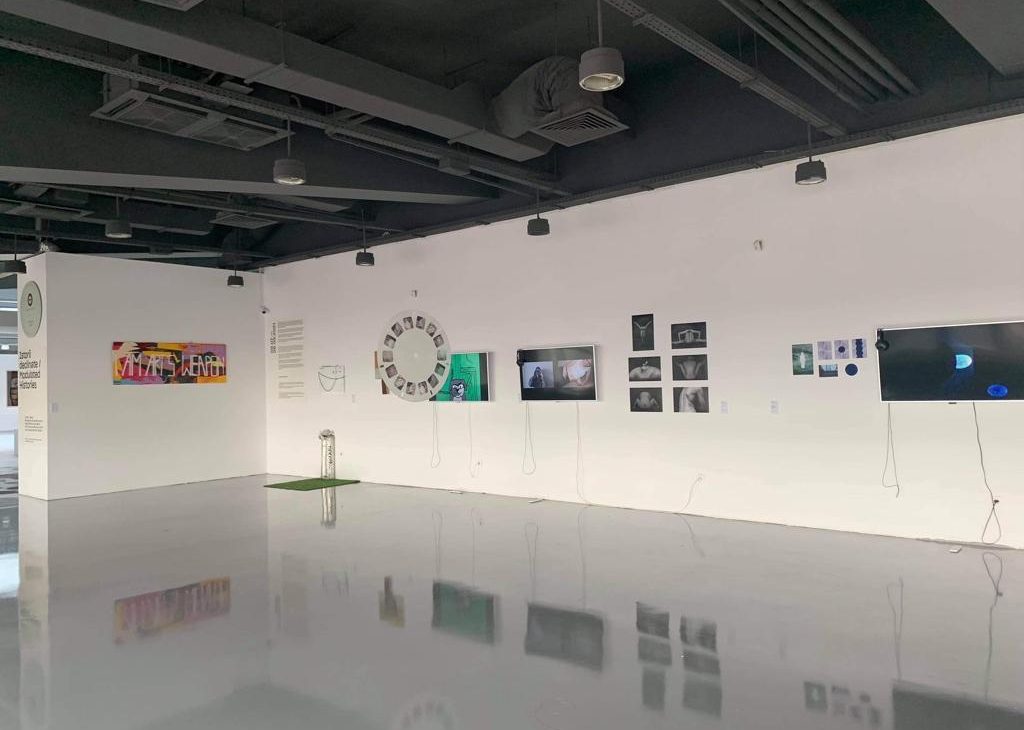
I decided to ask Călin Dan if he would be willing to do a physical exhibition, within the museum, when the restrictions were lifted. The Dialog Space on the 4th floor of the National Museum of Contemporary Art, otherwise familiar with interventions made by young artists, was proposed to host an exhibition with a predetermined theme: the students would relate to an artist or a theme through their works from the exhibition Seeing History (1947-2007).
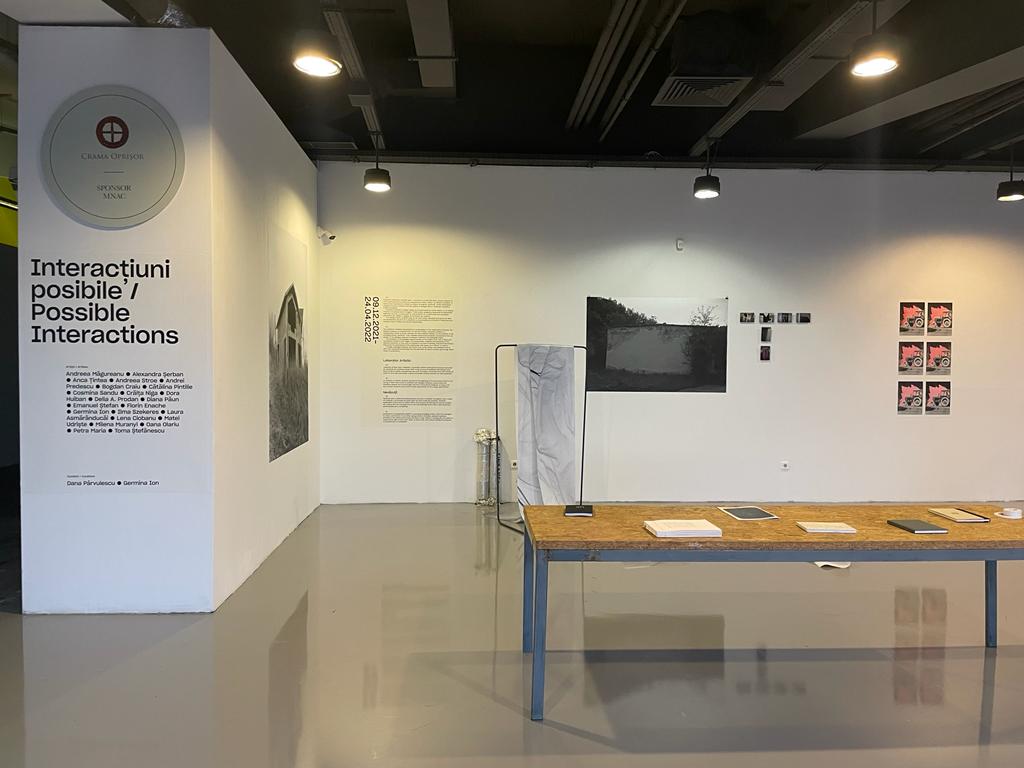
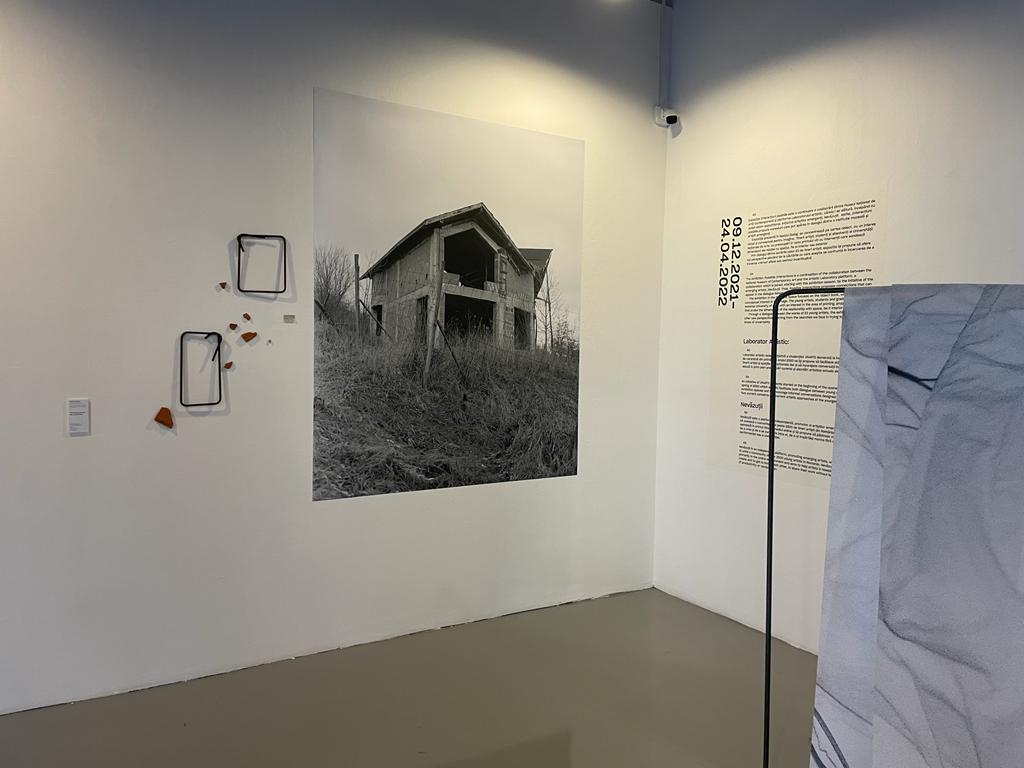
The exhibition took shape under the phrase “Declined Histories” and took place in two stages, starting from the winter of 2020, until the fall of 2021. After this experience, the collaboration with MNAC was maintained, continuing with a new project, “Possible Interactions”, which I made together with colleagues from Nevăzuții (The Unseen), an independent platform promoting emerging artists.
How would you describe the whole experience of collaborating with a museum?
For me, the whole collaboration, as well as the door that opened for us within the Romanian Contemporary Art Museum, were and are very important especially for the way that this project grew and the way the museum chose to support the artists at the beginning of road. At the moment I want this project to be an opportunity for young graduates in the field of theory and practice of visual arts to think and propose collective projects that will find their place in the Dialogue Space. I believe that, at the beginning of the journey, the spaces that offer the opportunity for an exercise, whether we are talking about a curatorial one or an exhibition one, indirectly become mentors in the development process of an artist. As for me, I’ve learned over the last few years that I’m a good mediator rather than a curator, and what I really want is to be able to bring people together.
What can you tell me about Știrbei47?
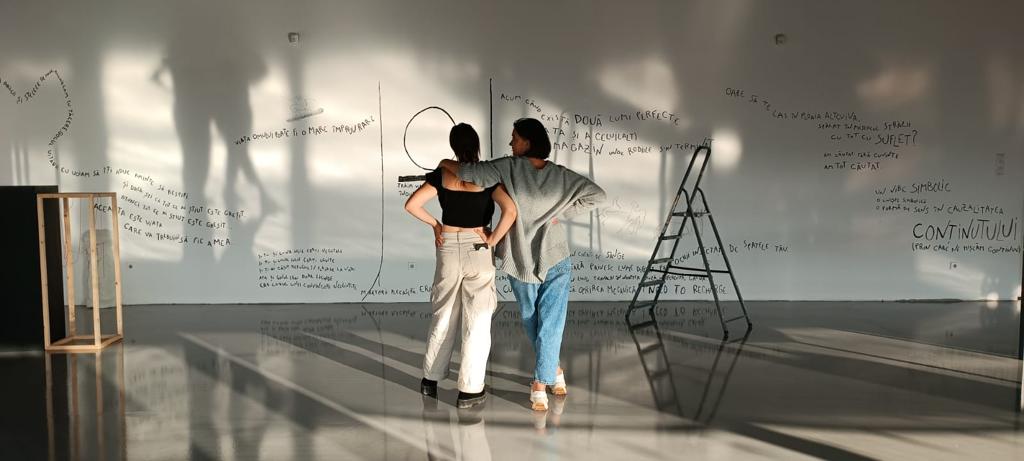
I founded this space precisely because I needed a place where I could meet students and where I could promote young artists. I share it together with two artists, Diana Elena Păun and Maria Mandea and with my colleague from the Art History and Theory Faculty, Iselin Huluba.
Over time, the space has become a very fluid one, where we host creative workshops, talks, film screenings, as well as exhibitions with students, many of which represent materializations of their proposals in space.
Știrbei47 is a framework, but also a community that grew organically, starting from the five weeks of “board games”, organized by Maria Mandea and then developing through the exhibition interventions coming from the students, which were an opportunity for them to practice („Gaze the Female”, ,În vizită”, „Matei la Știrbei”, „Fragilități episodice”, [Fear- as a concept], „Arta? Acasă!”, „Deghizări”).
In the end, the fact that I know that through Știrbei47 a community has taken shape is for me the most valuable thing. When I see people come to the space, simply to work or maybe just out of curiosity and pleasure, I feel energized and excited.
You have recently organized an artistic residence. Could you give me some details about what you are planning to do?
I proposed to organize the Art and Anthropology Residence in Luncavița, in my grandparents’ house, the house where I grew up and to which I am very attached. The idea of the residence is still “under construction”, there are still many things to connect and set up. To begin with, I took a short escape there with four very close artists – Alexandra Boaru, Crăița Niga, Lena Ciobanu and Petra Maria. We stayed for a few days, explored the village, the mountains and the banks of the Danube, talked to the people and “settled down a bit.” I propose to repeat the experience in the spring, together with other artists. The project is intended to be an interdisciplinary one, but I hope we can talk about it as it grows.
What are the plans for 2023?
For 2023, my attention will turn in three distinct directions – on the one hand I want to animate Spațiul Dialogului (MNAC) with more frequent interventions by emerging artists and to be able to coordinate things much better and more productively in this direction.
Regarding the shape of exhibitions organized at Știrbei 47, it is clear to me at this moment that I need a different type of space to be able to stage not only what I have learned in recent years, but also the ideas in which I believe very much and which are closely related to the idea of community and exercise, concepts around which I had most easily weaved trust, wasn’t it?
Last but not least, I will turn my attention to the growth of the Art and Anthropology Residency, it is certainly a soul project in which I want to involve as many people as possible and together with whom to build authentic experiences in a space that I hope will become one familiar to all.
All these grand plans will, of course, also need funding to come to life, so I will obviously have to make room for the steps to obtain funds as well.
Cover photo: Horațiu Șovăială