Alexandra Constantinescu is an artist who has developed her practice at the intersection of sculpture, ceramics, and new technologies, creating a visual language in which materiality and conceptual reflection coexist in a constant dialogue. Trained within the Cluj artistic environment and rooted early on in the practice of sculpture, the artist has expanded her research toward digital media, exploring the relationship between object, memory, language, and perception. In this interview, Alexandra Constantinescu speaks about her artistic formation, the experience of returning to academia after nearly a decade, her creative process, and the themes that structure her current concerns.
Angela Izvercian: When did you feel that your calling was to become an artist?
Alexandra Constantinescu: My artistic path has always been connected to sculpture, with its roots in the family environment. I began modeling alongside my father before acquiring verbal language and writing, and by the time I started primary school, I had already spent a great deal of time leafing through numerous art albums. During the same period, the desire to become an artist also took shape, guiding all of my subsequent decisions. I completed all levels of pre-university art education, and at the university level I pursued both a bachelor’s and a master’s degree, consistently choosing sculpture, even when other specialization options were available. However, the development of my working methods does not derive exclusively from formal education; it also took place through independent study, as well as within alternative environments.
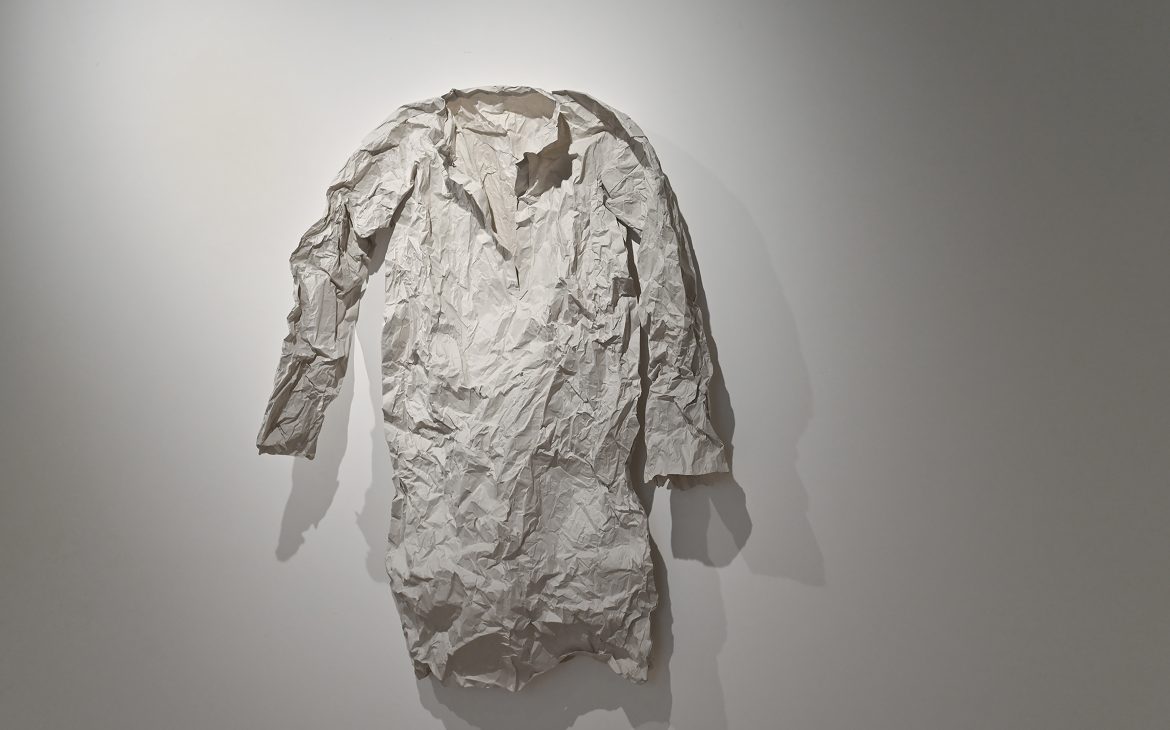
A.I.: You studied sculpture at the University of Art and Design in Cluj-Napoca. I noticed that shortly after completing your undergraduate studies in 2004, there was a fairly long period during which you did not exhibit. After almost a decade, you returned to the art field and continued your studies with a master’s degree at the same university. How different were these two experiences, and how did academic training contribute to your artistic development and, especially, to the formation of your own visual language?
A.C.: The years following the completion of my undergraduate degree did not represent a cessation of activity, but rather a necessary stage for assimilating and refining the academic knowledge I had acquired, as well as for expanding my means of expression beyond traditional sculptural techniques. Although my interest remained deeply rooted in the field of modeling, I sought an interdisciplinary approach, directing my attention toward digital media and ceramics.
I had begun learning 3D modeling and animation techniques at an accelerated pace while still a student, and the level of knowledge I acquired enabled me to present, at my 2004 graduation examination, an installation that was atypical for the sculpture department. The work integrated a spatial structure and a fragment of a 3D animation created in collaboration with my colleague, Radu Ștefan Constantinescu, with whom I later worked and complemented each other in many other projects.
Two to three years after obtaining my degree, I needed a setting with more specialized facilities in order to continue my experiments. This led to the creation of my first studio, a space that still functions today both as a personal creative laboratory and as a center for the transmission of knowledge. Among other activities, I teach courses and conduct workshops there for those who wish to acquire and deepen rigorous technical and artistic knowledge in the fields of sculpture and ceramics.
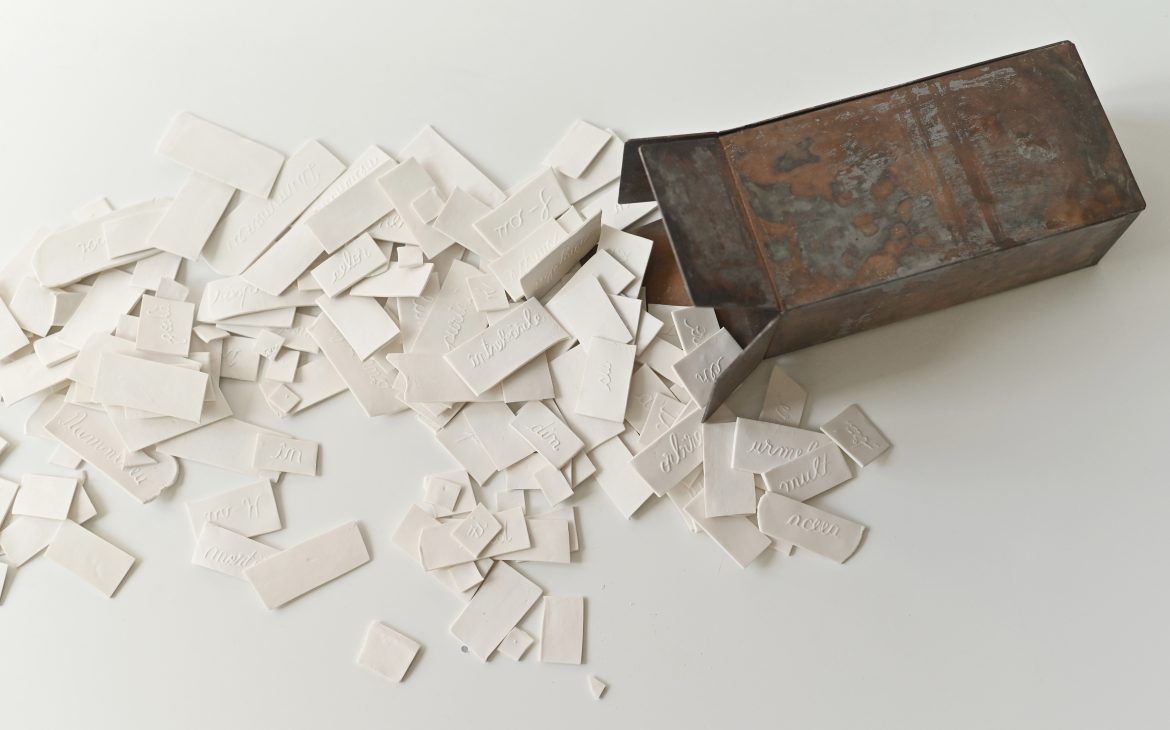
Returning to academia after almost a decade led to the transformation of my studio practice into a consciously assumed research endeavor. At the same time, it revealed a major institutional and pedagogical reconfiguration: the adoption of the Bologna system in art education had changed not only the duration of studies but also the curriculum. The new program integrated theoretical disciplines and profoundly altered even studio practice itself: it required not only the production of the artwork, but also its critical justification, the articulation and defense of a clear concept for every generated form. On a technical level, the workshops had been enriched with new production equipment, the university had its own gallery and organized an exhibition competition for students, while the study mobility system enabled intensive cultural exchange. All of these changes were supported predominantly by a faculty seeking genuine synchronization with the dynamics of the international art environment. Within this new and vibrant context, I benefited from one artistic residency and two study mobilities through the Erasmus program.
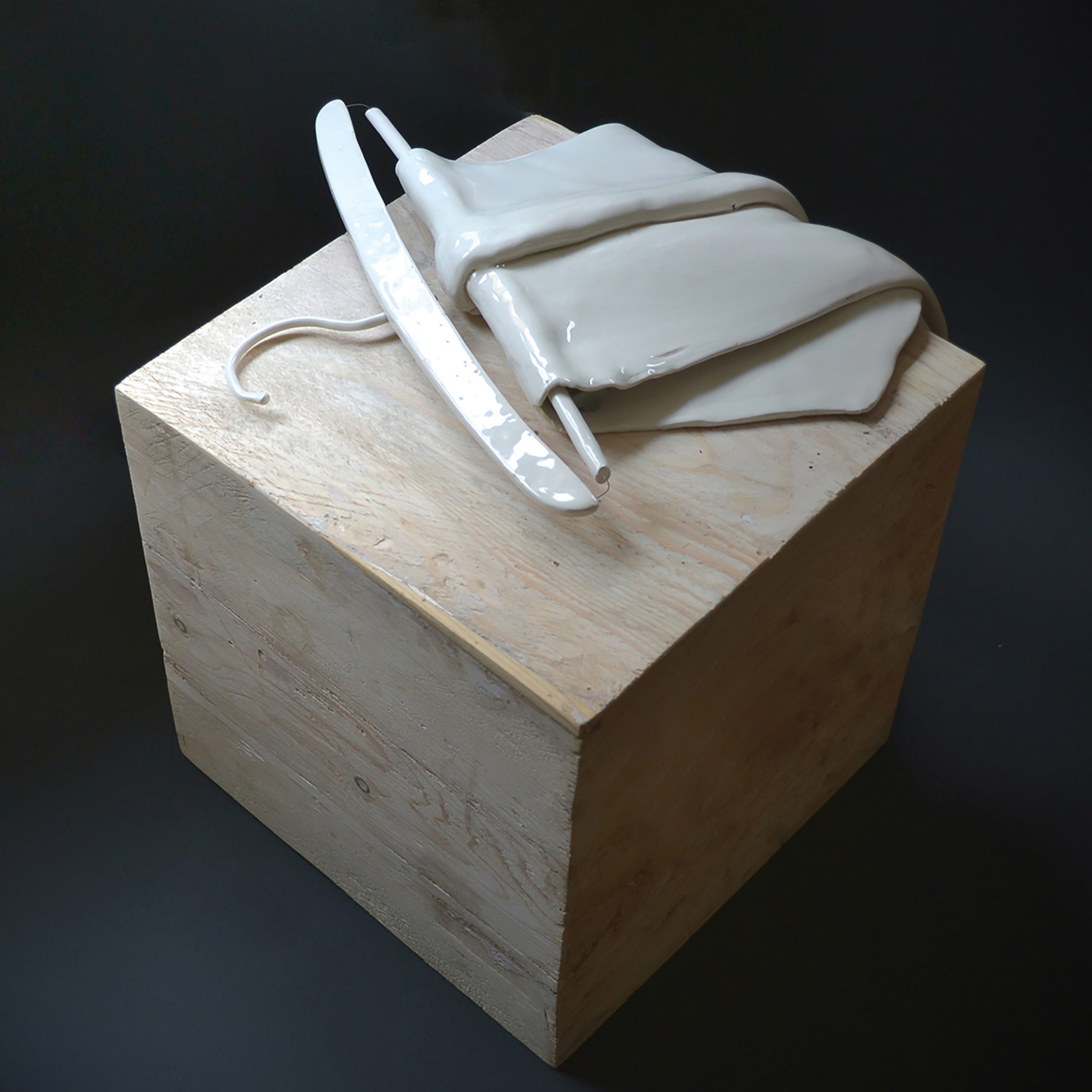
The moment when my new artistic language became visible was the Expo Maraton competition, in which I participated with the project Quiet Cubes. The sculptural installation I exhibited brought together the results of my previous research: ceramic pieces and concrete structures in direct dialogue with a 3D animation. Receiving four awards demonstrated the viability of this interdisciplinary approach and confirmed that the years devoted to study—both independent and academic—represented the necessary time for my technical and conceptual experiments to achieve a coherent expressiveness.
A.I.: How do you usually begin a new artwork or series of works?
A.C.: Many of my works crystallize around ideas that emerge while I am engaged in actions requiring minimal cognitive effort—opening a door, placing an object on a table, signaling an exit from a roundabout. I perceive these activities, situated at a considerable distance from the configuration and rhythm of a ritual, as an extension of the studio space. Ideas are the delayed result of the interaction between certain stimuli and areas of memory, a background of personal experiences, or the substratum of intuitive knowledge. I use autobiographical territory as a means of accessing a broader set of issues.
Drawing on a habit acquired through sculpture, I mentally expand the horizon of that idea, then limit it, remove fragments, adjust the volume of certain segments, establish associations with other concepts, and ultimately clarify aspects related to materiality and techniques. These are sufficient stages to construct an image with a certain degree of saturation, which subsequently allows me to continue the creative process naturally through repetitive sketches.
Regardless of the analytical precision of these actions, in the stage of translating the work into three dimensions and in direct, immediate contact with ceramics, metal, or concrete, there is always an unpredictable zone—a space in which the process demands spontaneity and some technical solutions must be reconsidered.
A.I.: What takes precedence in your artistic practice? What do you place emphasis on?
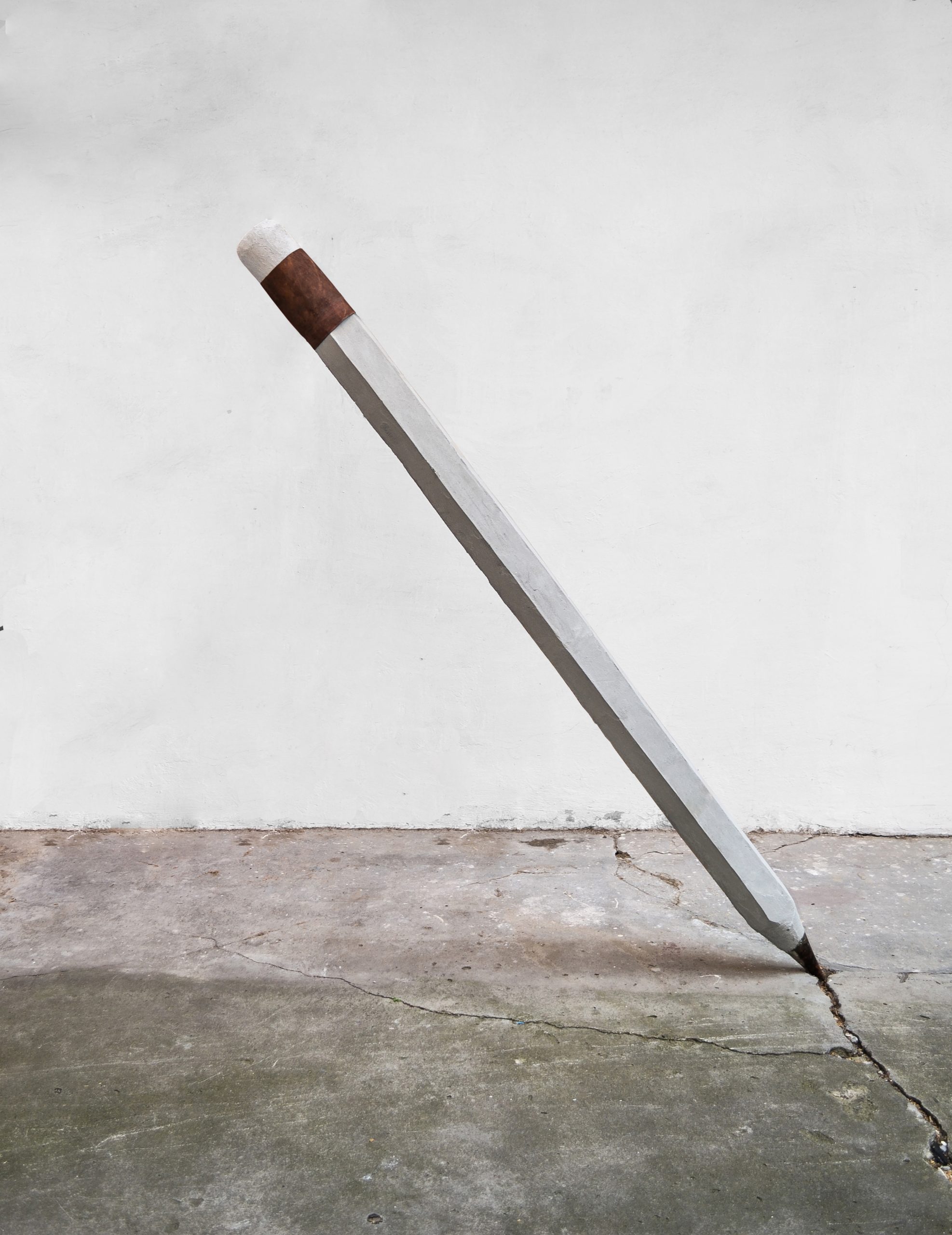
A.C.: I reject the use of isolated emphases or strict hierarchies. I do not privilege spontaneity over research, nor the reverse; they do not function independently. The element that takes precedence and encompasses all these facets is the entire working process. I avoid prefabricated cognitive solutions and refuse a didactic stance. The work is built through a dense process, the result of a personal investigation that maps the coordinates of a visual space, prompting the viewer to reassess their own mechanisms of perception and inquiry.
A.I.: What subjects are interesting and relevant to you today?
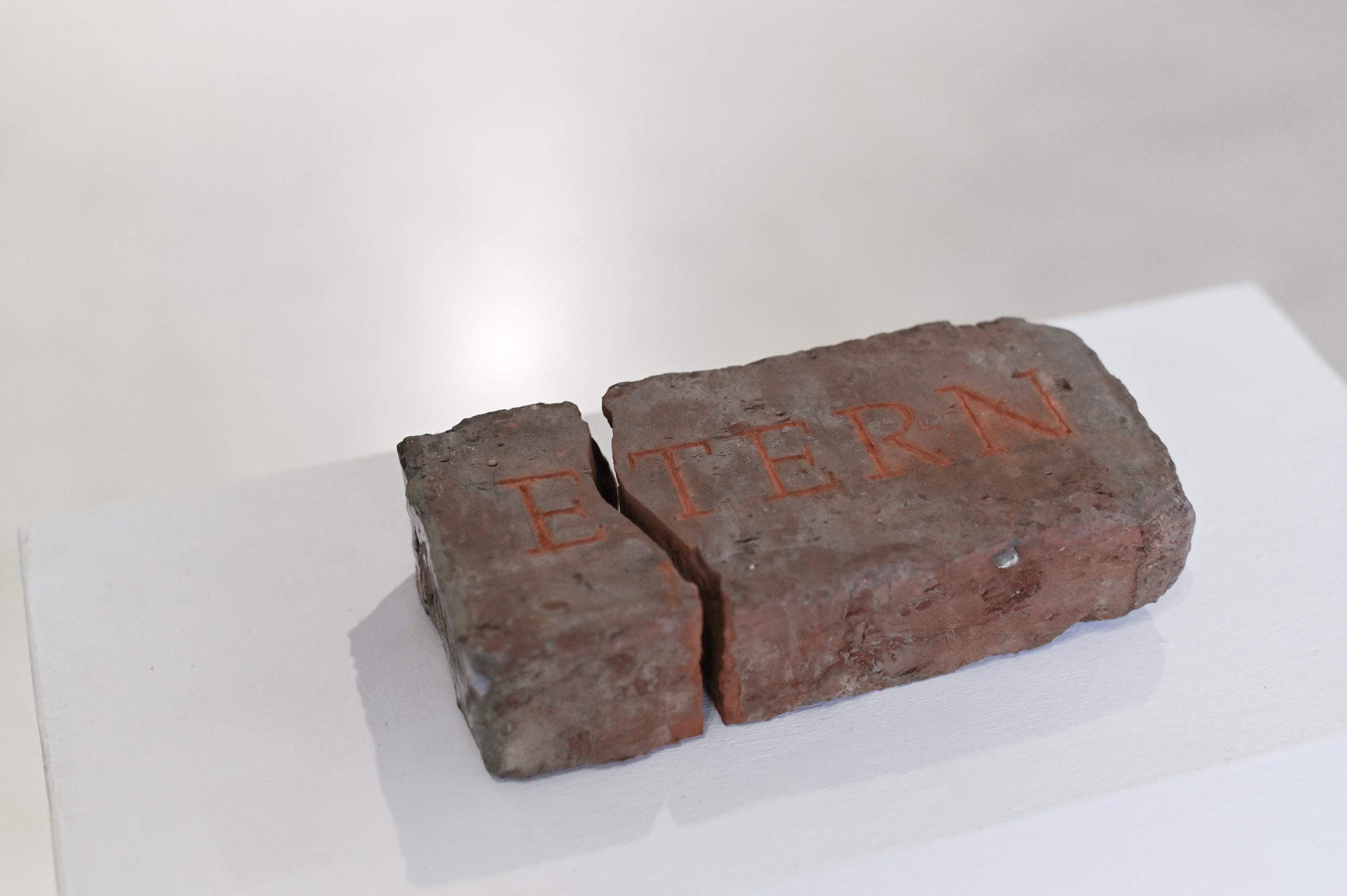
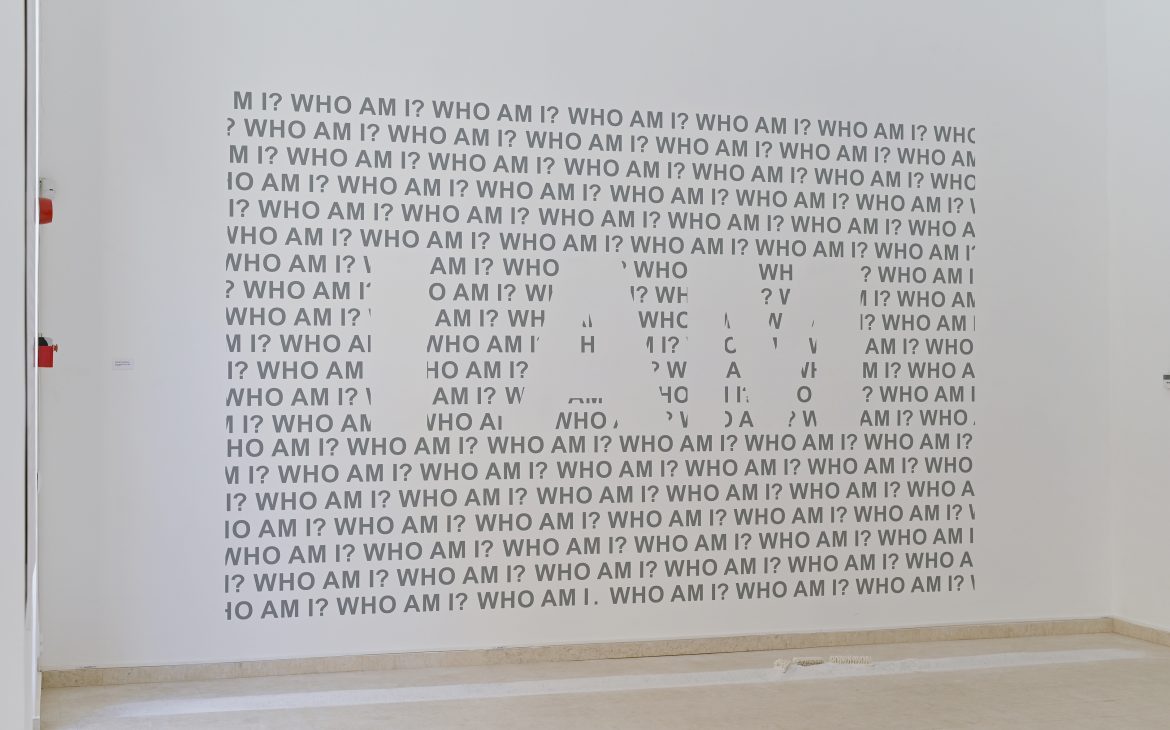
A.C.: I approach text beyond its strictly narrative or descriptive function. By analyzing linguistic units and the interstices between them, I investigate the realm of ontology—I am interested in the nature of things, modes of existence, and the mechanisms of perception. Through the use of a selective vocabulary, I extract language from everyday clichés, generating a context that allows new meanings to emerge. In order to better understand these existential aspects, I also study the connection developed with objects in the proximal environment and the memory mechanisms involved in the process of knowledge. Objects function as an archive capable of recording and bearing the weight of human presence.
A.I.: What is your greatest challenge as an artist?
A.C.: Many situations require a different approach, extended time for analysis, and complex solutions; however, so far I have not encountered my greatest challenge. When it does arise, I will mobilize the full range of tools at my disposal, generating new mechanisms of action and adaptability in order to overcome the resistance I experience.
A.I.: How do you see the future?
A.C.: There is a constant need to experiment, to test material and conceptual limits; without experimentation, studio practice would become linear. Over time, I have learned to temper these impulses, adjusting their amplitude. Within the very freedom I grant myself in artistic practice, there is a rigor, a shaping principle that allows the integration of the results obtained into the visual discourse.
The appropriate context is always anchored in the present, and my plans are focused on deepening the directions already on the worktable. In addition to the themes mentioned earlier, for several years I have been observing the morphology of the horizon line—those trajectories that outline the arrangement of landforms, clouds, and human settlements. In the coming period, I am prepared to translate this observational interest into a series of sculptural installations.