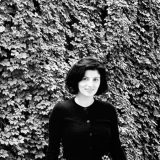
I spoke with artist Giuliano Nardin about his latest solo exhibition, organized in collaboration with H’Art Gallery, an artistic endeavor that includes works created over two decades of uninterrupted artistic activity. The exhibition, hosted at “Lahovary Castle”, can be visited by appointment until the end of May.
Angela Izvercian: Can you tell us about the context that generated the exhibition at the “Lahovary Castle”?
Giuliano Nardin: Pure coincidence, the space was going to be renovated after “Dan Popescu Exhibition”, and it didn’t happen anymore, and we took advantage of the opportunity.
A.I.: How does this exhibition complement your artistic approach?
G.N.: I don’t know if “complements” is the right word in this context. Exhibitions are more likely to make an artistic approach visible, and in this case, the generous space did its job perfectly.
Broadly speaking, since I graduated from college in 2003, I have had three fairly well-defined periods, 2003/2010 (a period less represented in the exhibition), 2010/2017 (the period in which I gave up color and which was the basis for everything that followed) and the period after 2017, in full swing and which constitutes the bulk of the exhibition. I have strived in the exhibition to outline the present moment as much as possible and to justify it stylistically.

A.I.: Can you briefly tell us what each period means? What are the particularities of each stage?
G.N.: The first chapter begins with the degree, with the fact that I was not allowed to exhibit my works at the final exhibition, with the fact that at that time there were two galleries in Bucharest and I was unable to get along with either of them, with certain cataclysms in my personal life. I had themes, then they disappeared, I exhibited for a few years in my studio, I worked mainly in oil. It was a period that was largely under the exclamation mark.
Since 2010, the film has changed completely, I was left without a studio for a while and at a certain point, I realized that I had such great shortcomings that I either stopped painting or started doing something else. So, I started everything from scratch, gradually gave up color, didn’t exhibit for 7 years, completely disappeared from the radar. It was a period that was largely questionable.
Since 2018, I have been collaborating with Dan Popescu, and on the foundation that was already dug, I have done what can be seen in broad outlines now in Dorobanti 39.
A.I.: The exhibition occupies the 1st and 2nd floors, plus the attic. Did you intend to occupy the entire space from the very beginning or was it a spontaneous decision?
G.N.: Yes, of course, on my part at least. It would have been pity and meaningless for me not to make the most of the space, especially since I had what to do with it.

A.I.: What challenges did you face during the paneling?
G.N.: The cold. I had a natural anxiety before the paneling, I knew how big the place was, and I didn’t have any specific idea about what works I would put up and in what way; obviously, the risk of something confusing coming out was quite high. Once I decided to make the large wall between the floors black and white, things connected themselves.
A.I.: How did the space leave its mark on the artistic discourse?
G.N.: I suppose the question refers to the way in which the space left its mark on the exhibition. In a very strong way, it is not a neutral element; it is full of accidents, and it cannot be ignored. I live with the feeling that I have used it to the fullest extent of my understanding.
A.I.: Looking back, how would you describe the whole experience?
G.N.: What was your experience organizing the exhibition? It’s a once-in-a-lifetime opportunity, at least I think so. It was tiring, to be honest; I approached it like I would any painting. It’s basically another work of mine that I spent a little over two weeks on, and I would say it was worthwhile.

A.I.: The characters that populate the Nardinian universe were described by Gili Mocanu as “Wandering humanoids […] in search of new horizons.” What meaning do these characters have for you?
G.N.: Gili didn’t say that, the words belong to me, but that’s irrelevant. I don’t really know much about meanings. The word scares me a little, but I don’t know. All I can tell you is that they are intimately connected to everything I am.
A.I.: I would dare to ask you how you would describe your way of being?
G.N.: Everything I paint is as personal as possible, there are no boundaries between my way of being and my works. Anyone who doesn’t manage to know me from what they see on the walls can’t know me anyway. I don’t have a bichon to walk, I don’t have a favorite football team, I don’t have a favorite food, everything that matters can be seen in the exhibition space.
A.I.: What is the message you want to convey through your art?
G.N.: I don’t have a message to convey, that’s not what I do. My art is my way of being.

A.I.: The exhibition can be visited by appointment or as part of guided tours led by Dan Popescu. What do you want the viewer to experience/feel/see when interacting with your art?
G.N.: I don’t have any such wishes; my job is done when the work is finished. And then it’s complicated with how people feel, if you bother with such things, you won’t get it done.
A.I.: Is there something you would like to experiment with, but the proper context hasn’t appeared yet?
G.N.: Of course, I’m not dead yet. I couldn’t nominate, but I consider myself an open person.
A.I.: How do you see your artistic path in the coming years?
G.N.: I don’t venture into the future that much. Most of the time tomorrow is well hidden in the fog.