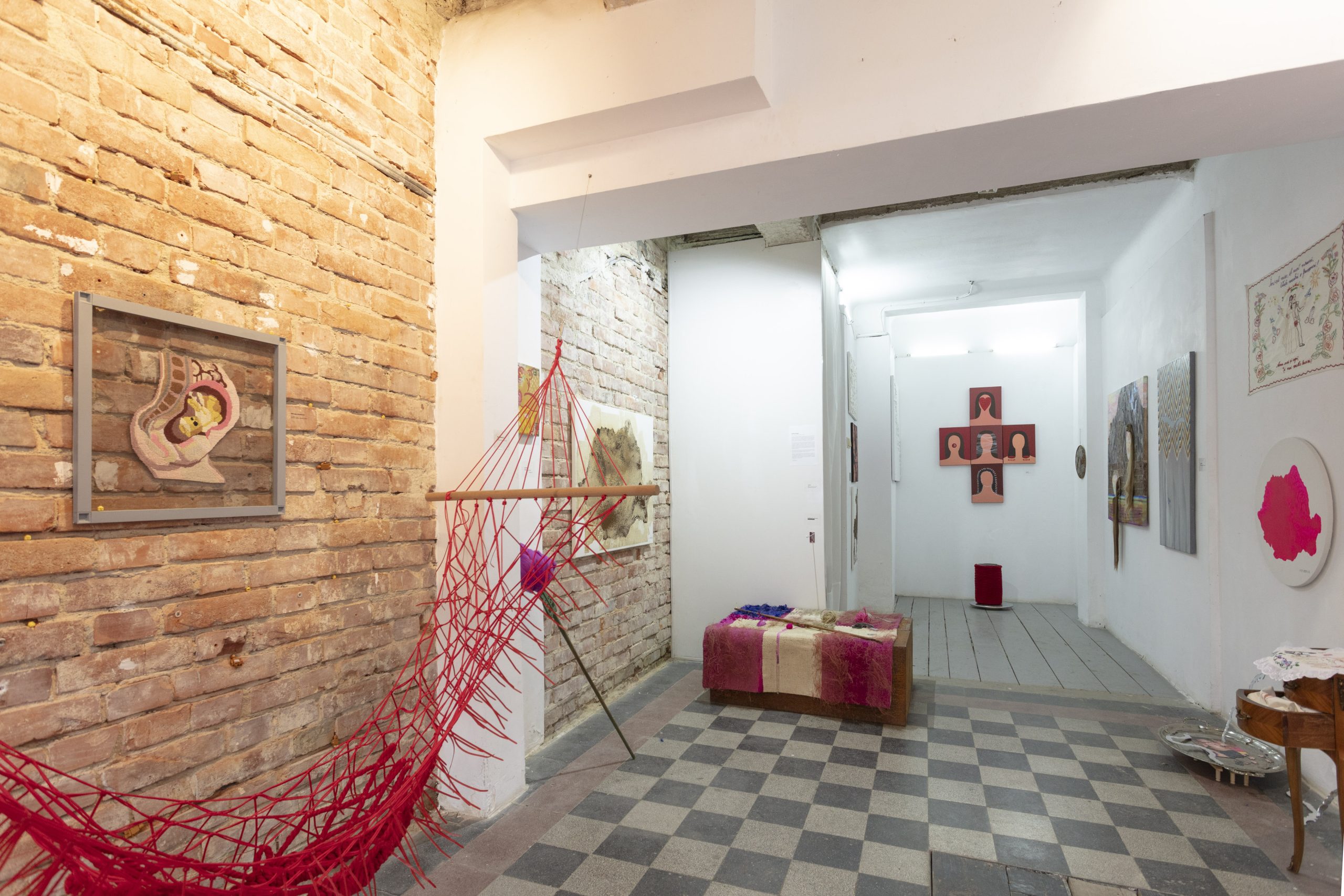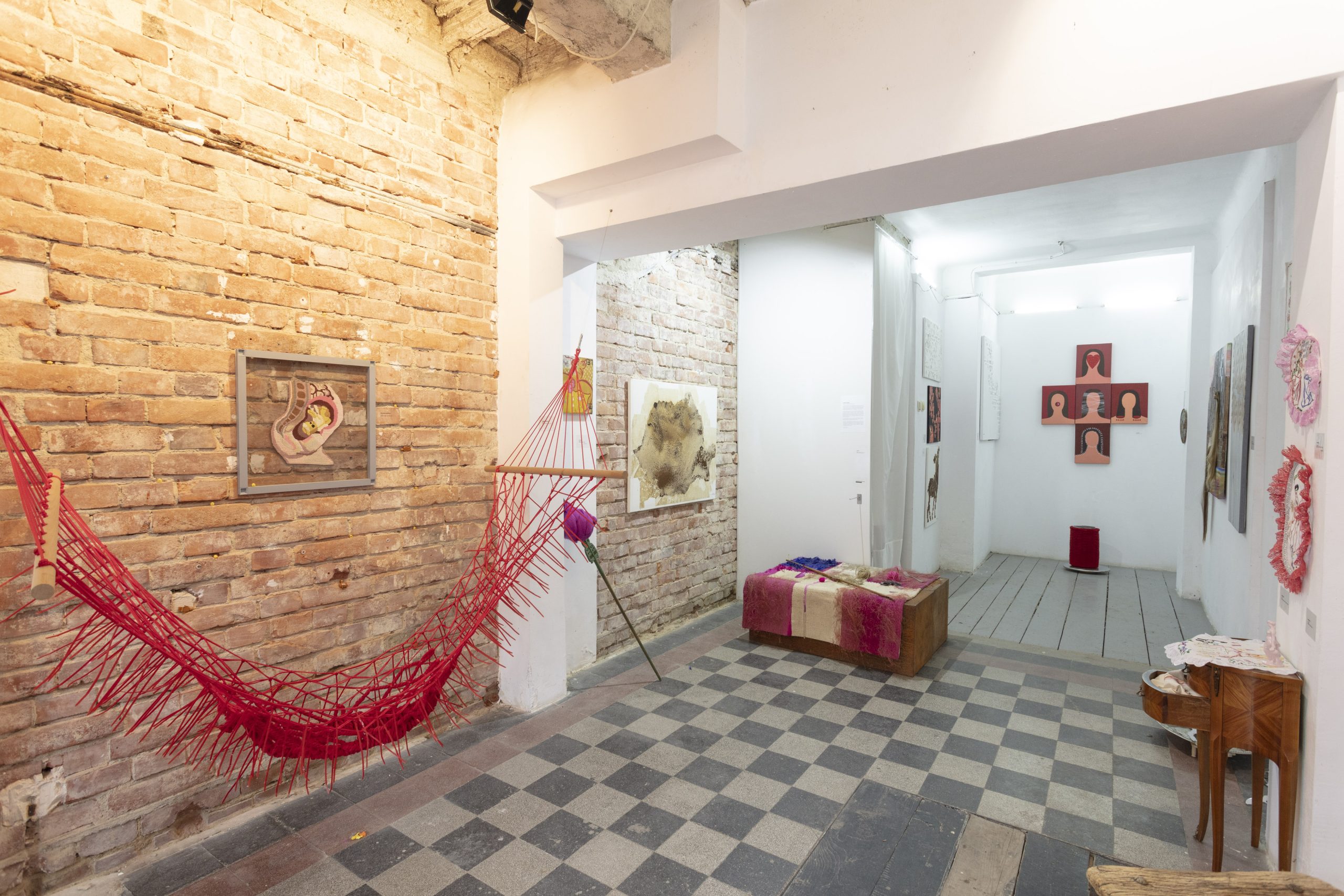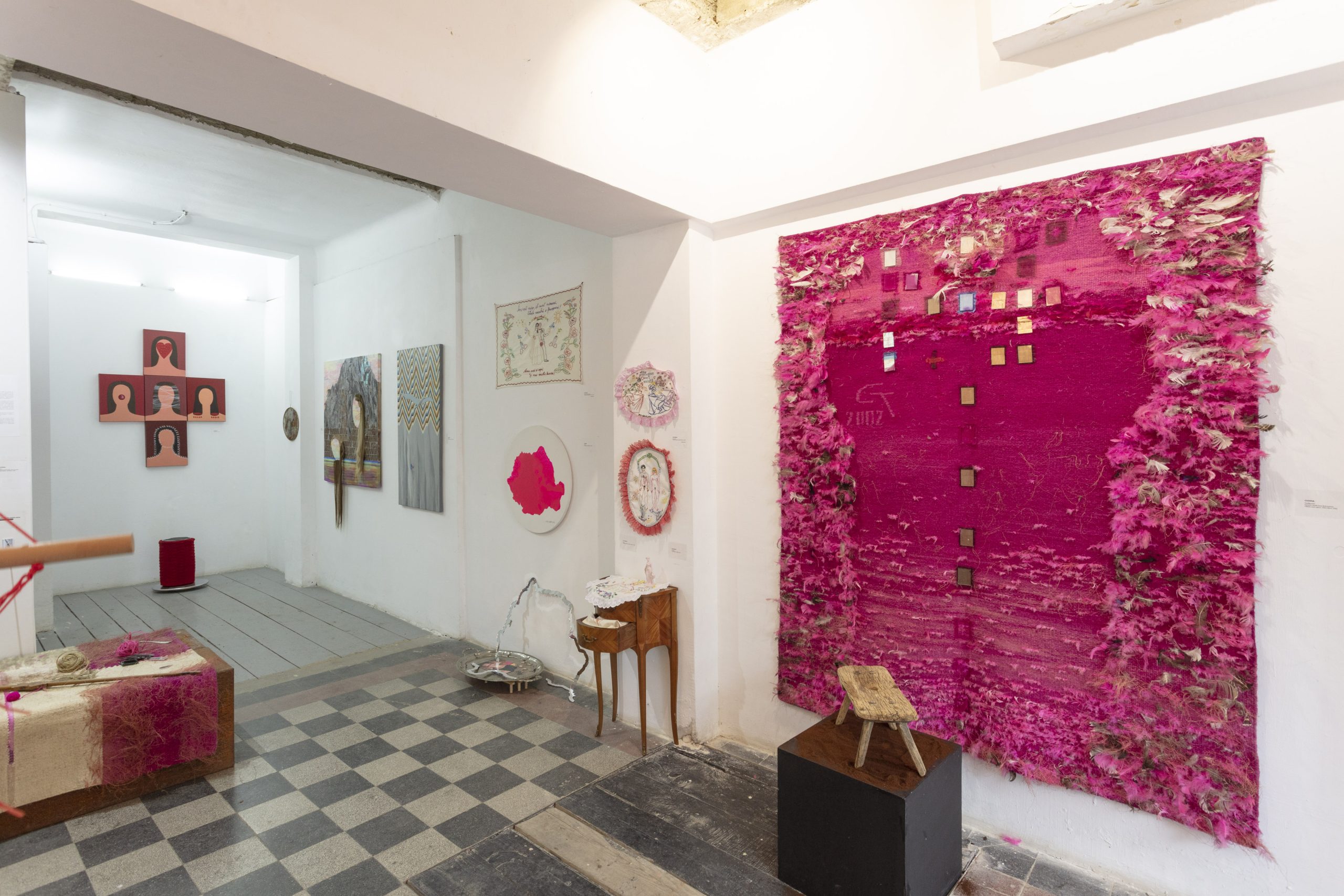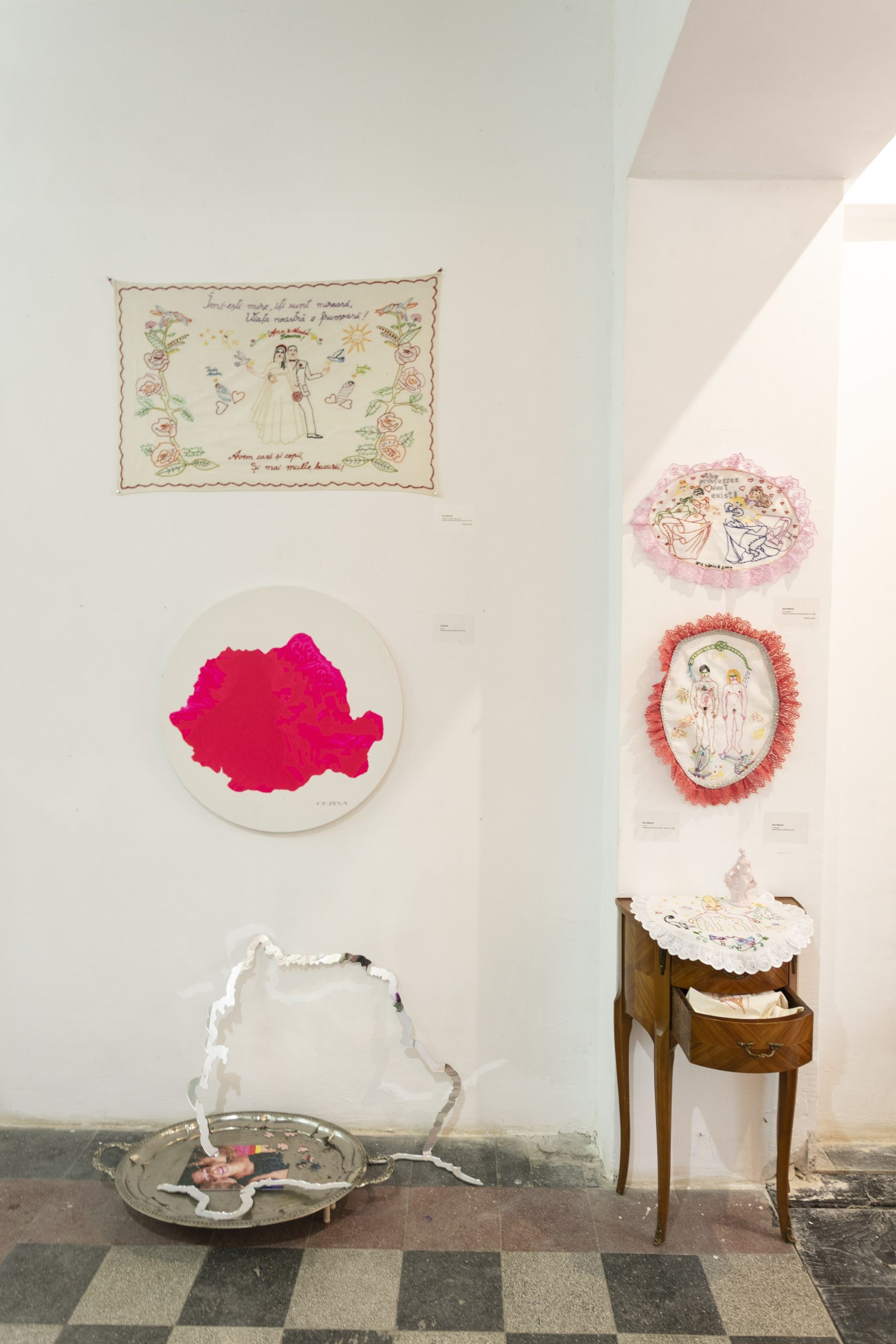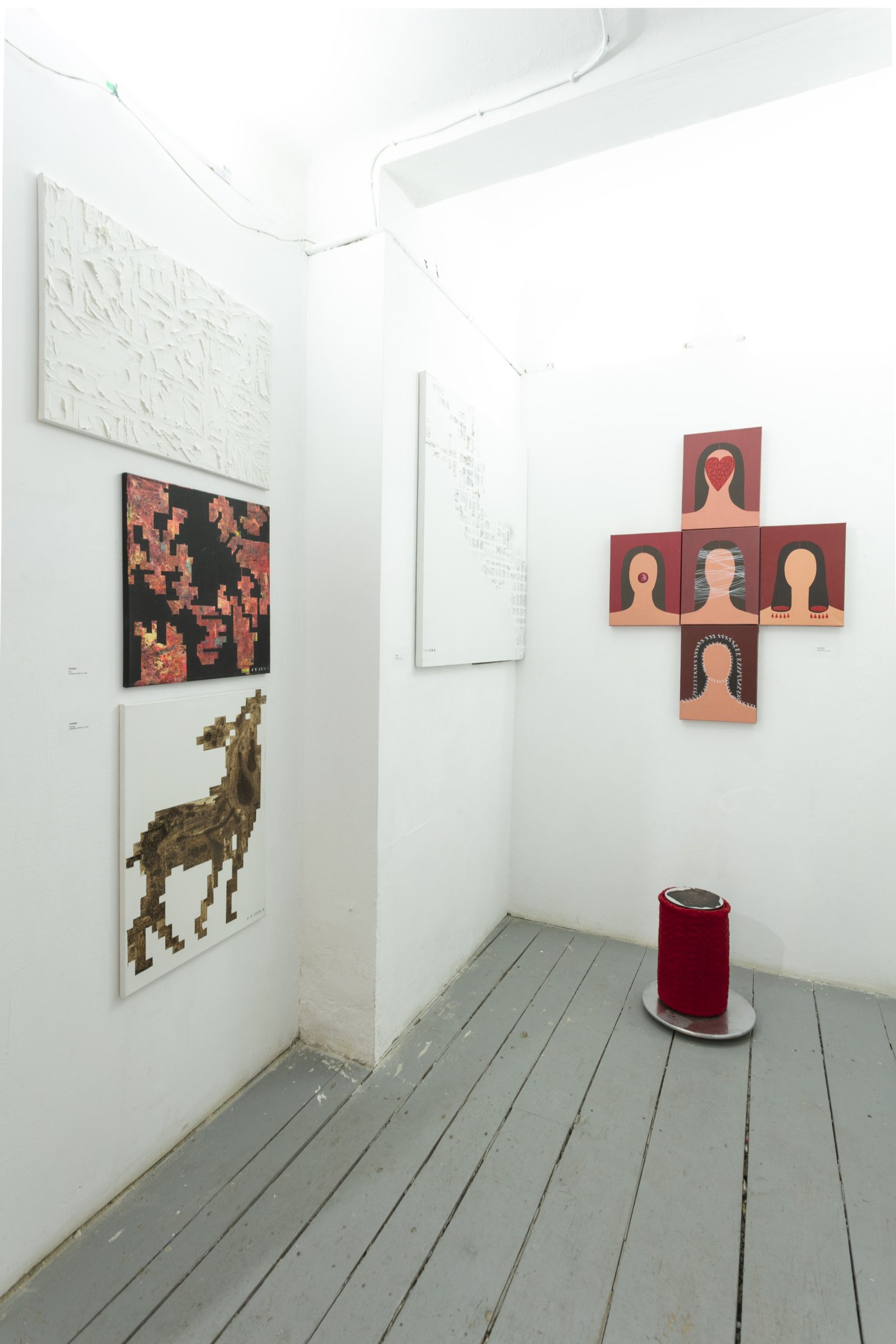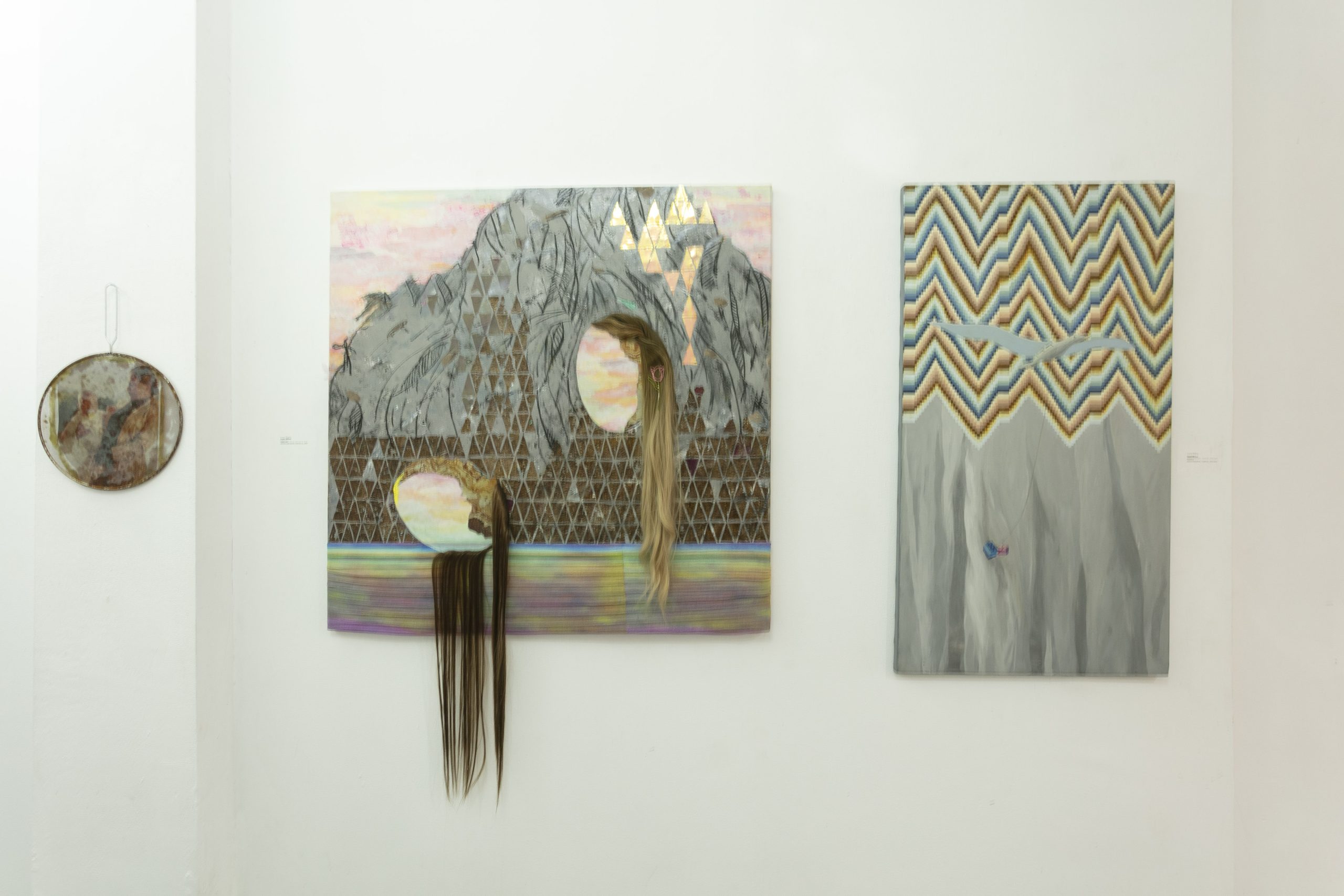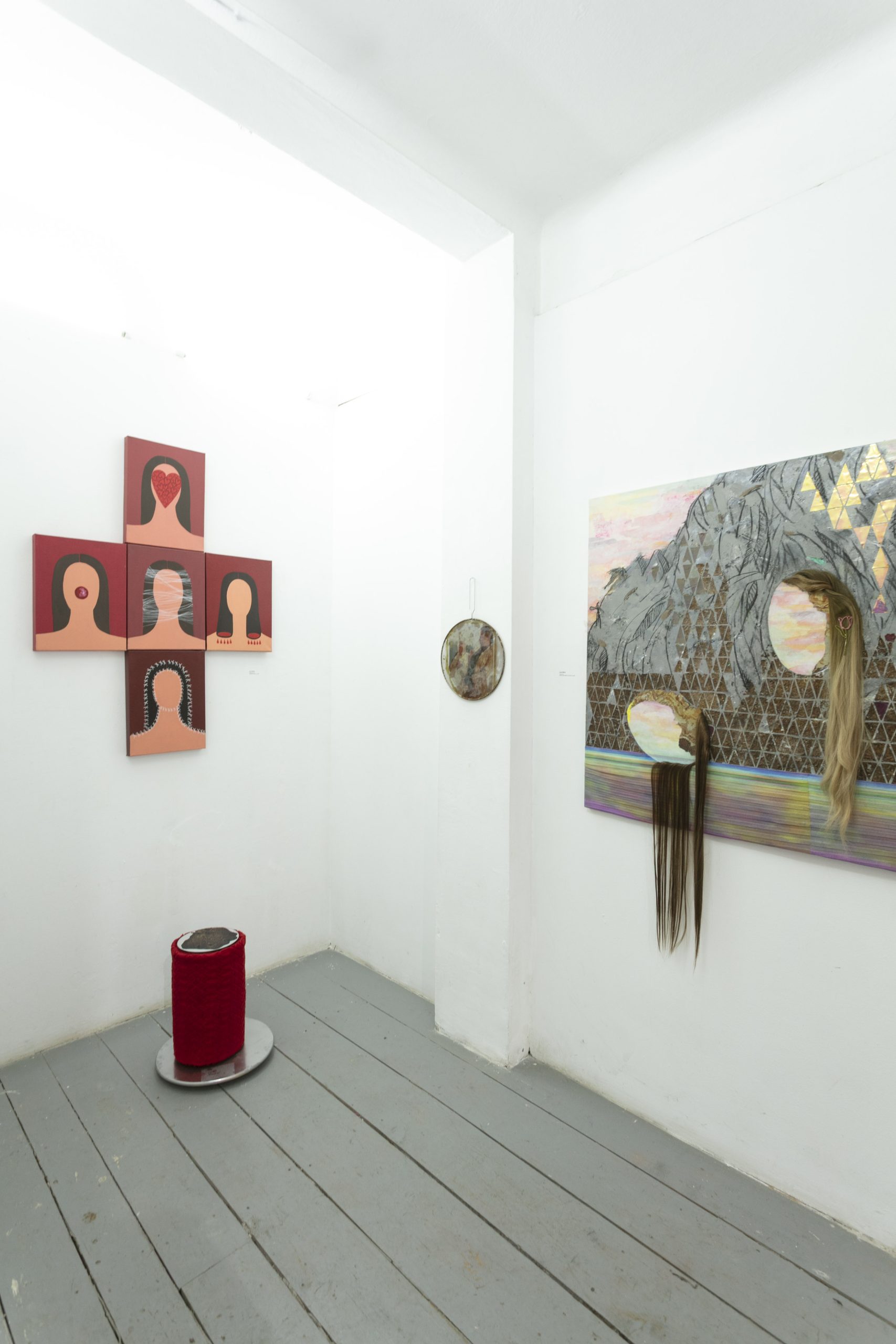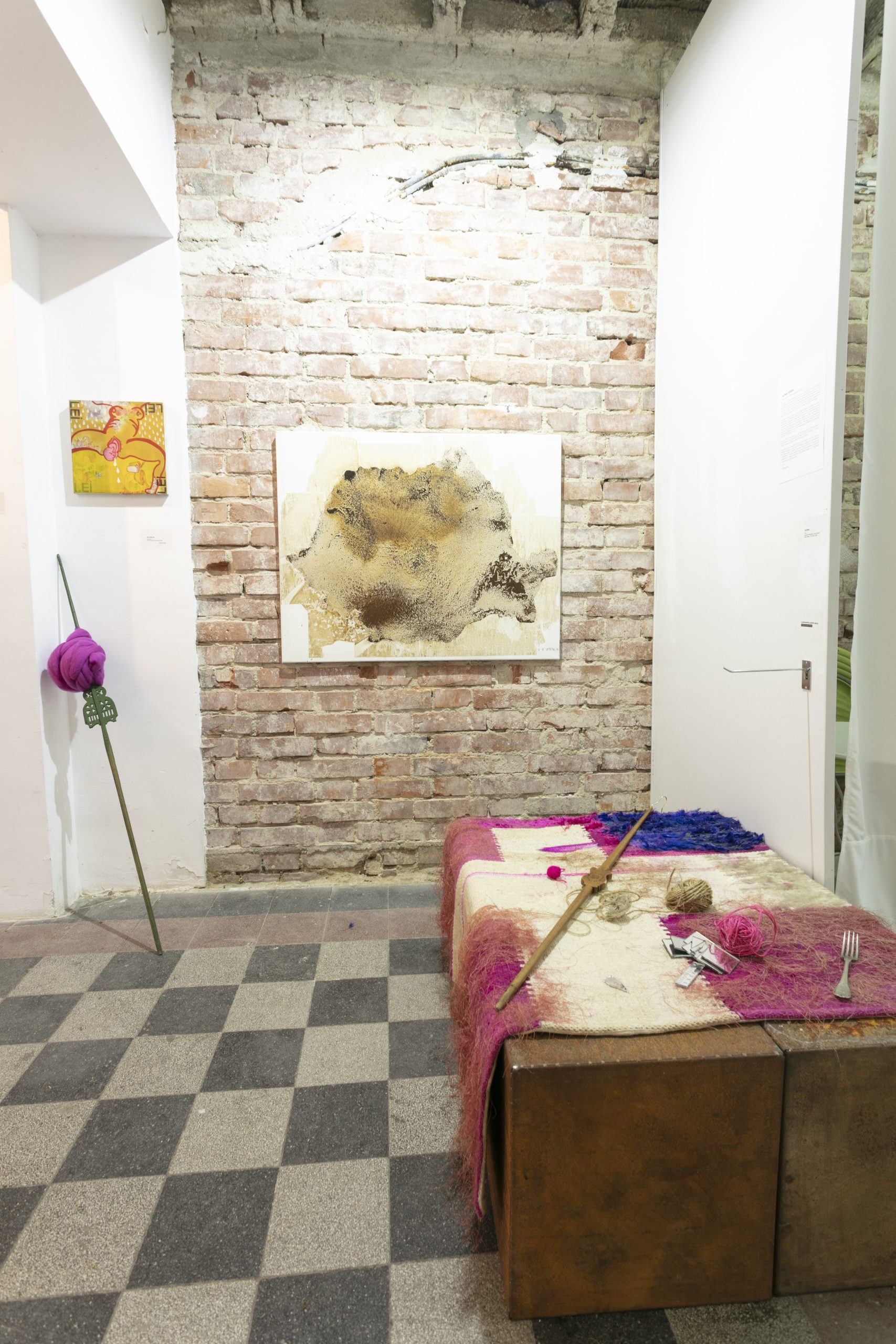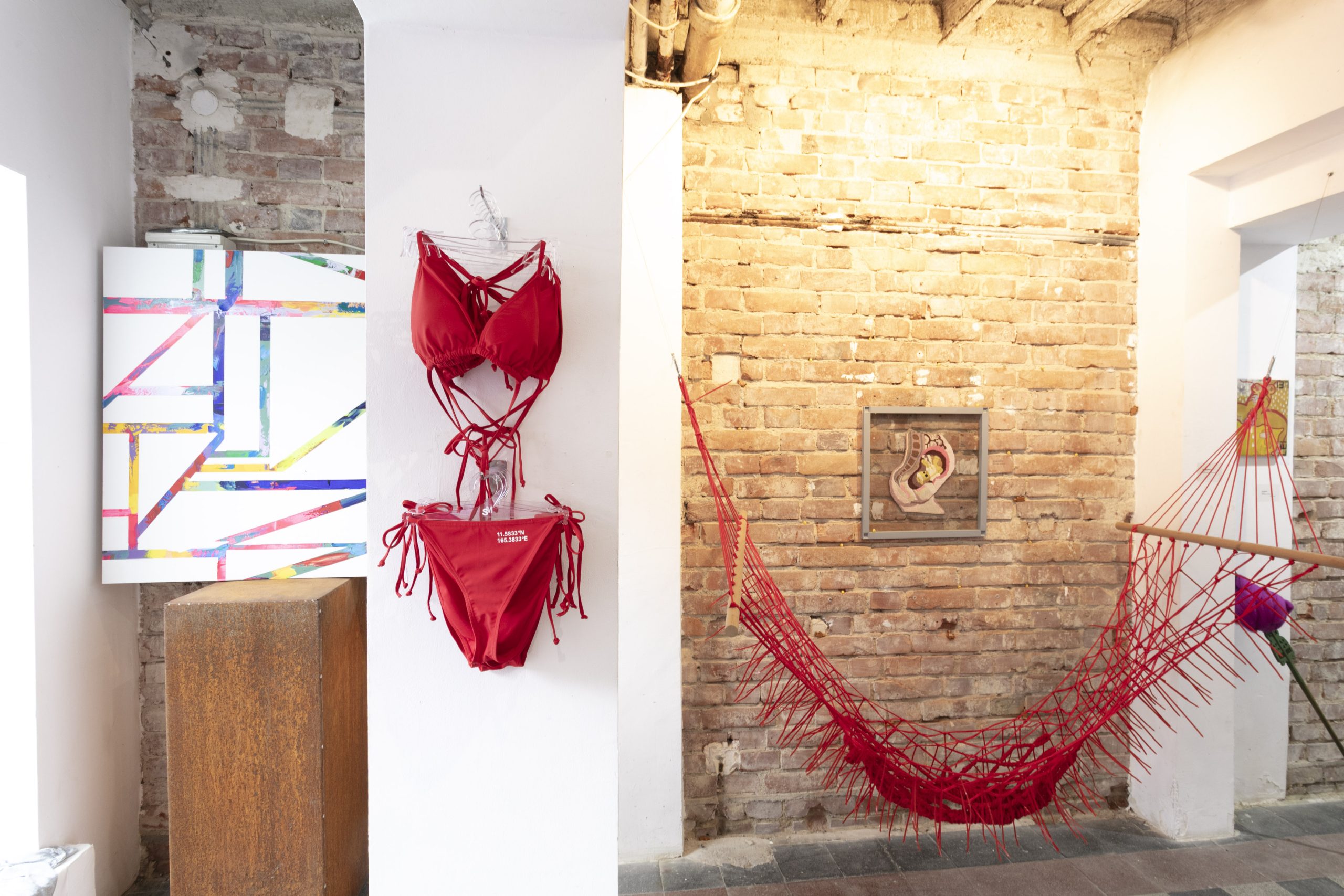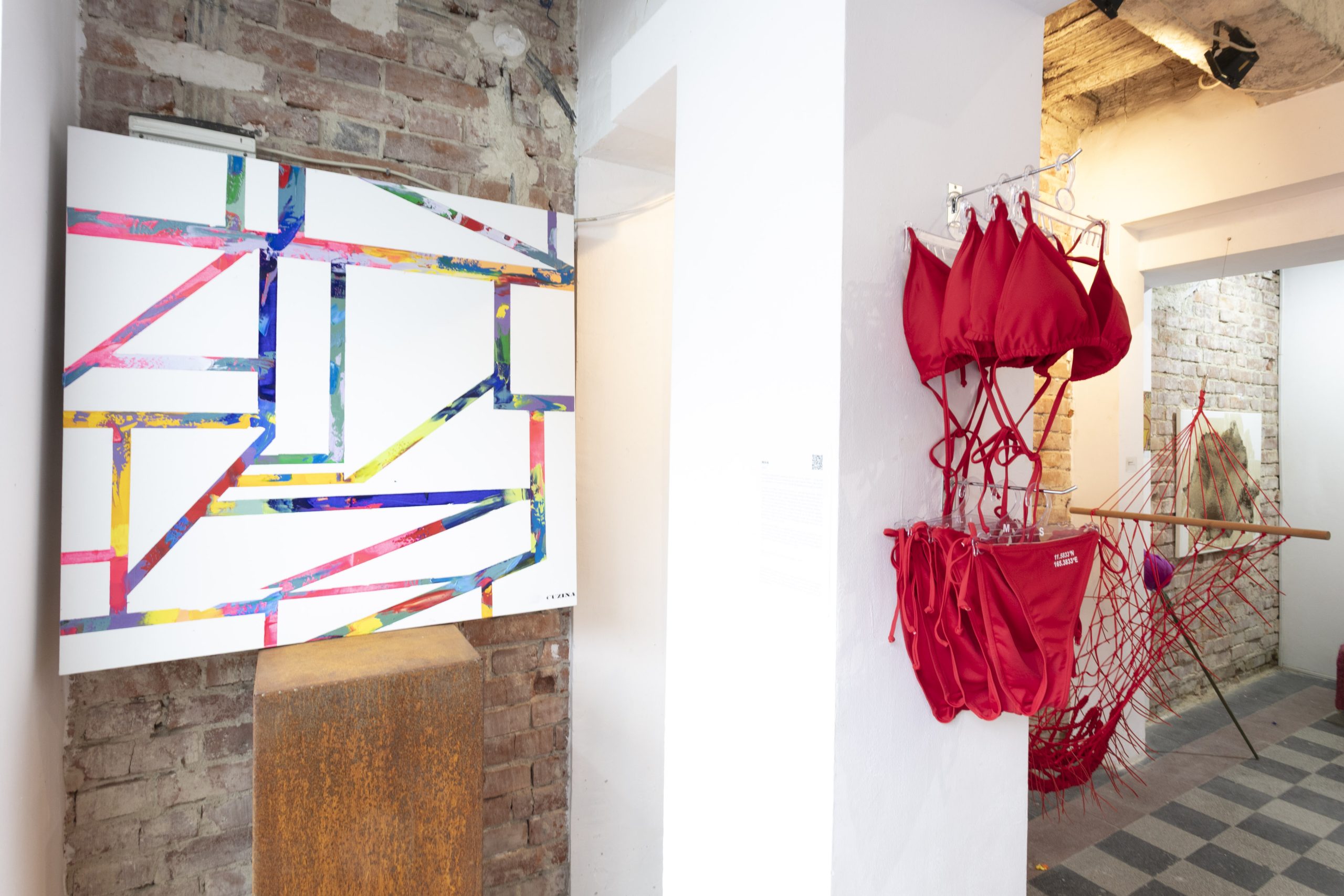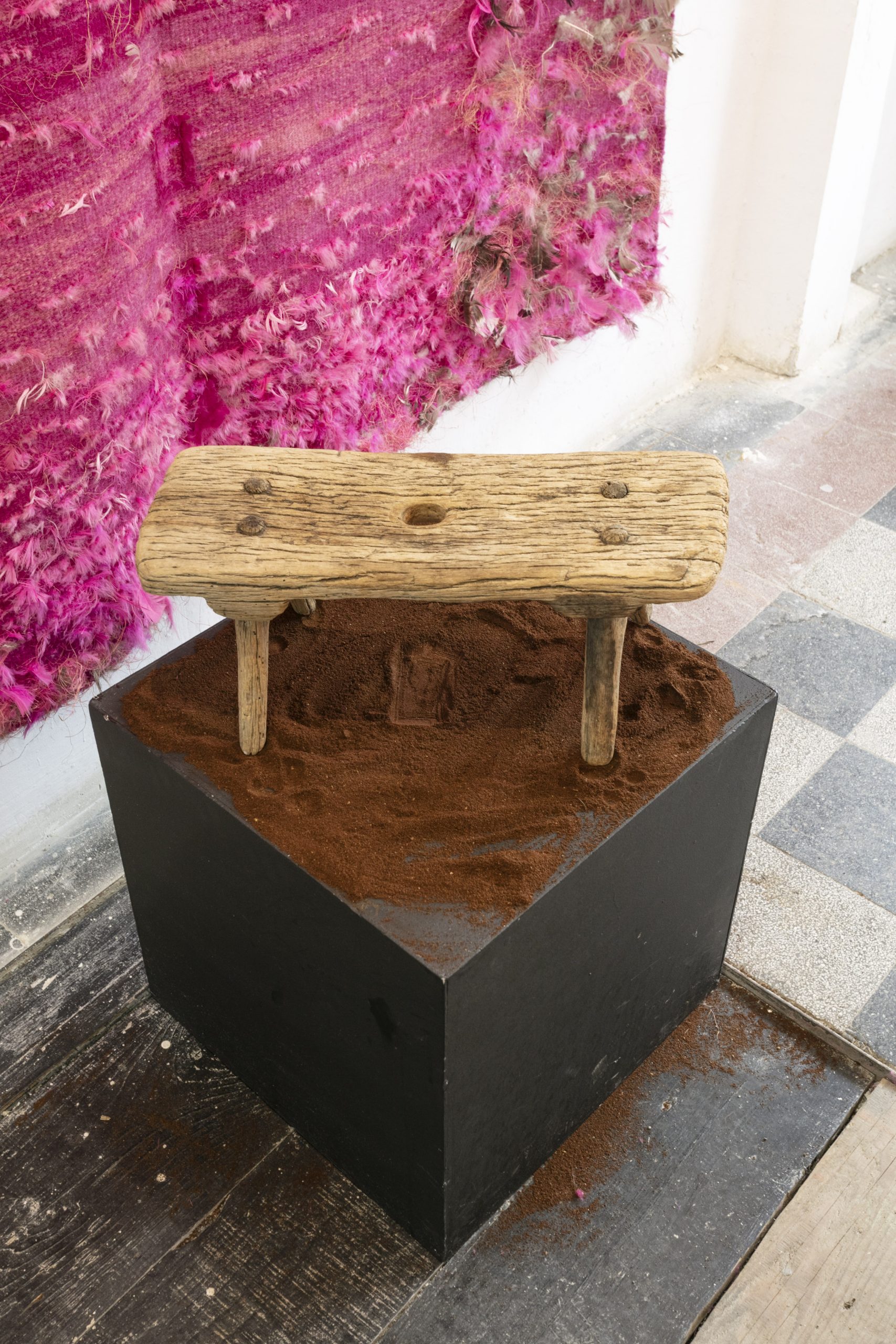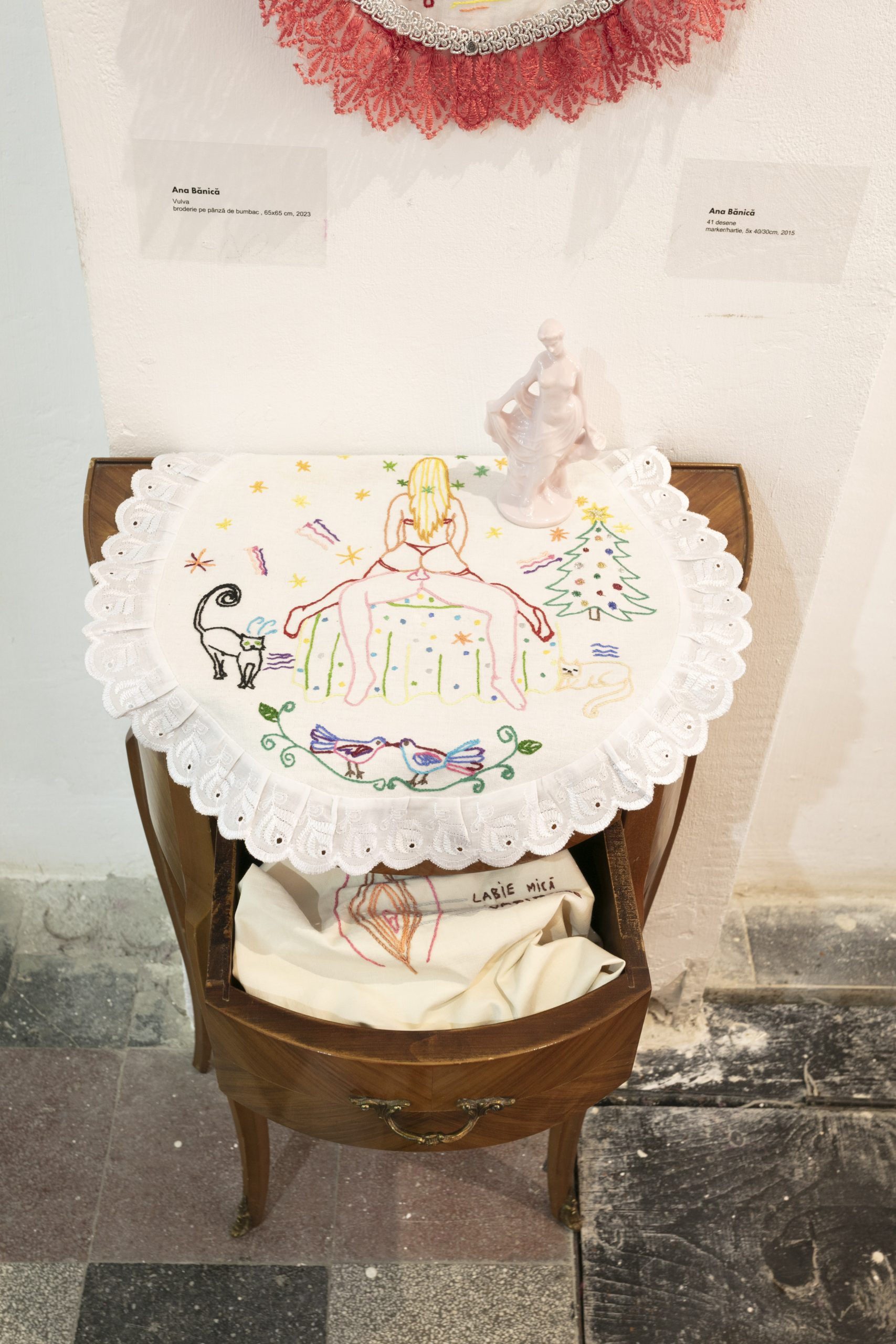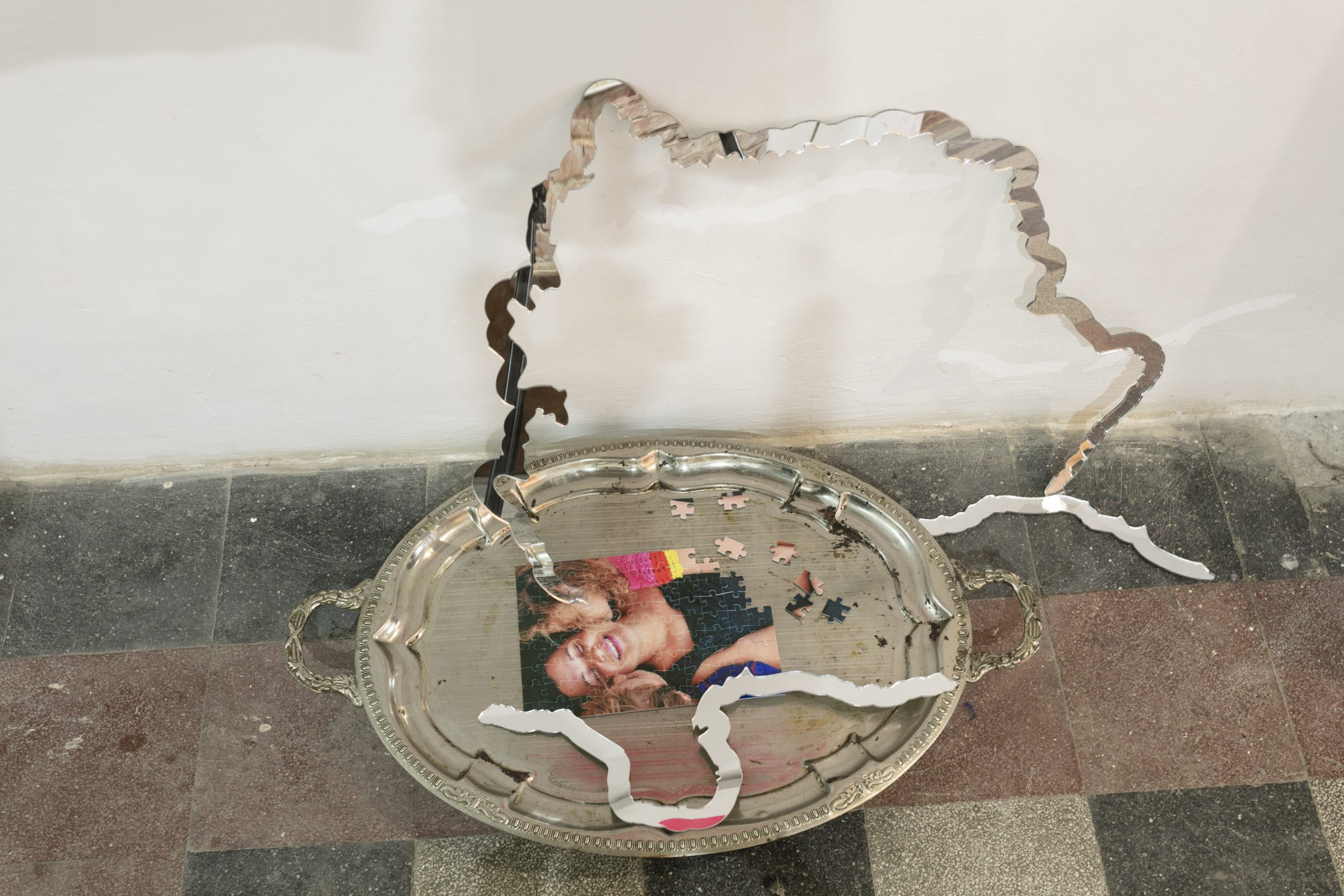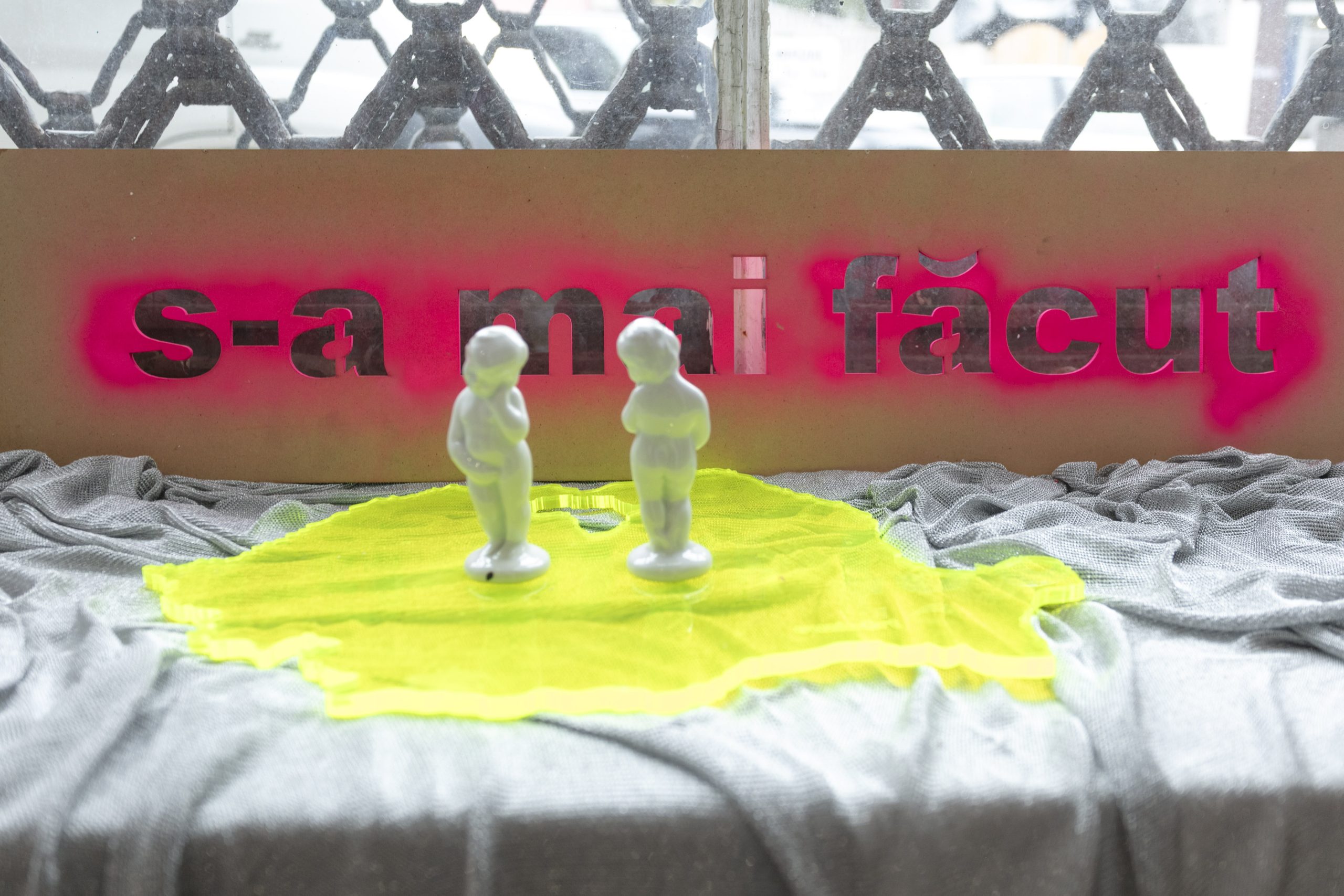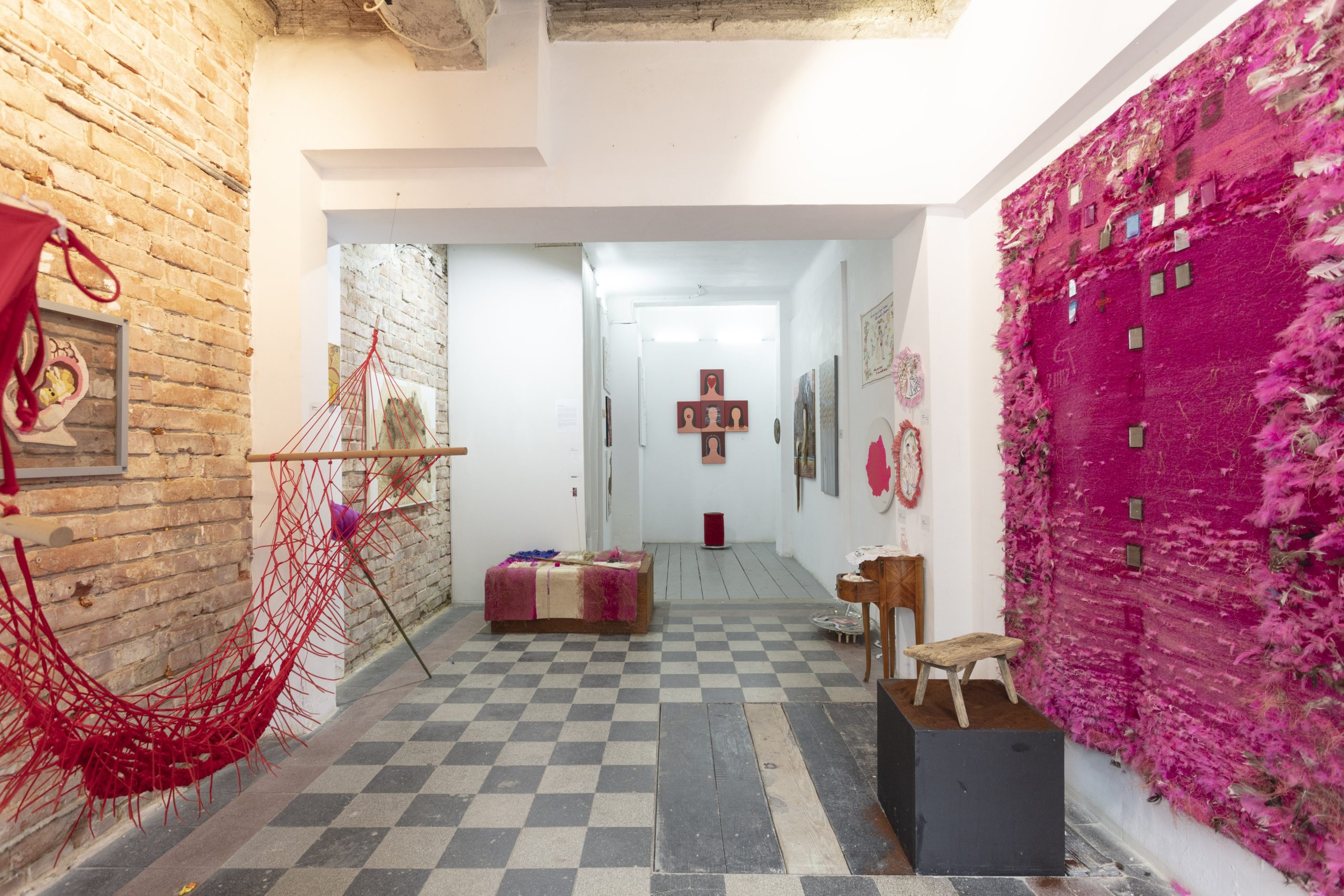
Opened at Alert Studio, the exhibition “Course/Parcus” proposes a reflection on artistic becoming and expressive mobility, bringing together a range of practices that traverse diverse media, techniques, and visual languages. The project foregrounds artists whose work is defined by versatility and a flexible approach to artistic expression, outlining a collective map of practices in continuous transformation.
In this context, the invited artists—Ana Bănică, Miva, Mihaela Moldovan, and Lumi Mihai—present works that articulate distinct yet convergent directions, united by a shared interest in exploring media and redefining visual expression.
Here, the concept of “parcours” functions both as an individual trajectory and as a framework for dialogue between artists from different generations—some active since the 2000s, others since the 2010s. The works on view reflect processes of accumulation, change, and repositioning, revealing a fluid stylistic language in which artistic identity is continuously shaped through transformation.
At the core of this approach is the practice of CUZINA, which establishes the conceptual framework of the exhibition. A graduate of the National University of Arts in Bucharest, Department of Tapestry (2004), where she studied under Professor Olga Birman, the artist continued her education with a Master’s degree in Visual Arts under the guidance of Marin Gherasim. Since 2003, she has been a member of the performance group Aproximativ 28, and since 2004, a member of the Union of Visual Artists in Bucharest.
Her artistic practice develops through a constant exploration of a wide range of media: painting, drawing, photography, installation, tapestry, object, and performance. This mobility becomes a key strategy through which the artist investigates ideas, narratives, and observations about reality, often filtered through an ironic sensibility.
Her visual language is influenced by abstract expressionism, op-art, minimalism, and conceptualism, as well as the logic of the readymade. In her work, the idea is never fixed; instead, it moves across media, adapting and generating new forms. A structure may first appear as a textile piece, only to later be reinterpreted as a textured painting or an object, offering different perspectives on the same visual matrix.
In recent years, the artist’s interest has increasingly turned toward traditional Romanian textile art. Elements such as the stitch are extracted from their functional context and reinterpreted at an enlarged scale or within a contemporary visual language, becoming autonomous forms within the composition.