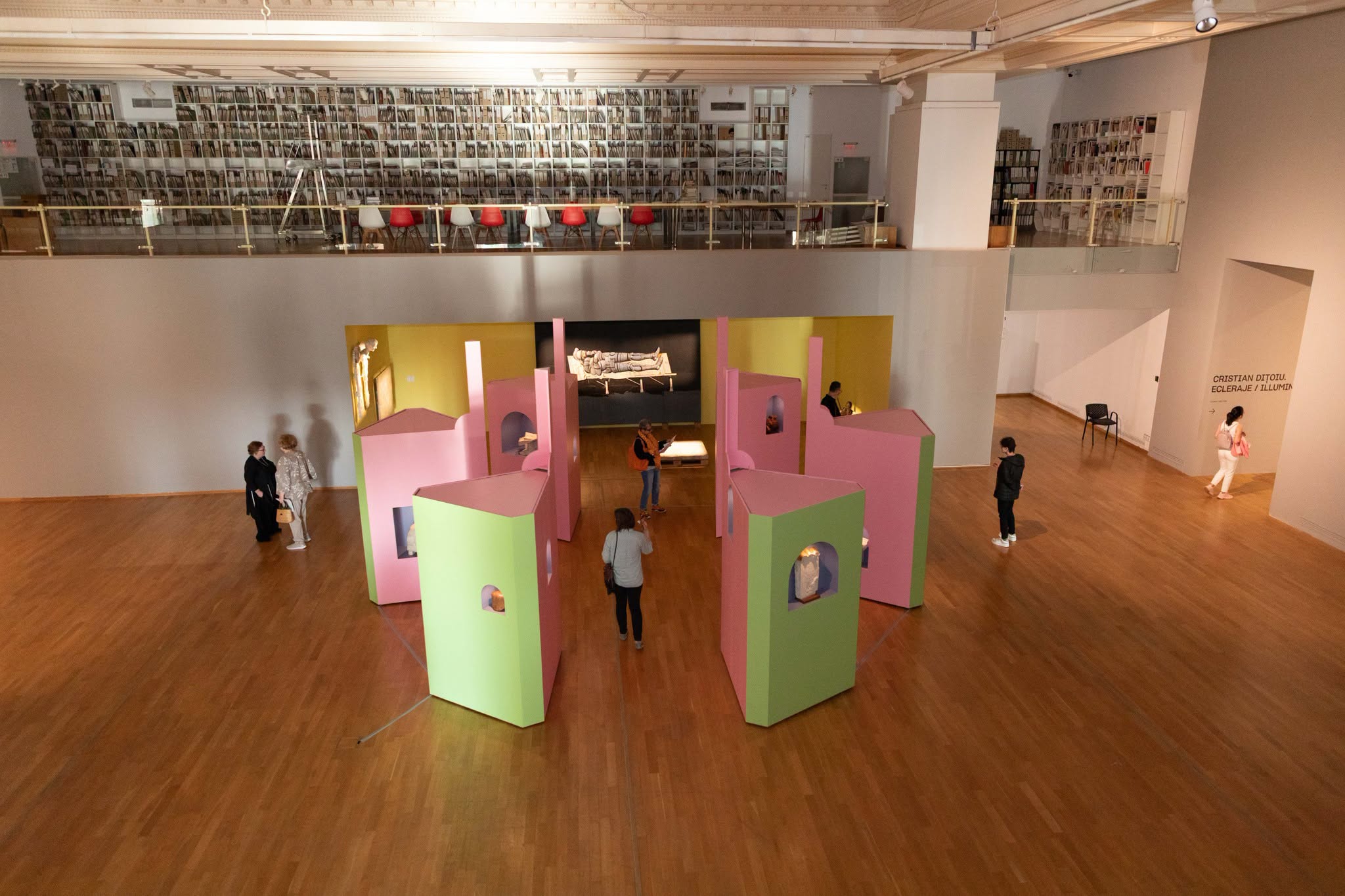
The exhibition “Campo Santo” at MNAC, curated by Călin Dan and Celia Ghyka, takes its starting point from the name given in the 13th century to the cemetery in Pisa. According to legend, Archbishop Ubaldo Lanfranchi is said to have unloaded here five ships carrying sacred soil brought from Golgotha, a trophy of the Third Crusade to conquer Jerusalem. The immense reliquary built to protect this sacred earth, through the recycling of Roman and Etruscan sarcophagi and funerary monuments, would gradually become a space of archetypal significance. Its progressive transformation into a museum culminated in the 19th century, following the secularization imposed in Italy by the Napoleonic reforms.
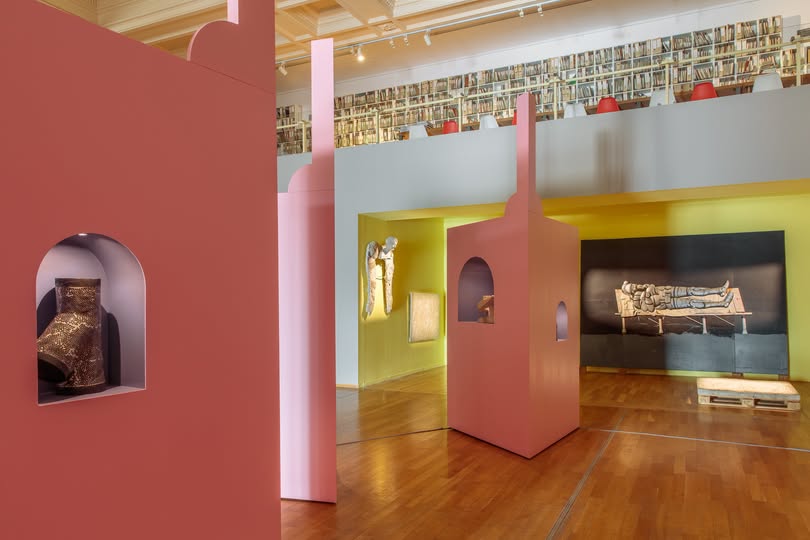
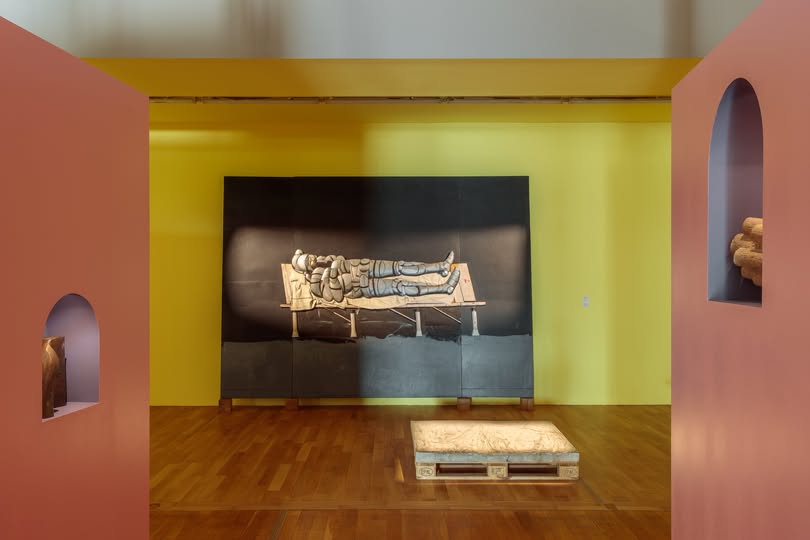
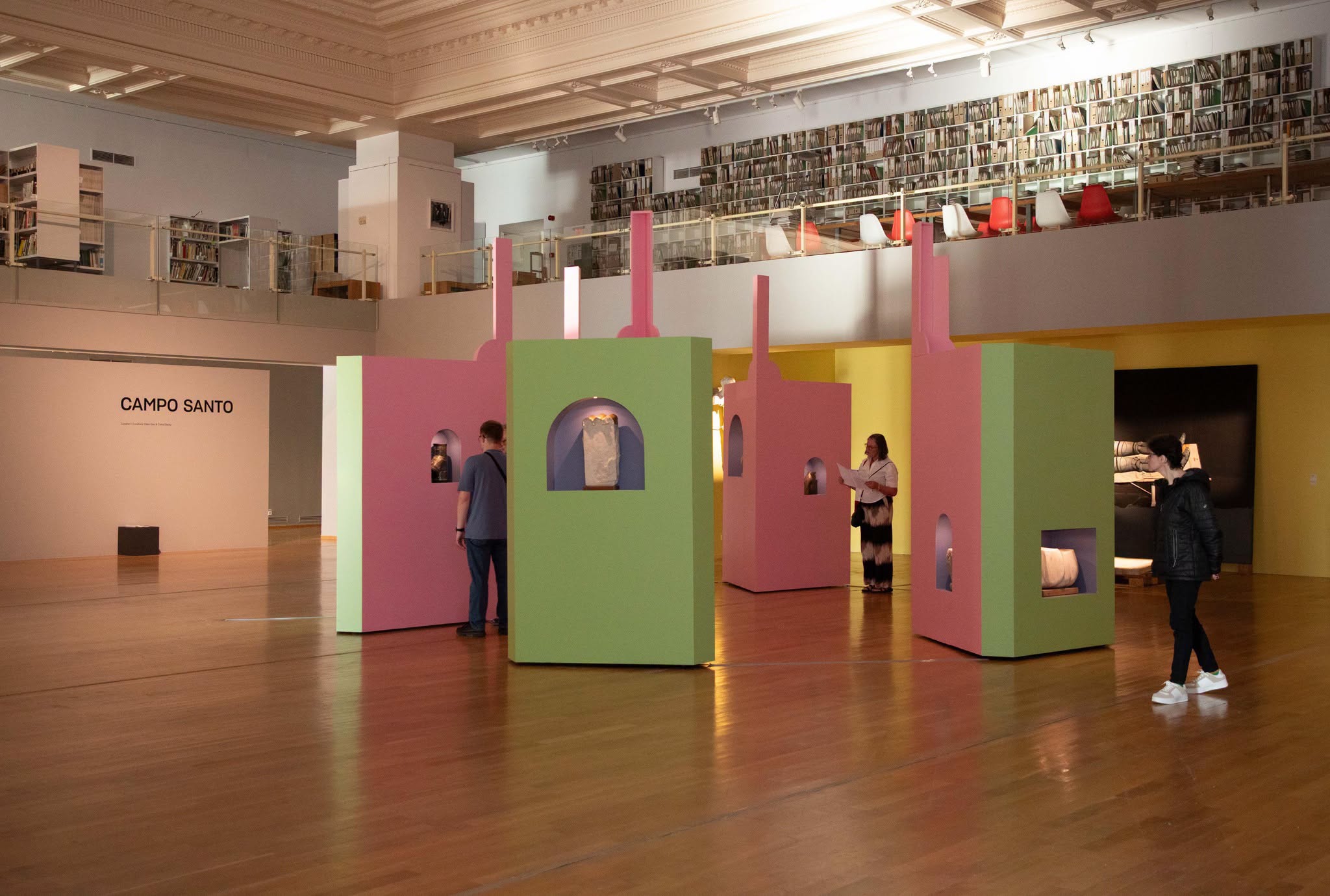
“The title of the exhibition thus evokes the theme of the cemetery–reliquary–museum, a special space that reused the funerary sculpture of classical antiquity in the context of early modernity. Campo Santo also alludes to one of the implicit dimensions of sculpture, an art almost invariably associated with death, with bringing to a halt the passage of time that destroys and recycles. Campo Santo proposes an installation inspired by the image of architecture in Italian Renaissance painting. The towers of color that populate Trecento and Quattrocento painting have themselves been transformed here into sculpture, a sculpture that becomes the support for its own environment, in a game of mise-en-abyme that explores its own limits and mechanisms of signification.
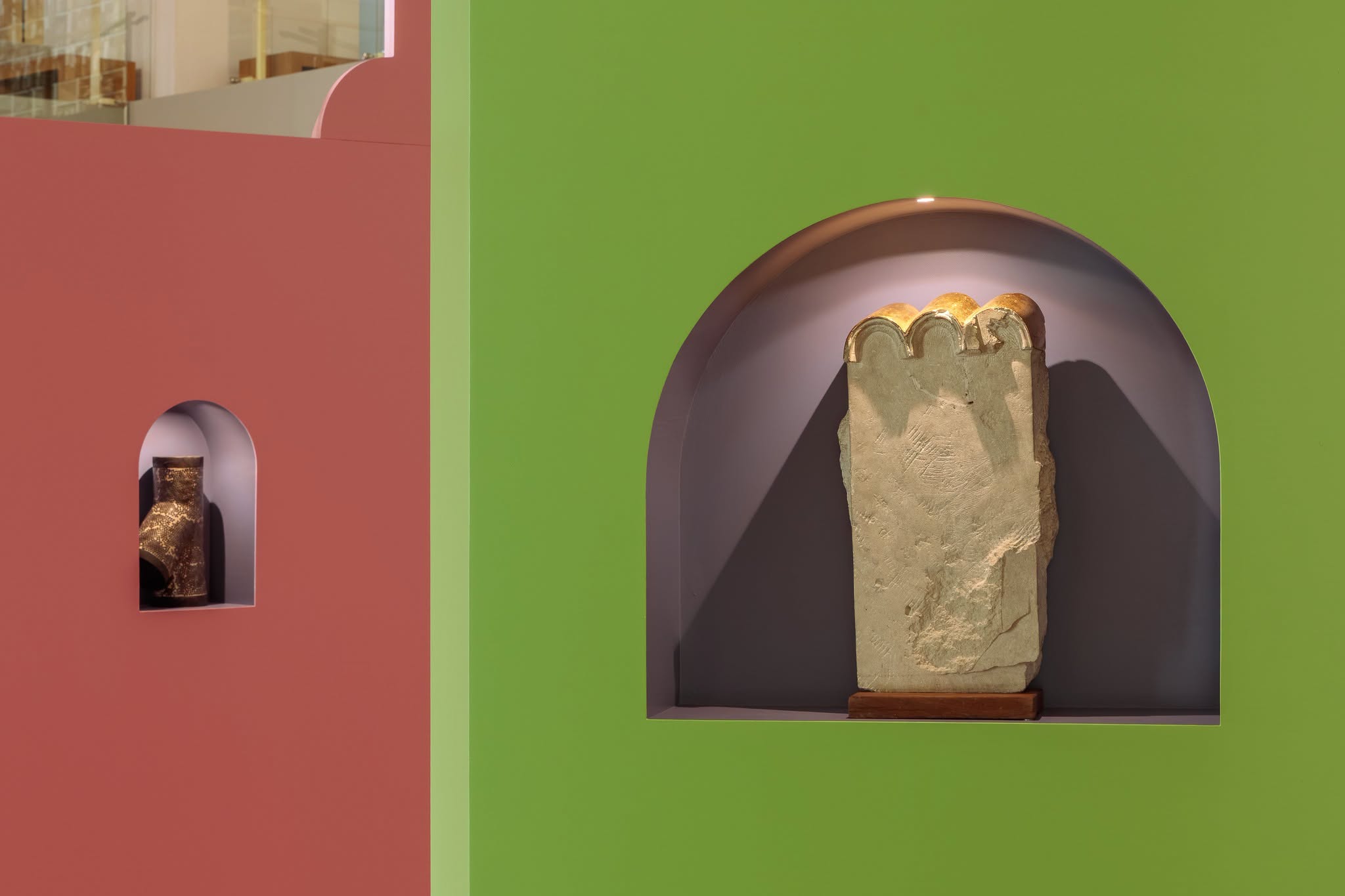
The installation functions as a columbarium, housing sculpture within its niches. The selected works evoke the funerary theme to varying degrees of explicitness and, through it, refer to the original function of sculpture: to commemorate or substitute for the dead. What they share is a rejection of, or departure from, the figurative, together with an exploration of areas less represented in Romanian sculpture: the testing of abstract forms and the expressive possibilities of matter.”
(Excerpt from the curatorial text)
The exhibition, produced with the support of the Interart TRIADE Foundation as part of the National Cultural Programme “Timișoara – European Capital of Culture 2023,” can be visited on the museum’s ground floor until October 18, 2026.
The exhibition features works by George Apostu, Pavel Bucur, Alexandru Călinescu-Arghira, Gheorghe Coman, Roman Cotoșman, Bela Crișan, Horia Damian, Céline Emilian, Dan Gavriș, Nicolae Golici, Petre Grăjdeanu, Peter Jacobi, Ernest Kovács, Bata Marianov, Ion Mândrescu, Ion Lucian Murnu, Alexandru Nancu, Vladimir Predescu, Silvia Radu, Liviu Russu, Paul Vasilescu, and Benno Werth.
From August 12 to September 6, 2026, MNAC’s opening hours and visitor route are temporarily adapted due to high temperatures and an unforeseen technical issue affecting the air-conditioning system. The exhibition spaces on the 1st, 2nd, 3rd, and 4th floors are temporarily closed; however, the exhibitions on the Ground Floor and Mezzanine, including Campo Santo, remain open to the public, with free admission.