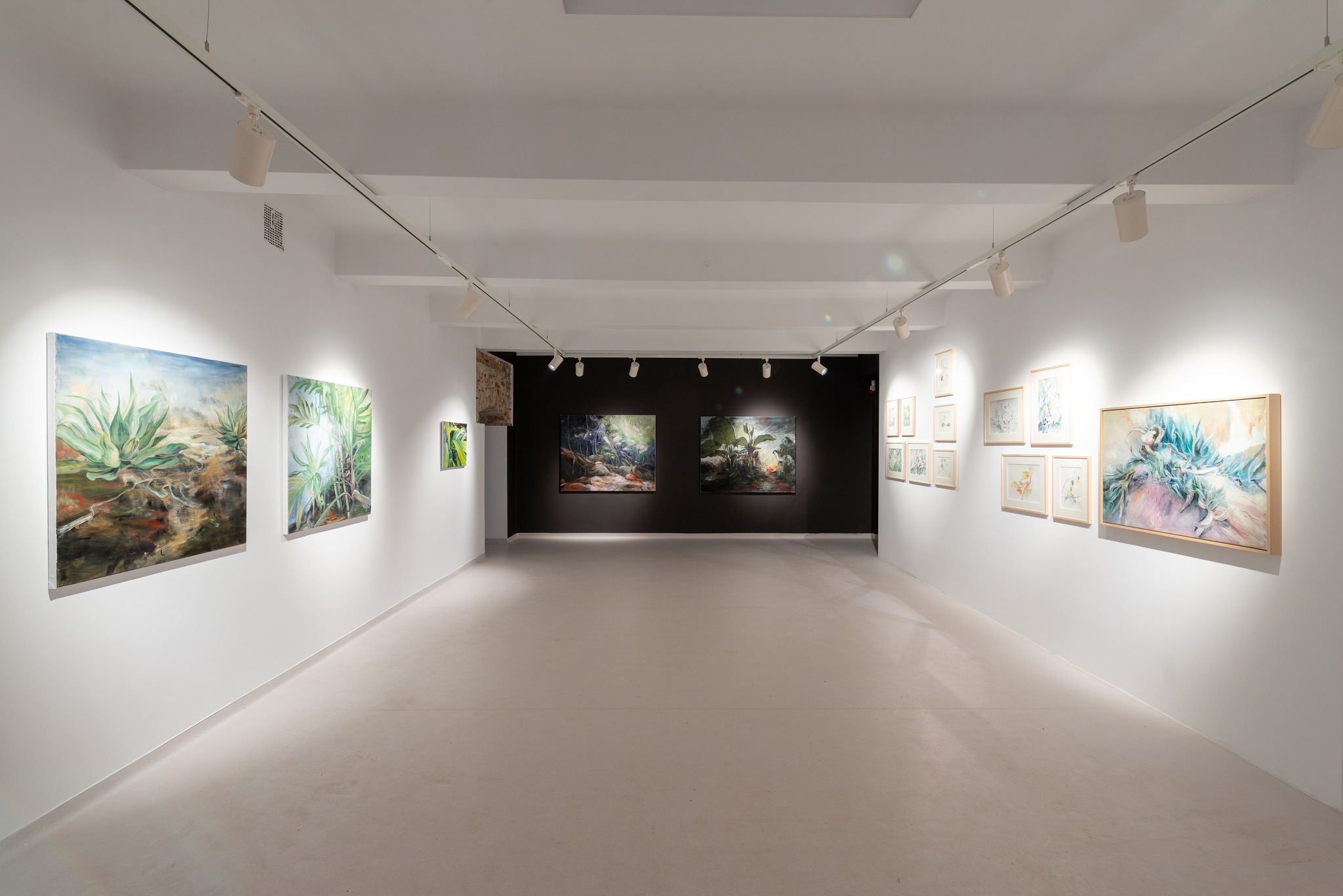
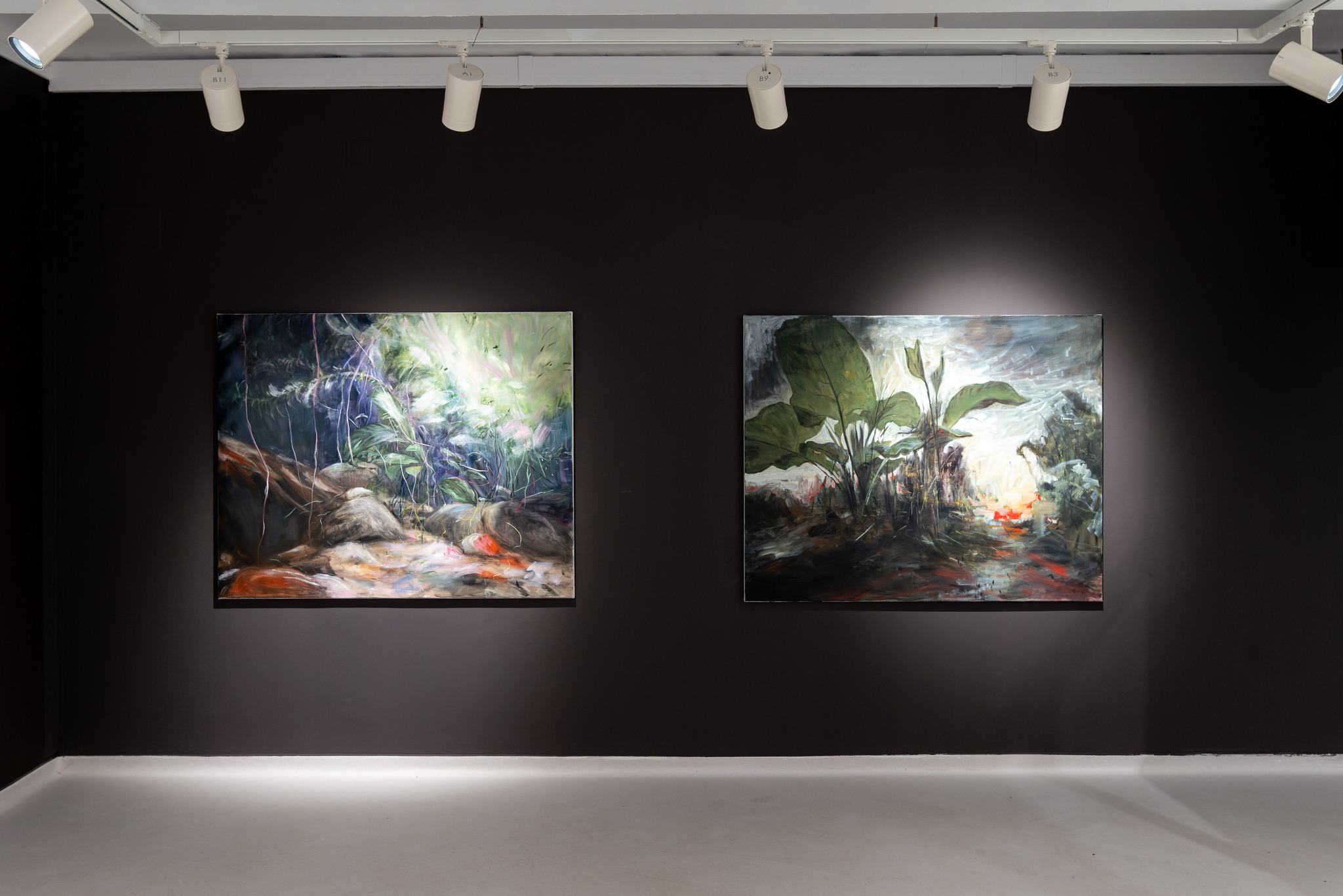
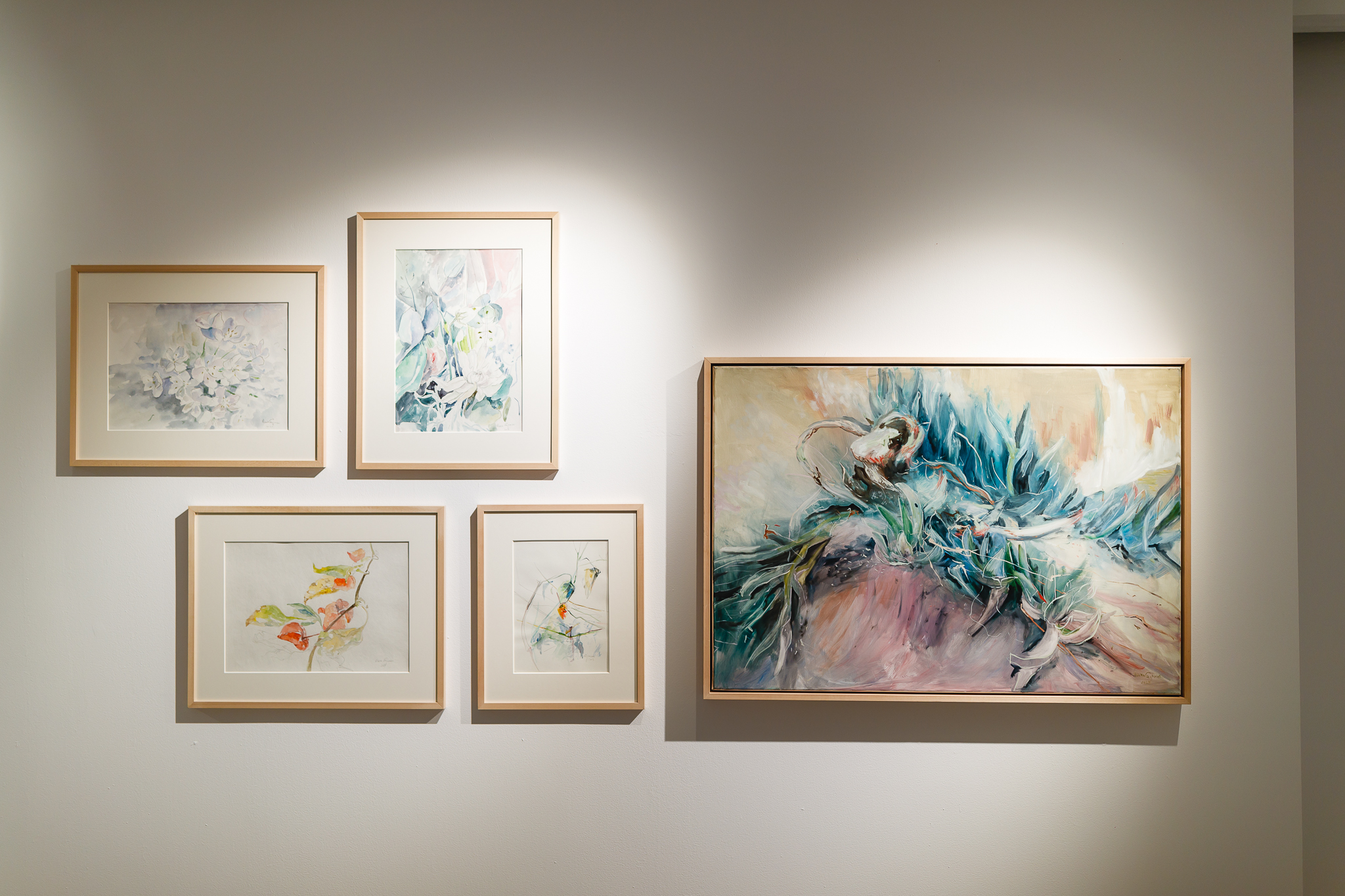
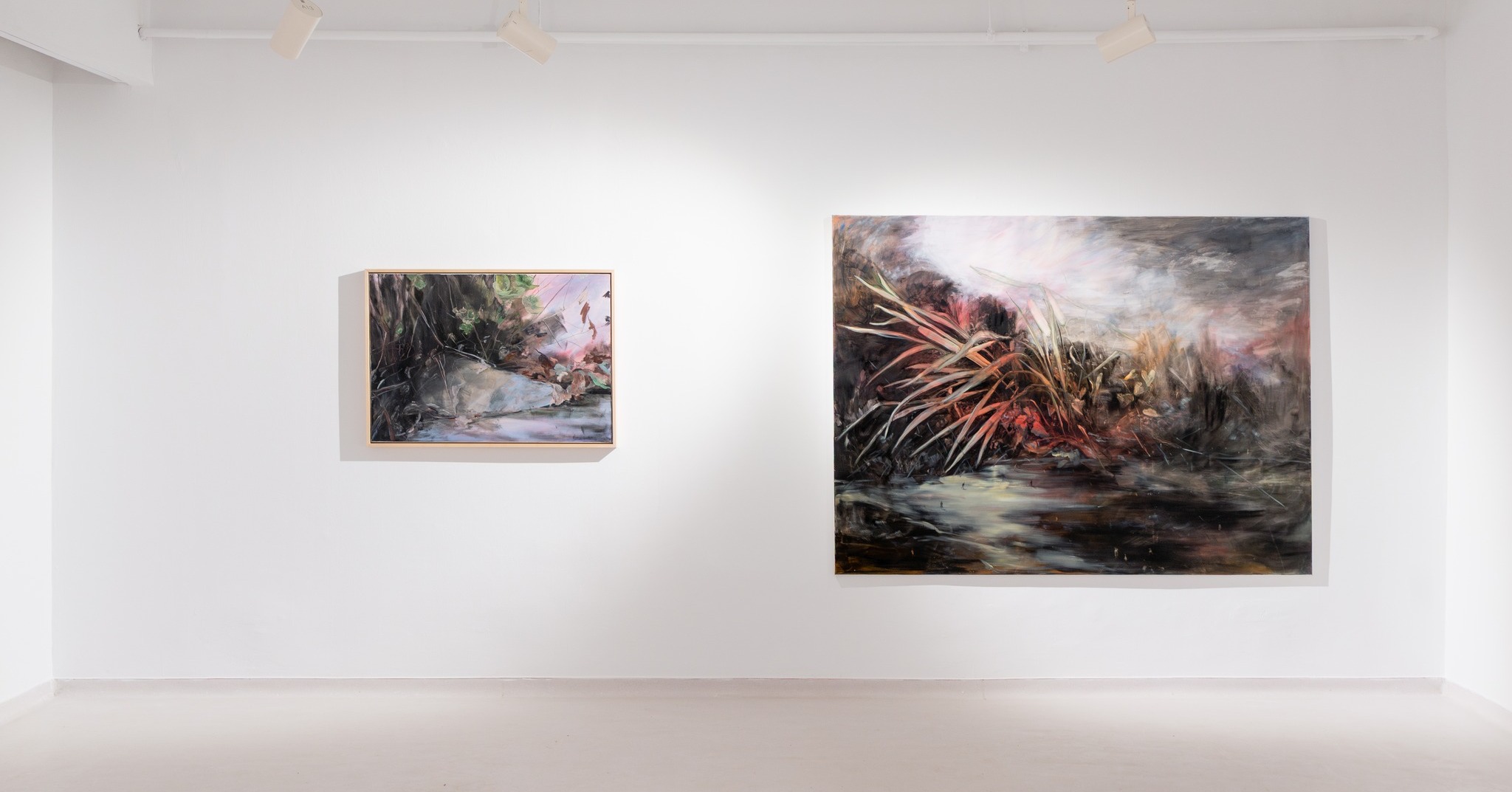
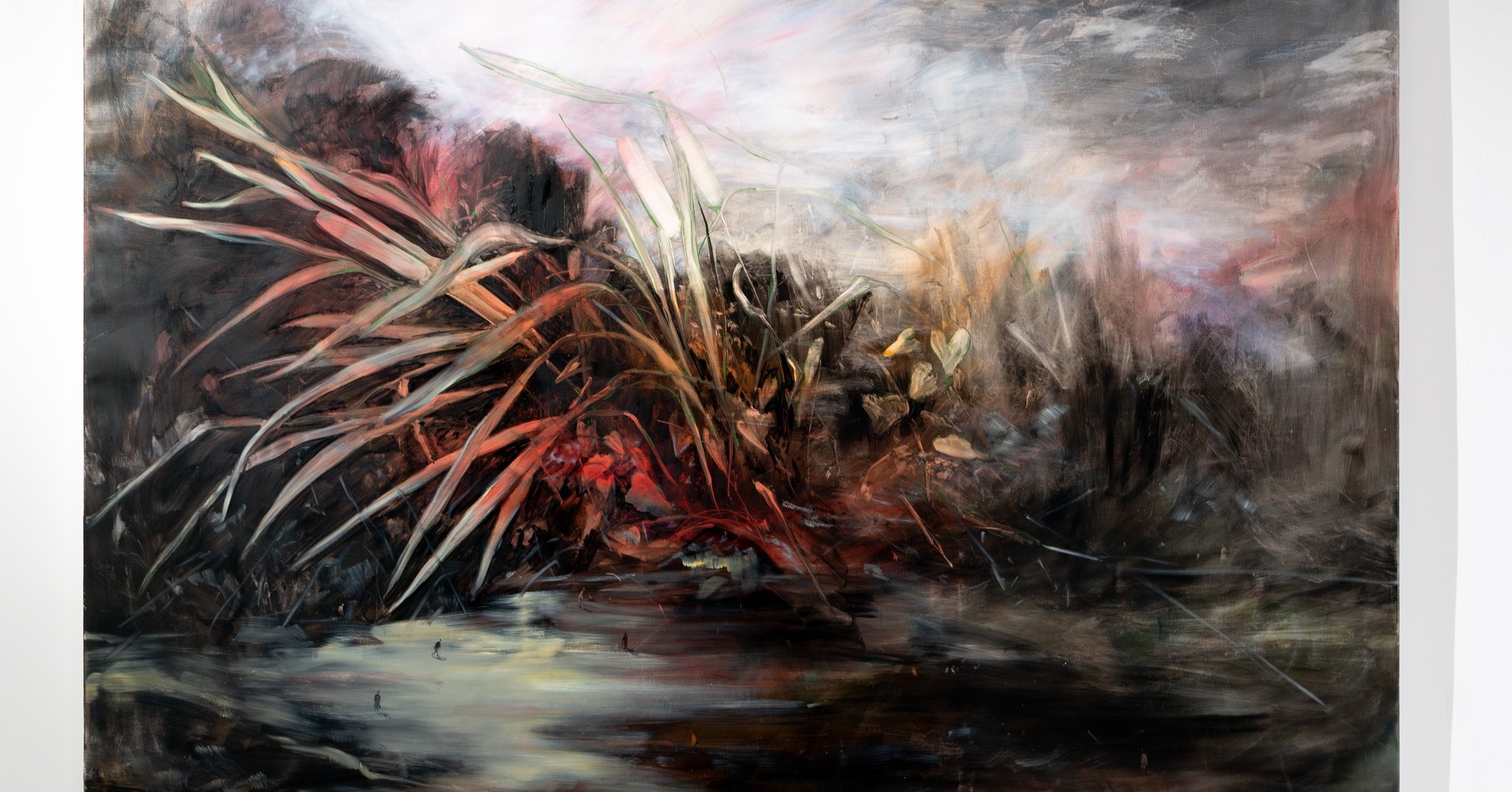
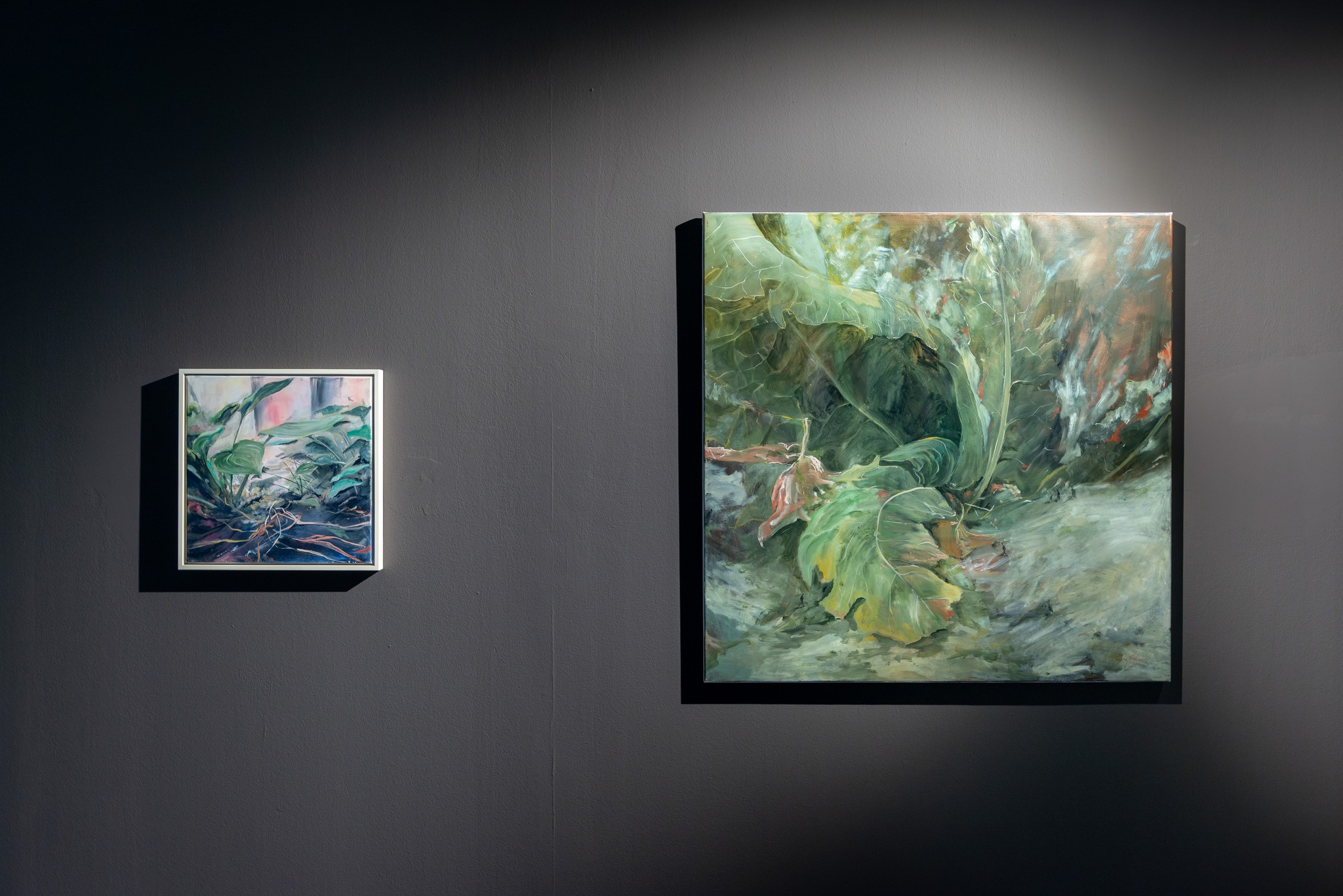
At the META Spațiu gallery in Timișoara, visitors can see the exhibition by artist Uliana Gujuman, Random Acts of Disappearance, curated by Mirela Stoeac Vlăduți.
“The exhibition brings together a constellation of paintings in which Uliana Gujuman reimagines the relationship between human presence and the plant world. At first glance, the exhibition appears to celebrate green abundance — lush leaves, dense networks of roots, and imposing stems spilling across the canvas with an almost sculptural force. Yet beneath this surface of exuberant growth lies a subtler, more unsettling question: how does the human figure disappear into nature, and how does nature, in turn, reclaim the spaces that once shaped us?
Born in Chișinău in 1990 and later relocating to Timișoara in 2009 on a scholarship, Uliana’s artistic trajectory is marked by a continuous negotiation between places, identities, and ecologies. Since 2014, the artist has lived in Zetea, Harghita — a rural environment whose quiet rhythms, seasonal transformations, and botanical subtleties have become central to her visual vocabulary. The exhibition synthesizes, alongside works spanning her entire artistic evolution, the results of her doctoral research Nature and the Imaginary in Painting (West University of Timișoara, Faculty of Arts and Design, supervisor Assoc. Prof. Dr. Daniela Catona), transforming theoretical investigation into a tangible and sensory visual ecosystem.
In Uliana’s visual universe, the plant kingdom does not simply frame human presence; it swallows it, surpasses it, and ultimately absorbs it. Plants — both indigenous and exotic — intertwine into hybrid organisms, forming dense choreographies of leaves and petals that dominate the visual field. The plant ceases to be a passive background and becomes protagonist, architecture, and myth.
Random Acts of Disappearance is thus less about retreat and more about reorientation. It proposes the idea that disappearing into nature can be a way of reappearing differently — more attentive, more vulnerable, more attuned to the complex ecologies that sustain us.” (curatorial text)
The exhibition can be visited until February 15. Admission is free.