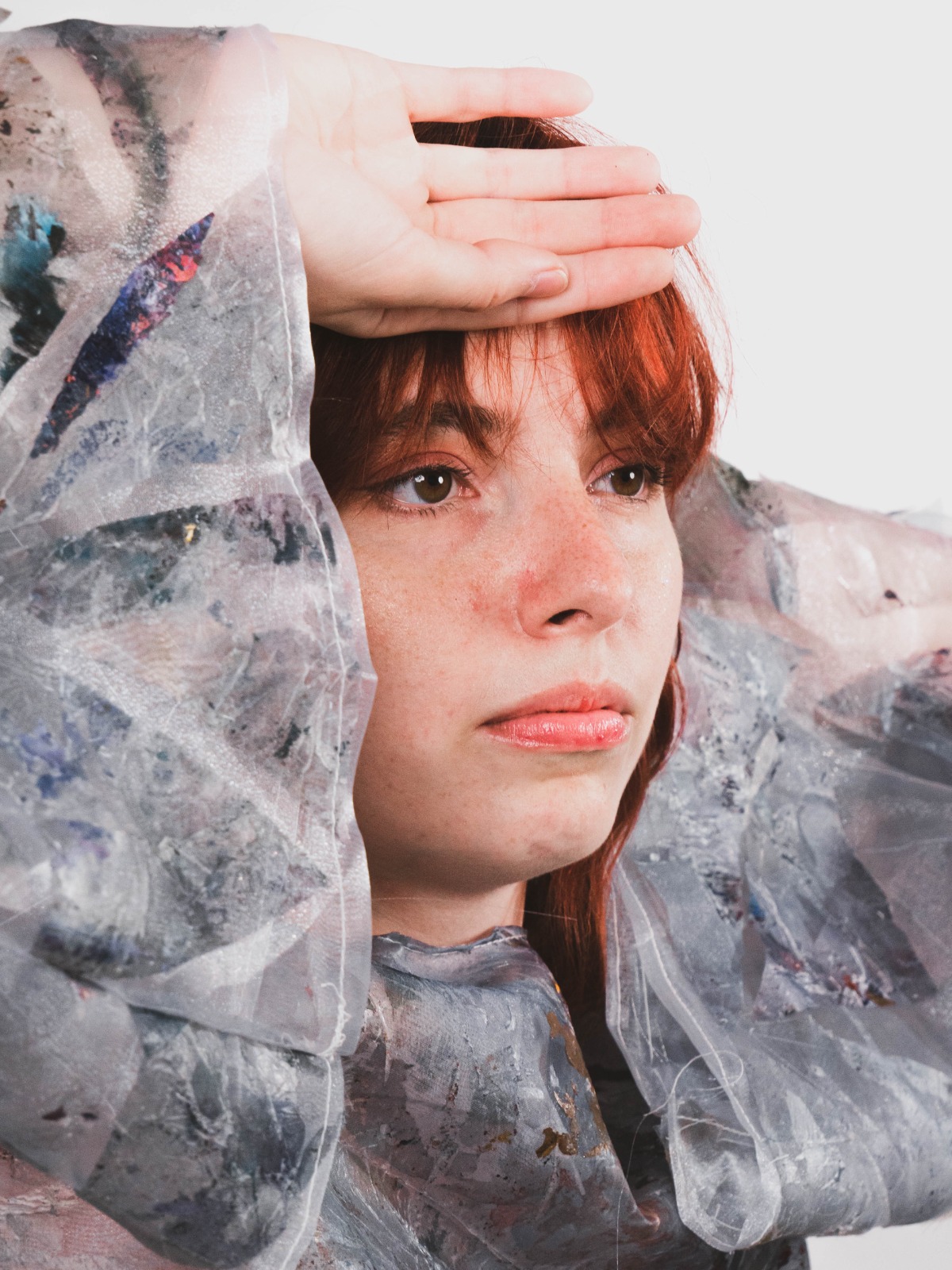
In Andreea Naherniac’s artistic universe, textile material becomes an extension of emotion — a meeting space between memory, intimacy, and fragility. Her works speak about touch, about memories that tear apart and reassemble, about vulnerability as a poetic force. Educated at the University of Art and Design of Cluj-Napoca, the artist explores threads, fabrics, and textures not only as visual means, but as an affective language — a form of silent confession.
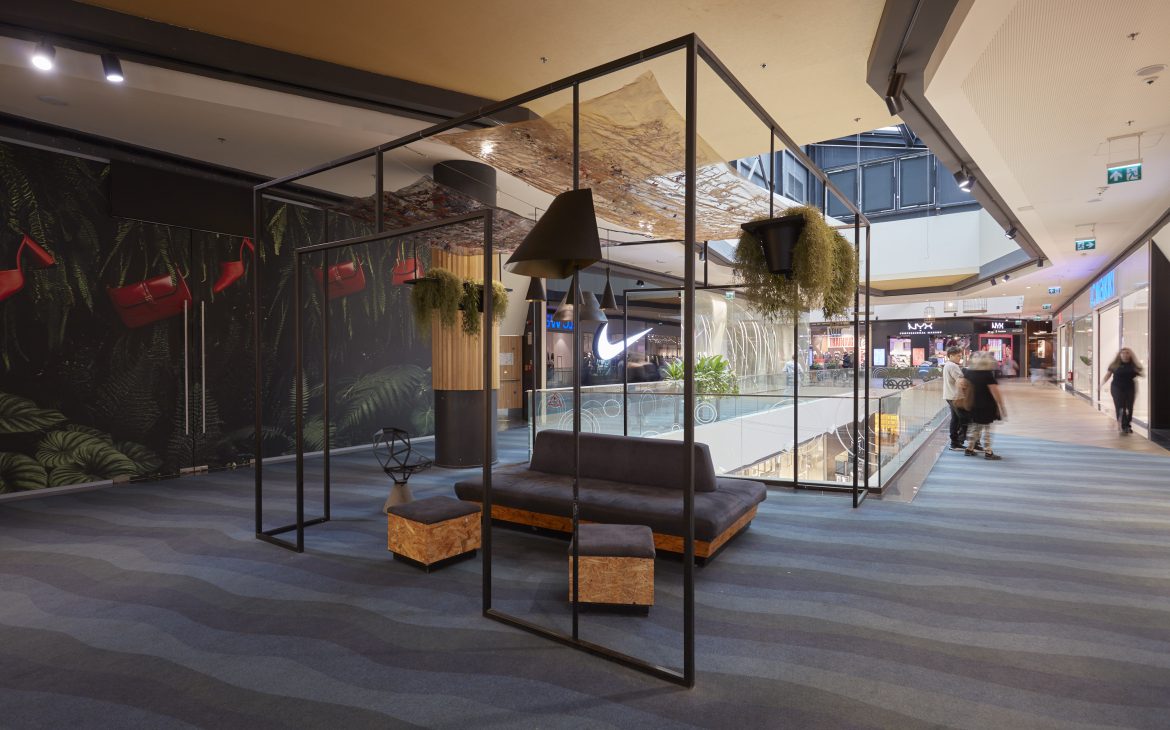
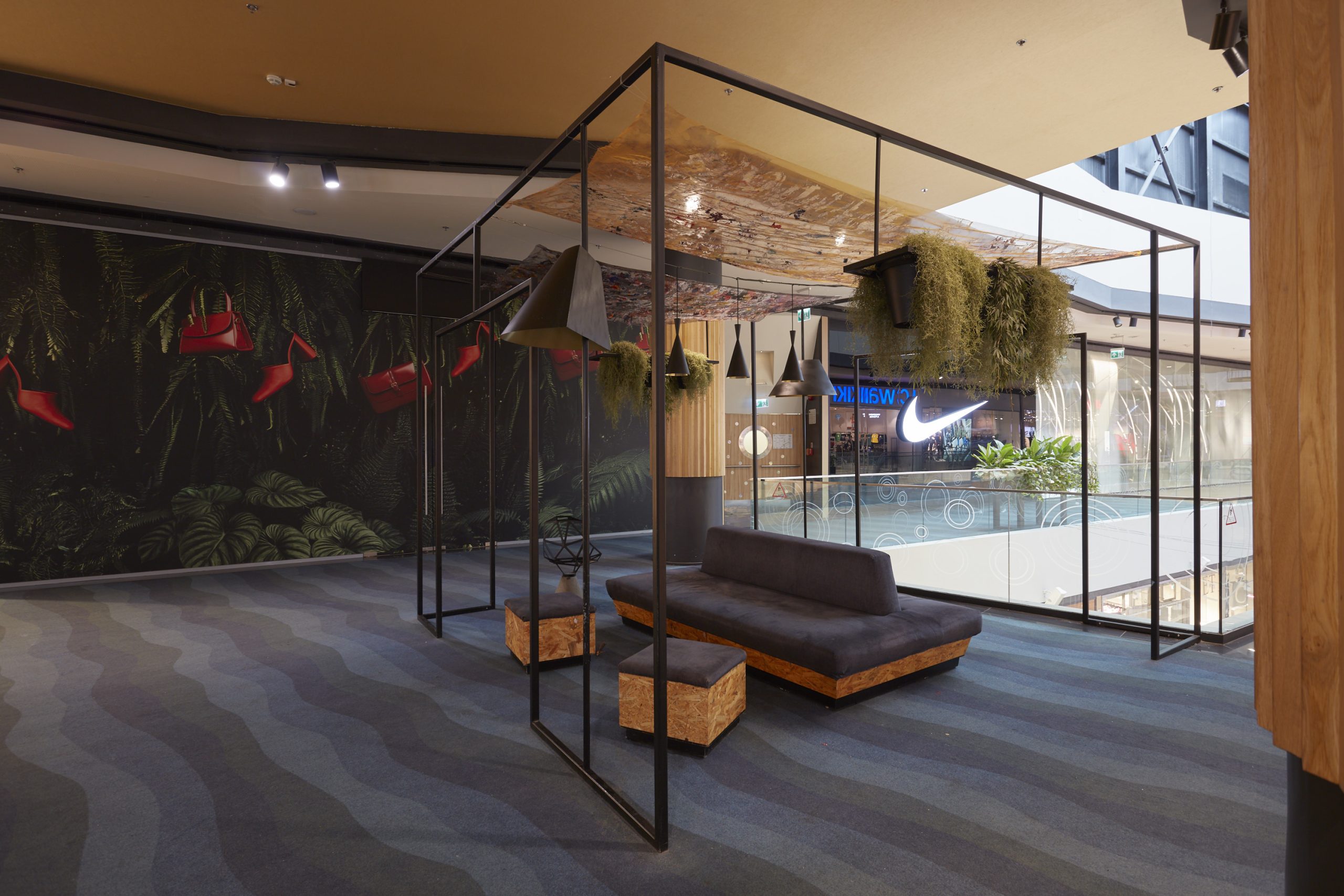
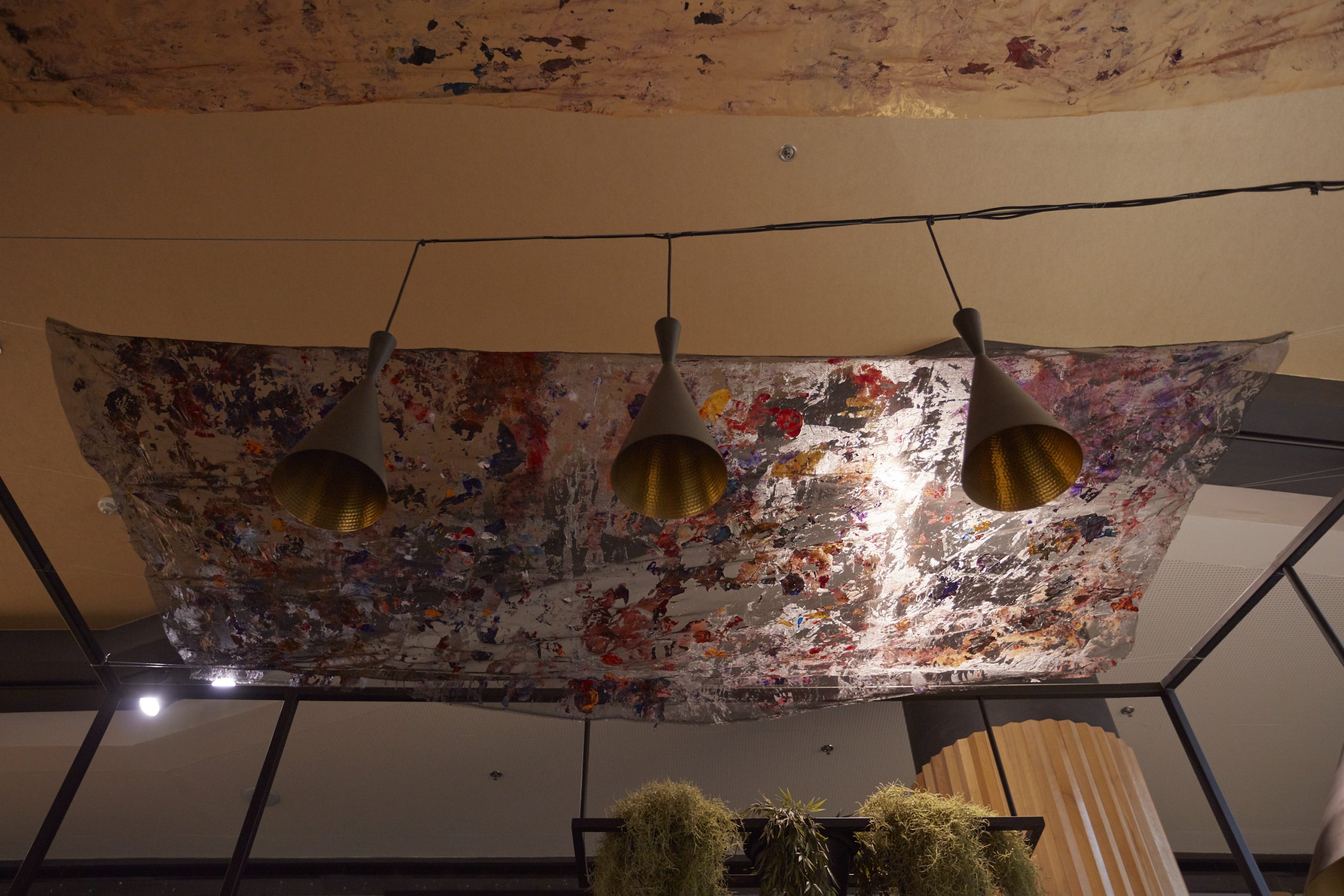
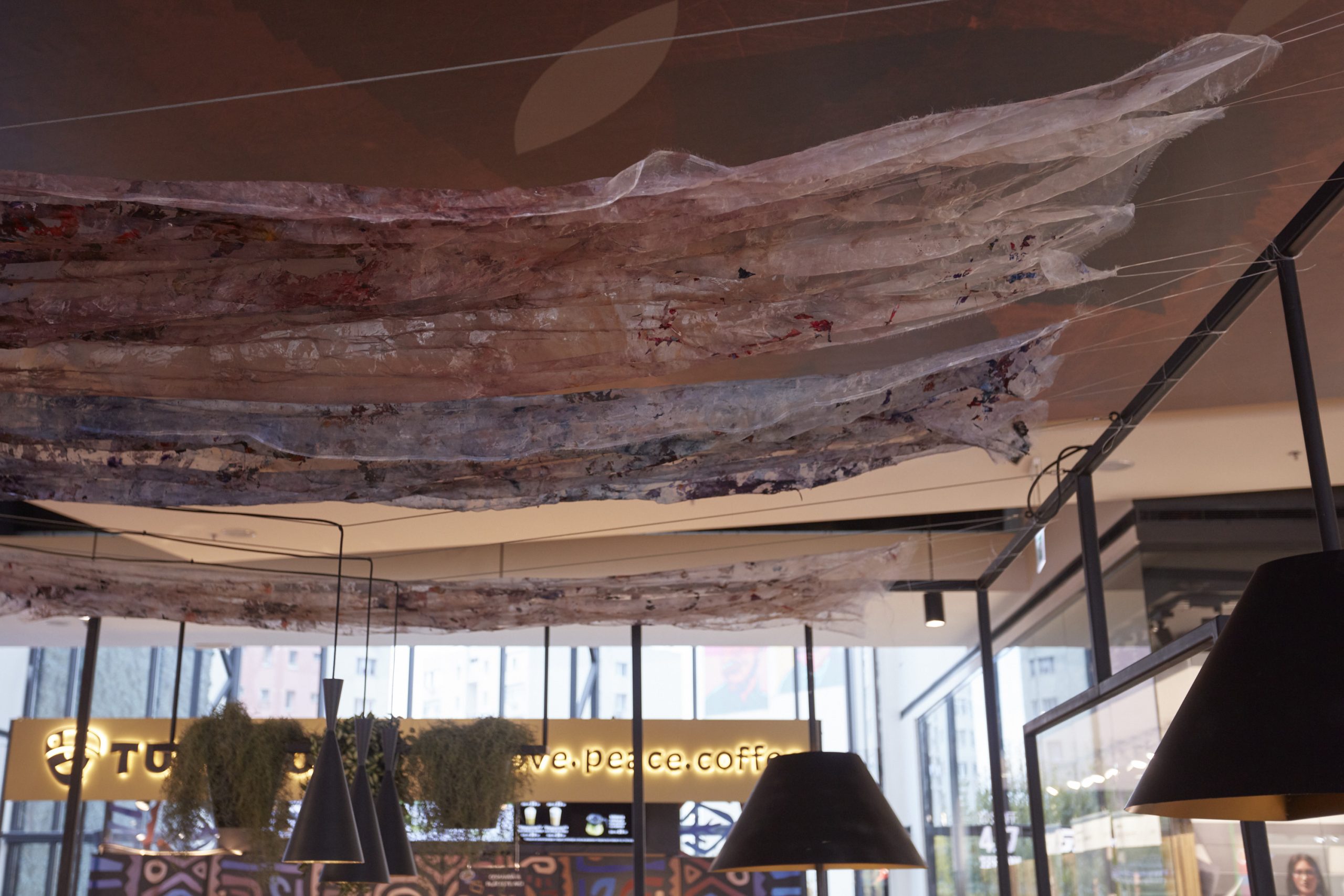
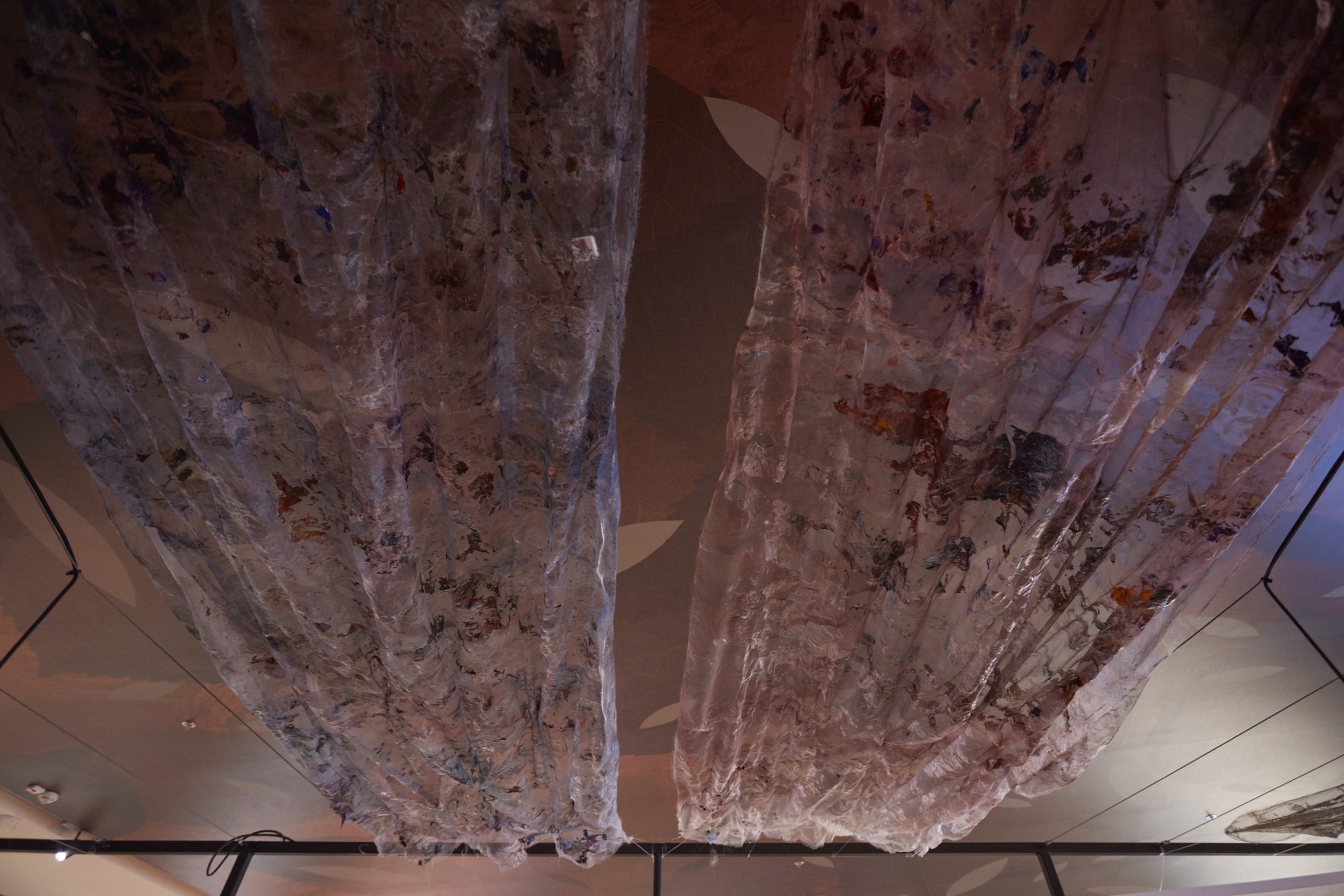
In her practice, textiles become sensitive bodies, carriers of personal and collective meanings, where emotion gains materiality and the artistic gesture transforms into an act of remembrance and healing. Within the exhibition Breaking the Silence: A Visual Narrative on Emotions Left Unspoken, Andreea constructs a shelter for introspection — an installation in which the fragility of the material encounters the solidity of metal, evoking the tension between vulnerability and resilience.
We spoke with artist Andreea Naherniac about memory, intuition, emotion, and the power of touch to transform matter into poetry.
Ada Muntean: How did you end up choosing textiles as your primary medium of expression? Was it an intuitive choice, or one that developed over time through specific experiences or influences?
Andreea Naherniac: Since childhood, my mother encouraged my sister and me to engage in creative activities, so she enrolled us at Palatul Copiilor (Children’s Palace, children’s education and artistic center). There, I discovered the Atelierul Fanteziei (Fantasy Workshop), a place where I could develop my artistic side. I learned to make bracelets from colorful threads, paint on glass, embroider, and create small weavings. I especially loved sewing — I made my own clothes for dolls and spent hours playing alongside my sister. Gradually, I became increasingly fascinated by textile materials and their versatility. In the final years of high school, I felt the desire to explore textile art more deeply, and this passion led me to leave my hometown and enroll at the University of Art and Design in Cluj-Napoca, specializing in Textile Arts – Textile Design.
A.M.: In your practice, memory becomes a work tool. What type of memories or personal experiences do you feel influence you the most in the creative process?
A.N.: For me, any personal experience can become a source of inspiration for a new artwork. In the exhibition Breaking the Silence: A Visual Narrative on Emotions Left Unspoken, I chose to translate a childhood memory — a moment of calm and daydreaming that I believe many of us have experienced. My friends and I used to go to my grandmother’s yard, where we would sit on a blanket and watch the clouds, trying to give them shapes in our imagination. Passively, yet creatively, those clouds came to life. Through my work, I wanted to recreate this memory and transform it into an artistic expression of innocence and the power of imagination.
A.M.: When materials reactivate memories through touch, texture, or smell, how do you choose to transcribe them visually – are you looking for a faithful rendering or are you more interested in a metaphorical interpretation?
A.N.: I am particularly drawn to the metaphorical rendering of an image, because I believe that each person has their own perspective and can interpret what they see differently. Through my works, I aim to bring back to people that joie de vivre — the joy of living, of feeling, and of connecting sincerely with their emotions, without fear.
A.M.: What role do the senses – especially touch – play in your artistic practice? How do they influence the relationship between artist, work and viewer?
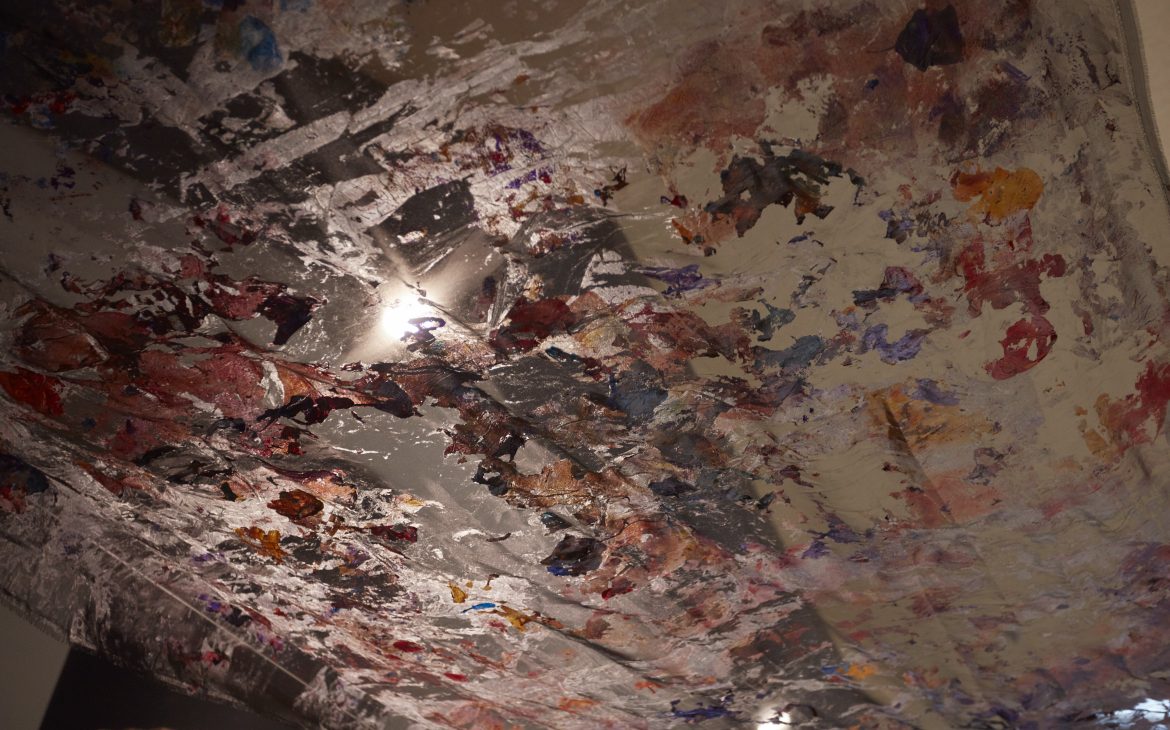
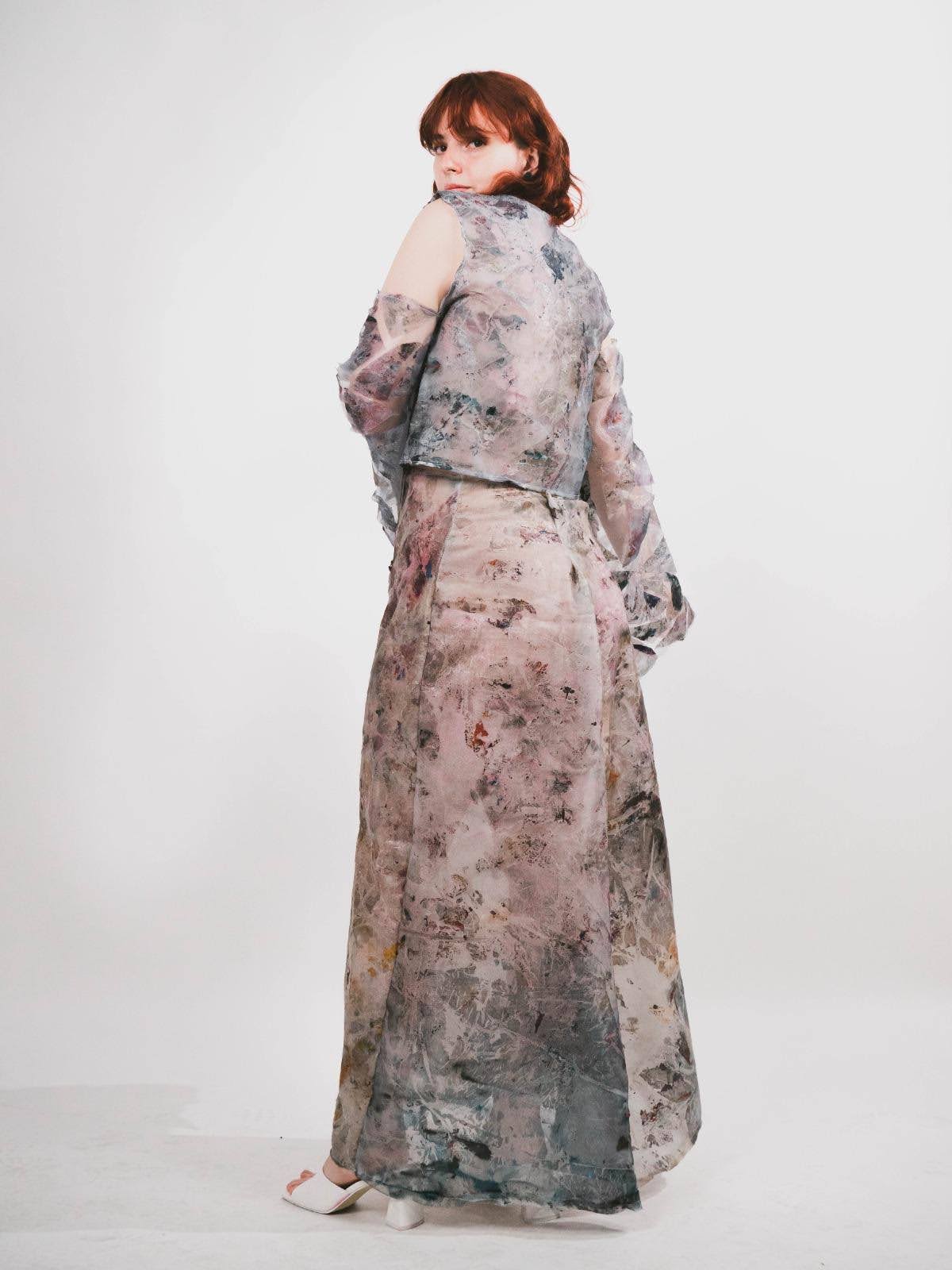
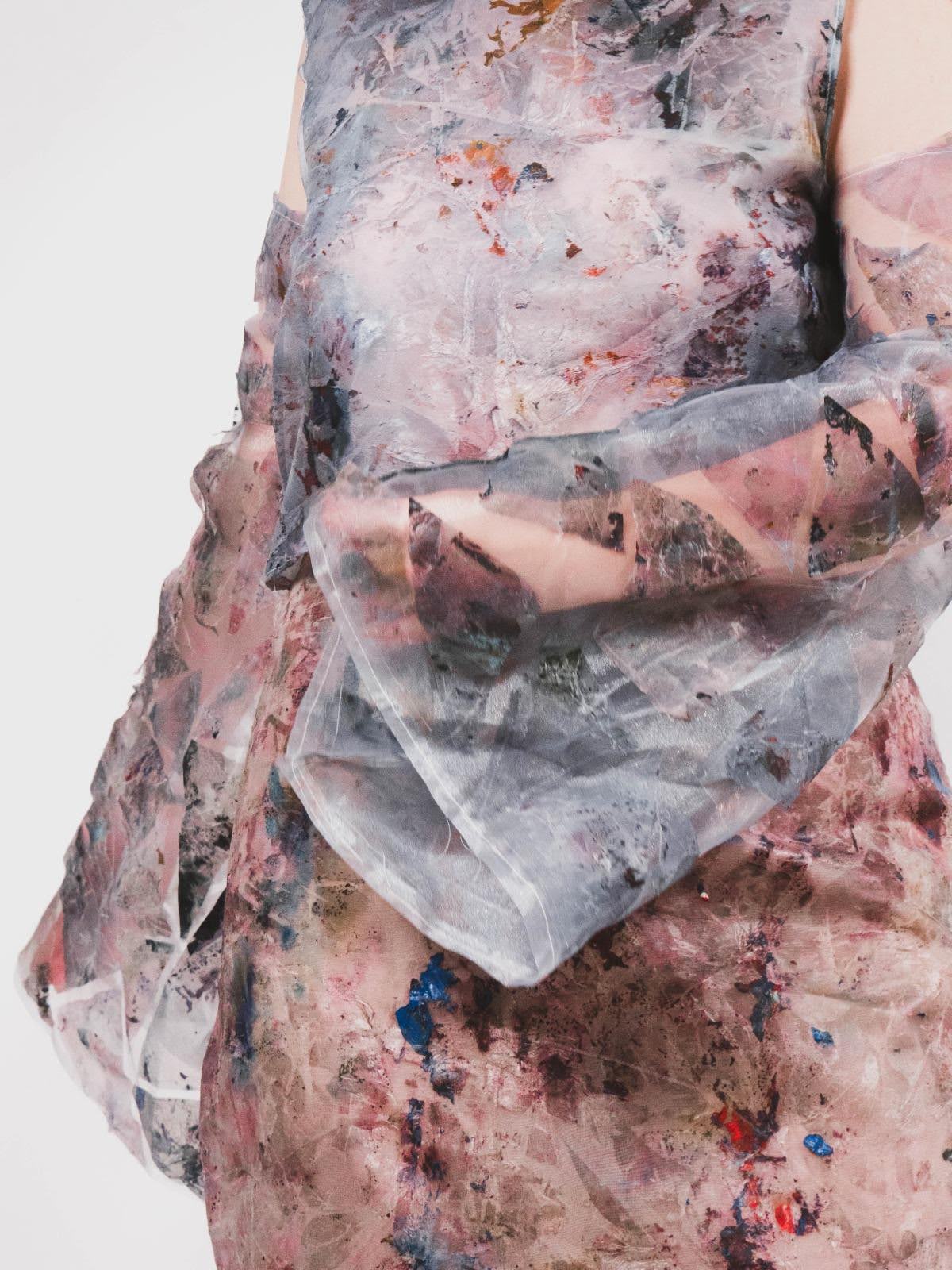
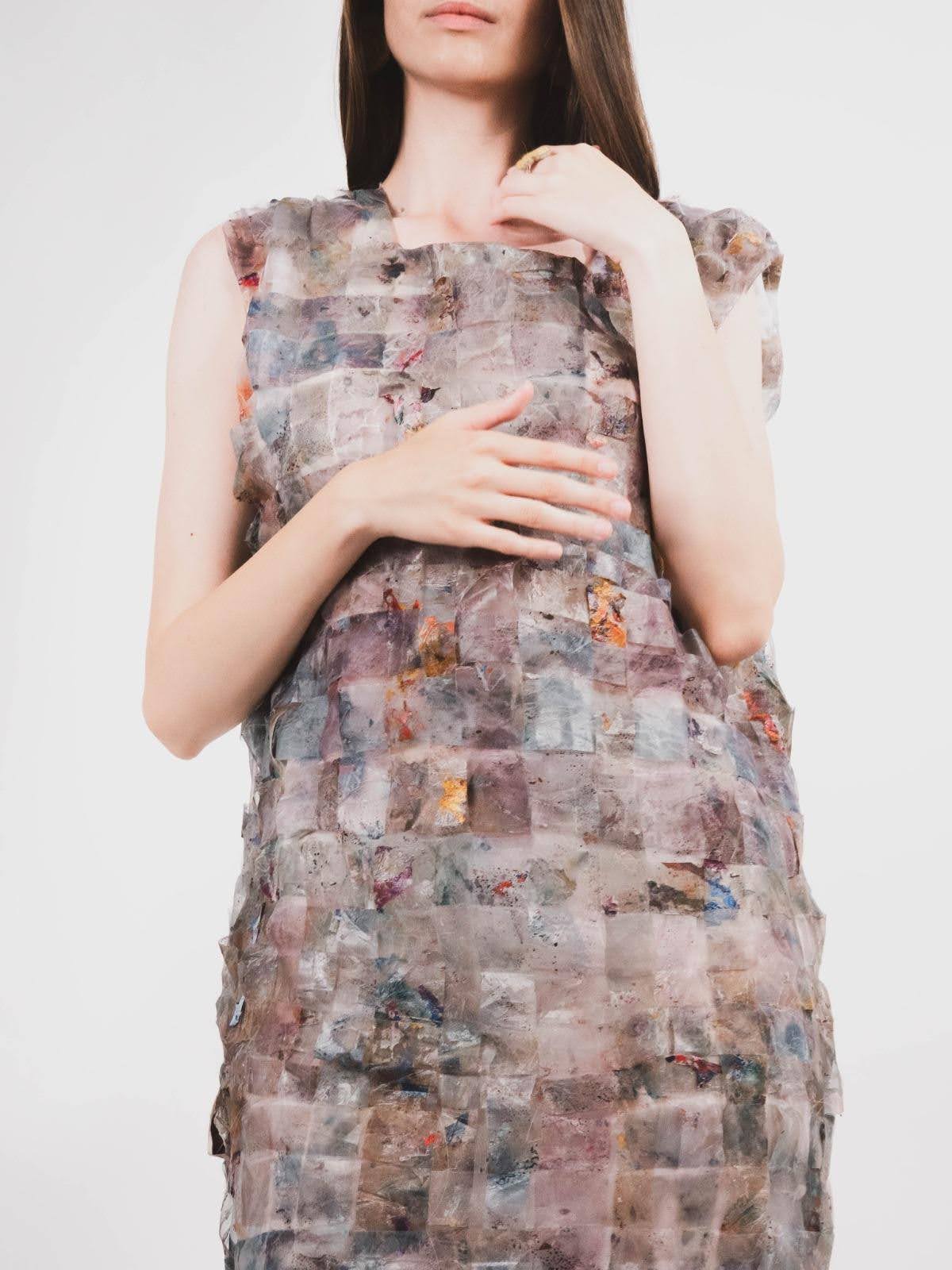
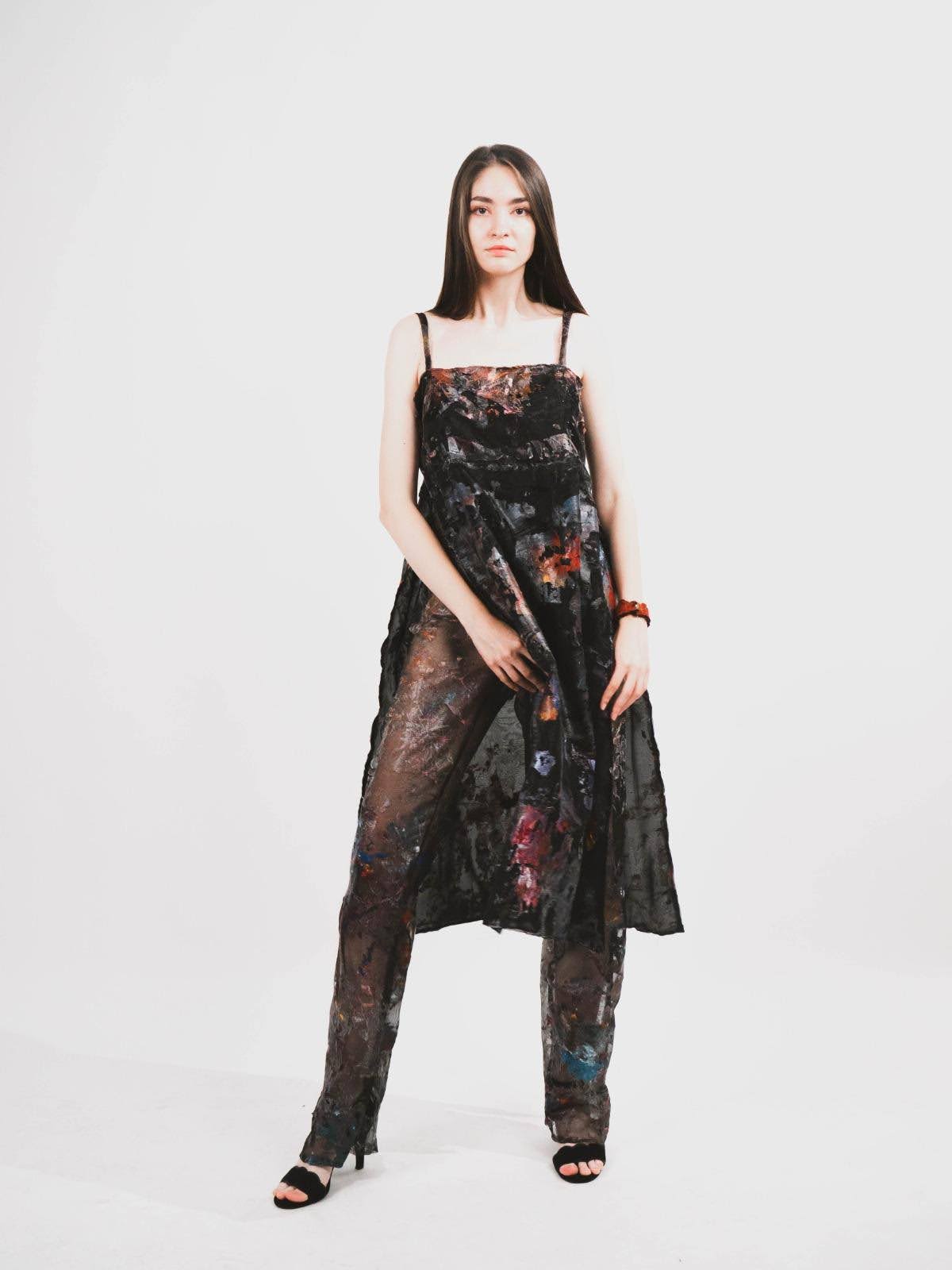
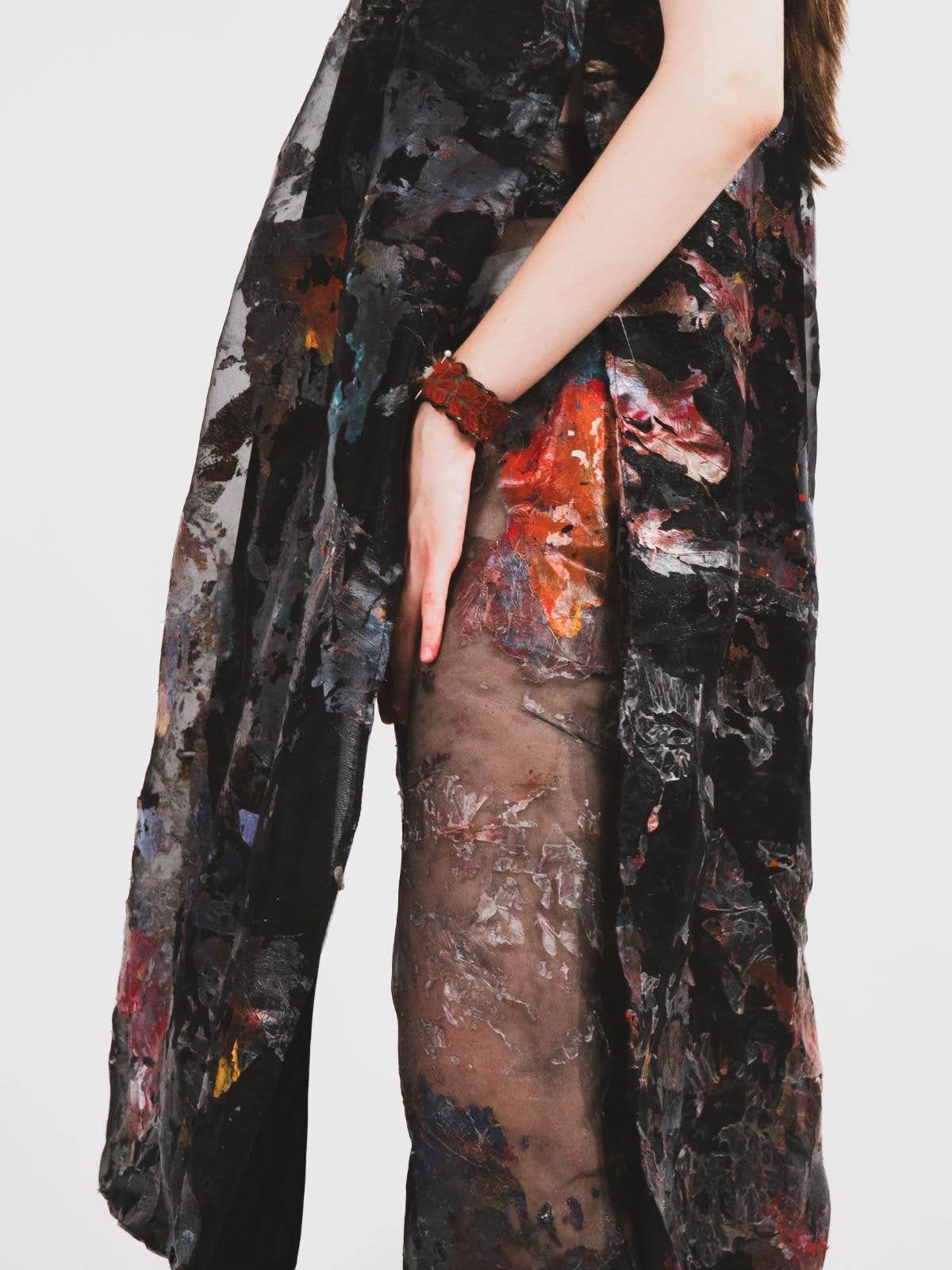
A.N.: All the senses play an essential role in perceiving and understanding the world around us, but for me, the sense of touch is what most deeply defines my relationship with art. I rely on a direct connection with the material; at the first touch, I can intuit the texture, weight, density, and versatility of the textile. Touch thus becomes an expressive language: through the materials I choose, I can convey emotions. Smooth textures suggest calm and delicacy, while rough surfaces can express tension, pain, or unease. In my works, I have chosen transparent organza, a fluid, delicate, and sensitive material that can tear at the slightest touch. For me, this fragility symbolizes memory — a precious and vulnerable element that must be cared for.
A.M.: What is the relationship between idea and execution in your works? To what degree do intuition, accident, or improvisation intervene in your working process?
A.N.: I always start from the idea of what I want to convey to the audience through my works, and this thought guides my entire creative process. However, very often, when faced with the material, I don’t have a clear image of the final result; I prefer to let intuition lead me. I am not afraid of accidents that may occur along the way; on the contrary, I see them as creative opportunities and try to integrate them as harmoniously as possible into the work.
A.M.: Do you think there is an aesthetic of intimacy or vulnerability in textiles? How do you explore it in your practice?
A.N.: Yes, there is. Textile materials are close to the body — they touch us, wrap us, protect us. They evoke care, warmth, and personal memory, so in art they carry an emotional and sensory charge. Textiles are malleable, perishable materials; they can be easily unraveled and reassembled. This fragility becomes a symbol of human vulnerability. The aesthetics of intimacy and vulnerability in textile arts is not just about fabric, but about human relationships, memories, and experiences. I have tried to transform soft material into a poetic language of touch, pain, and healing.
A.M.: How do you envision your development as an artist – what subjects, materials or mediums would you like to explore next?
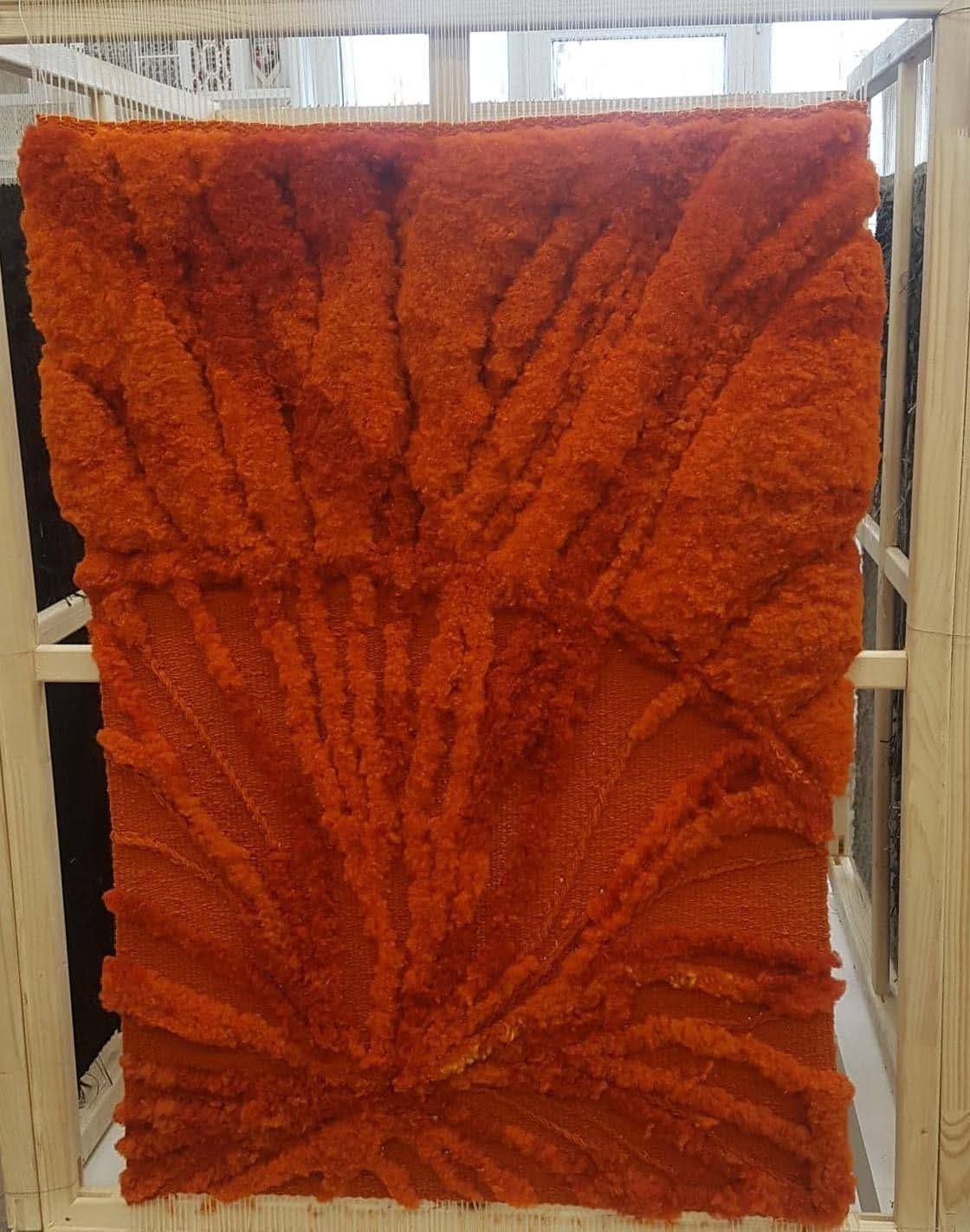
A.N.: I would like to continue exploring the technique of weaving. I learned the basics of this method at university, but I wish to deepen my knowledge, as I consider it both a fascinating and challenging technique. I plan to develop projects that involve a variety of textile materials and threads, experimenting with textures, colors, and structures. For me, it will be a process of discovery — of ideas, of materials, and of the ways in which they can be combined to create new forms of artistic expression.
A.M.: If you had to define your artistic practice through one keyword, what would it be?
A.N.: My textile work is based on emotion. Every gesture, every stitch, every spot of color, becomes a bridge between the material and my inner feelings, inviting the viewer to feel and engage in a dialogue with this sensitivity.
A.M.: How do you relate to the concept of the exhibition Breaking the Silence: A Visual Narrative on Emotions Left Unspoken and how did you develop your artistic intervention in this project?
A.N.: I was very intrigued when I heard the concept of the exhibition; it stirred a wave of emotions in me because it is a close subject for me, and I immediately connected it to the theme of memory, which I think of as a puzzle of memories, emotions, and experiences that can be influenced by many factors, one of them being depression. I started from the idea that depression is not just the absence of joy, but rather a distortion of the way we feel and perceive the world — a kind of prison. This installation was born from an attempt to give form to a void. I combined the fragility of textile material with the rigidity of a metal structure, creating a space where emotions come together and become visible. The installation aims to be a shelter — a place of protection, but also of reflection for the viewer. It is a space where each of us can recognize their own fragility.
The interview was conducted as part of the cultural project “Breaking the Silence: A Visual Narrative on Emotions Left Unspoken”, co-financed by the Administration of the National Cultural Fund (AFCN). The project does not necessarily represent the official position of the Administration of the National Cultural Fund. AFCN shall not be held liable for the project’s content or any use to which the project outcome might be put. These are the sole responsibility of the beneficiary of the funding.