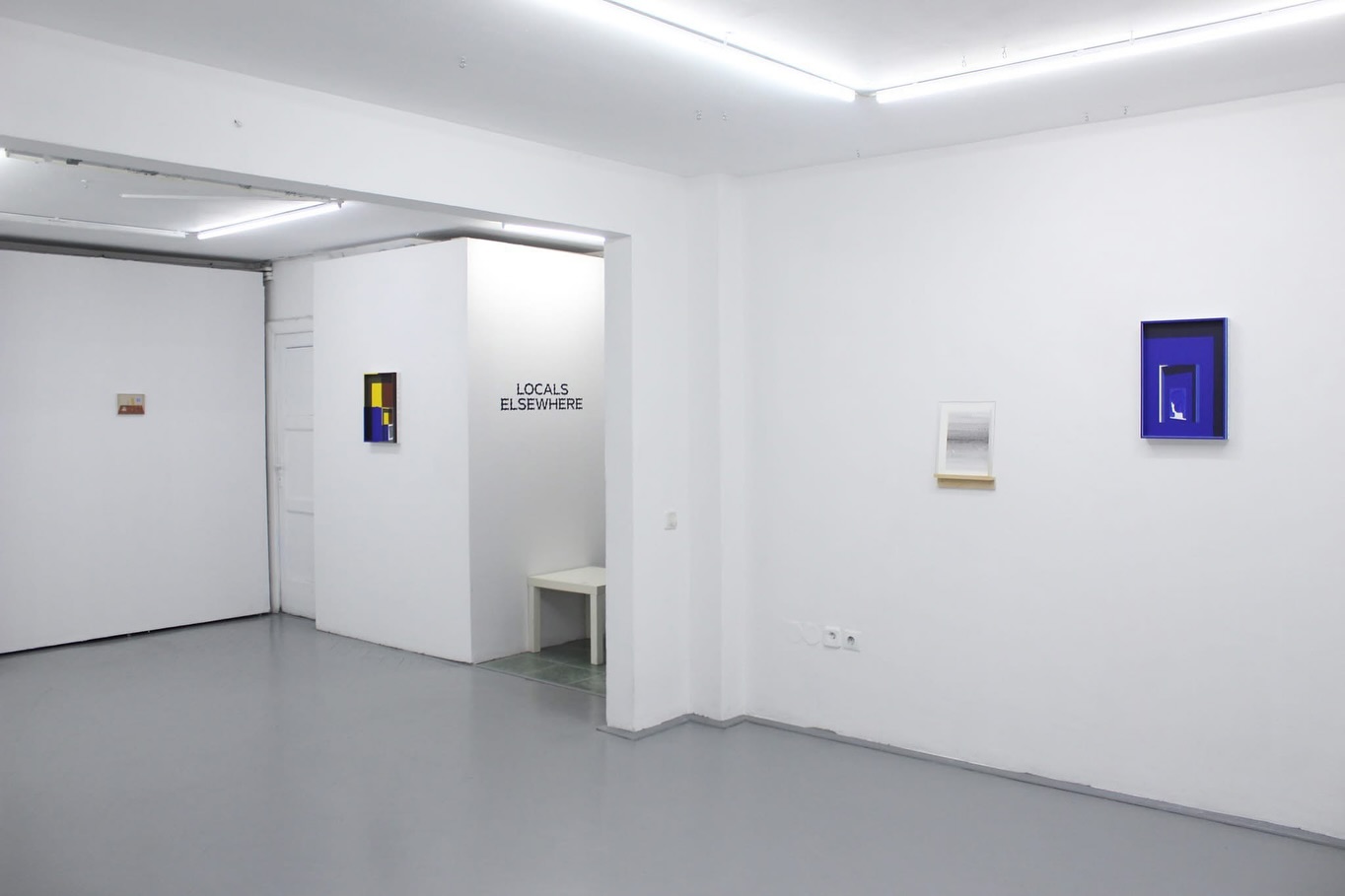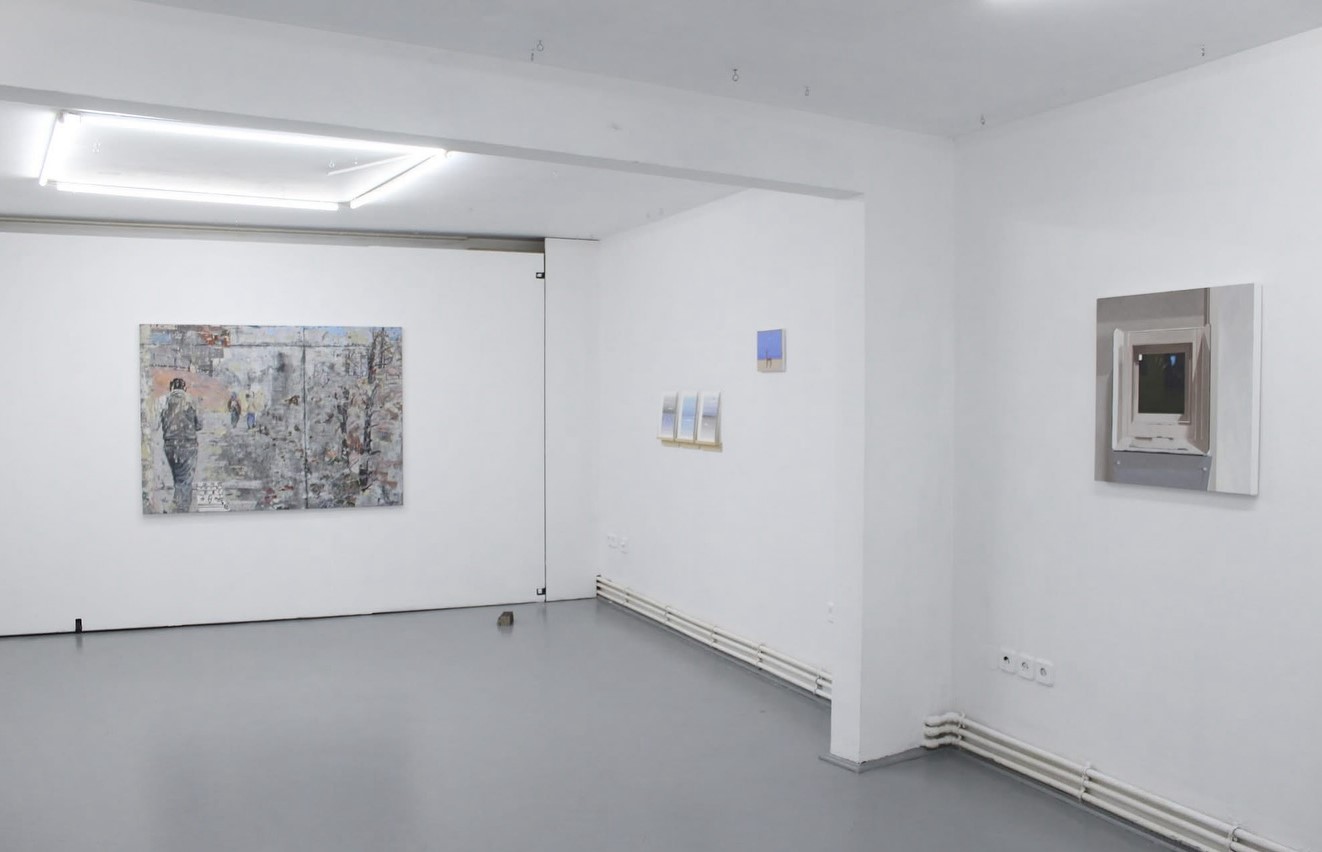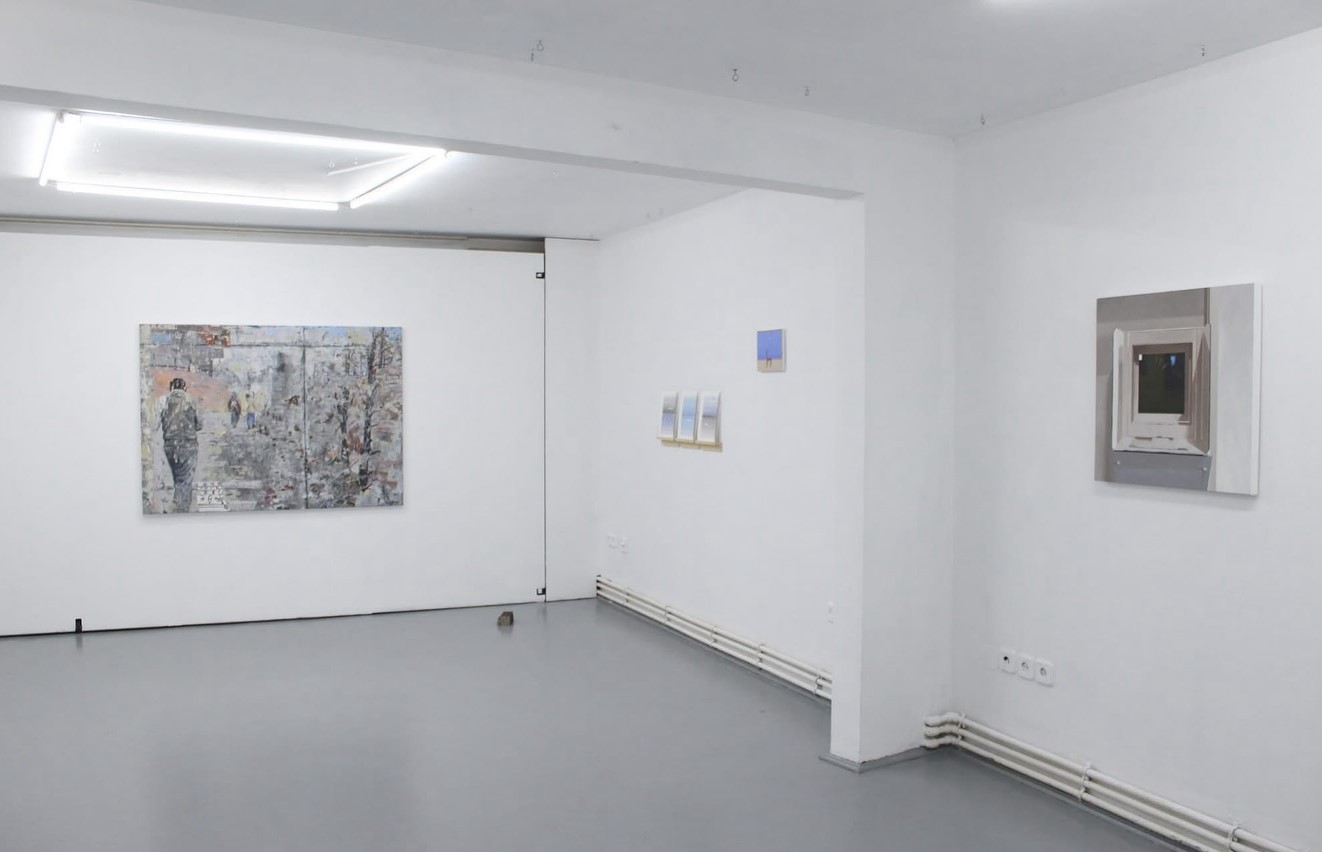
The exhibition “Locals Elsewhere”, on display at Etaj artist-run space, is a project that brings together five contemporary artists: John Dickinson, Marina Kassianidou, Aitor Lajarin-Encina, Marius Lehene, and Sarah McKenzie.
“Spaces of confinement, hyperplanes of simultaneity, hearkenings, gaps between what is and what seems, memory and forgetting, spaces of humorous speculation, and spaces of rumination – each becomes alive in specific ways in relation to us. They become places. In some of these, we are locals, in some, outsiders.
Some of us are outsiders to all of them. We live where we are physically, and we also live elsewhere: in our dreams, memories, projects and desires. Locals Elsewhere is an exhibition featuring the work of five artists living in the West and Southwest of the United States. These artists process their surrounding spaces, natural environments, and man-made elements, taking in their immediacy but also their paradoxes – their relationships to places they know in faraway lands like Cyprus, India, Spain, Romania, or in (the more distant still) fictional spaces of literature, art, and film. Each of the five explores the visual and conceptual intersections between the local and the global, the native and the foreign, the closed and the open, the familiar and the unfamiliar, and nearness and distance idiosyncratically.
John Dickinson’s recent works explore the connection between negation and signification, as well as the relationship between image and object. The legibility of intention and the influence of received forms – say, the frame, are other concerns also looming in the background. Dickinson refers to these as “red herrings, competing orders of information, and contrived incidents” and they converge in the work, impeding and simultaneously establishing potential meaning.
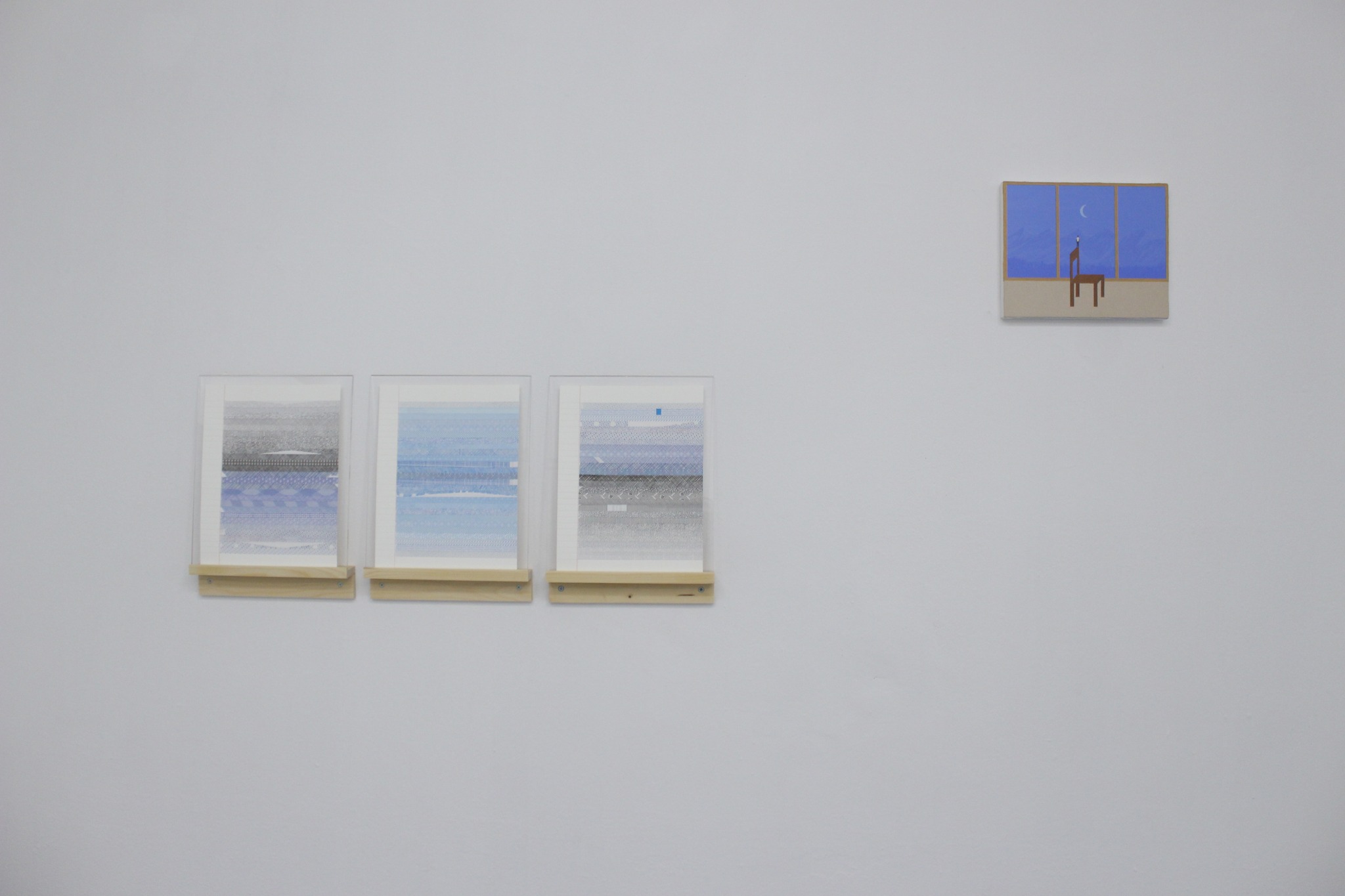
The surfaces of mass-produced materials are the focus of Marina Kassianidou’s interest here. Her works establish a tension between these materials as physical supports for marks and them as integral drivers of the work whose “intentions” the artist is, in a sense, following. What results is partially discernible marks that recede into and thus activate semantically the mechanical, accidental, and “natural” marks apart from the artist-made ones.
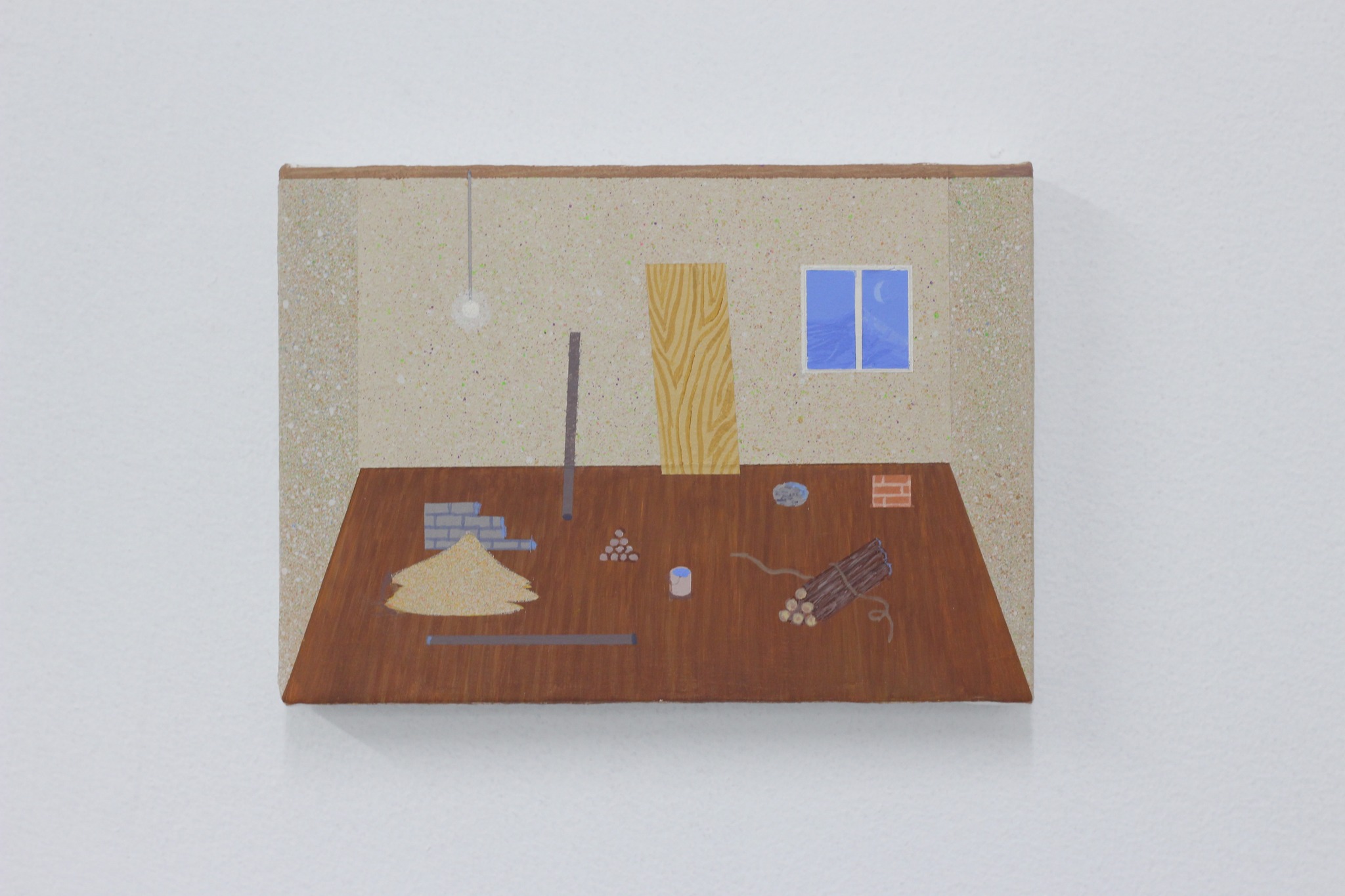
Familiar but enigmatic scenes unfold in Aitor Lajarin-Encina’s diagrammatic paintings. Symbolically and metaphorically, they refer to existential concerns the main theme of which is, possibly, the question of “where are we, humans, now?”. Unfolding like fables with varying degrees of encryption, his works reflect and ruminate on issues regarding the relationships between humans, between them and the human-made habitat and the “natural world”.
Built in transferred layers of paint woven together in fragments, Marius Lehene’s works open interferences between parallel visual worlds. Cracked, chipped, peeling, and tired, these images and surfaces seem unable to offer immunity to whatever system they locally and temporarily describe. Pondering simultaneous locations, his paintings multiply the point of view, the implicit “I”, and highlight the precariousness of the figure-ground segregation.
Sarah McKenzie documents the built environment through carefully crafted paintings, using architectural changes as evidence of societal, economic, and cultural shifts. She focuses on institutional spaces, particularly American museums and prisons, where cultural transgression is celebrated and criminal transgression is punished. These spaces, distinct from all others, maintain their relationship with the entirety of our built environment, serving as both a critique and a symptom of it.
The exhibition can be visited after opening by appointment until August 22, 2025.