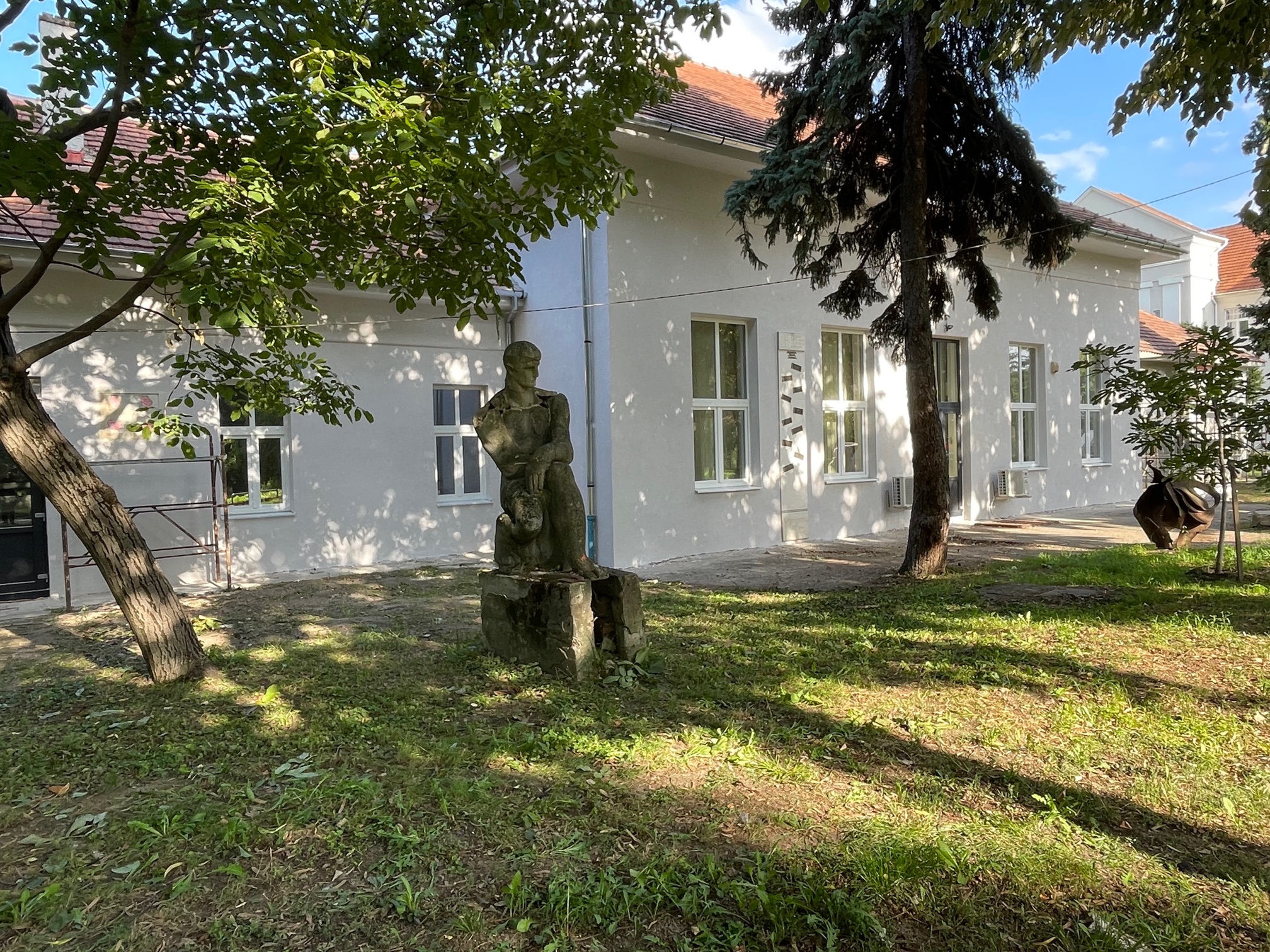
The cultural program “La pas prin atelierele UAP din Romania 2023/ Walking through the UAP Studios” includes exhibitions, debates, and guided tours by professionals from the creative industries in the buildings of the Union of Visual Artists in Bucharest, Râmnicu Vâlcea, Arad, and Timisoara.
Art lovers can meet dozens of exceptional artists in their creative universe: the Studio. After the exhibitions opened in Bucharest, Râmnicu Vâlcea, and Arad, events followed by visits to local studios, the program continued in Timisoara between July 15-16.
Gabriela Mateescu, the project coordinator, talked with some of the artists from Arad and Timișoara involved in the project “Walking through the UAP Studios”, about how important the studio is for them, how they managed after college without a studio, what stability means and rented studio and the fear of losing it. . Among the artists who have talked about this is also Radu Pandele, who rents a studio in the ISAF building in Bucharest, and Edith Torony, who has a studio at home.
ARAD
Cosmin MOLDOVAN: “The need to have a studio appeared in high school at the end of the twelfth grade, when I was preparing for college admission when I was modeling ronde-bosse portraits in my parents’ kitchen from the block, and then pouring them in the drying room from the 4th floor.”
This whole process was a spectacle for the neighbors who held meetings in that space, which was suffocated with cigarette smoke and brandy smells; where towards the end of the sessions, they also analyzed the plaster portraits in the style characteristic of the worker in the communist factories, who was good at everything, from the carburetor of the Dacia 1300 in the parking lot being tied with wire to the color and pattern with which they painted the staircase…
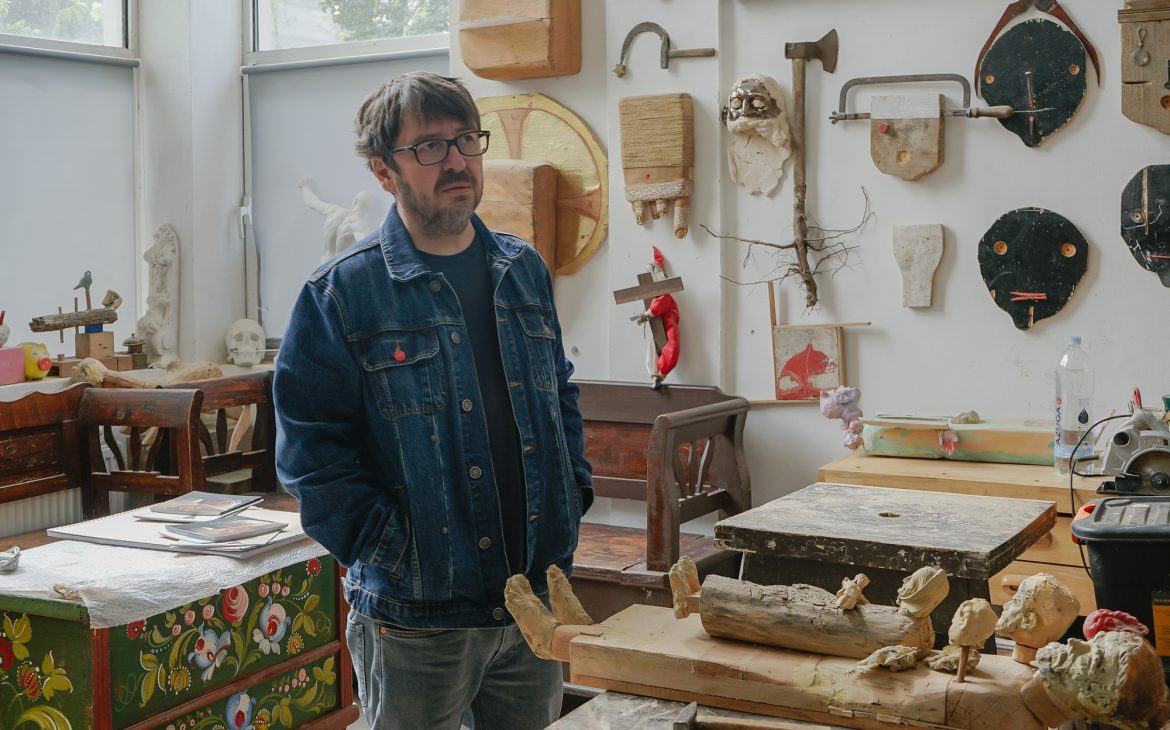
Credit photo Andrei Mateescu
During the first two years of college, in addition to the activity in the workshop at the college, which was small and inappropriate, I also welded sheet metal works in the ACR tin shop where my parents worked. Here again, I met all kinds of experts in contemporary art, who advised me how to use the metal, clean it, and paint it with primer (besides looking good, it doesn’t rust, said Spark, the welder’s nickname).
At the end of 1996, it was a good time for real estate investment, so my folks decided to buy a piece of land with an old house to build a studio. I lingered in the space created by them until 2002, when I moved to another area also intended as a car workshop, which I used until 2019, although in 2014, I received a workshop from UAP that looked deplorable. When it was put on its feet, that space was demolished to make way for the monument of the Great Union in 2018, a memorial that has yet to be erected.
At the end of 2020, we moved into the new workshops built from scratch after a long process managed by the Arad Branch of UAP in Romania.
Laurian POPA and Diana SERGHIUȚ: “The studio is for any artist his whole universe, and for us two, it is no exception. The need for a workshop is an absolute one. Whether it was a large space, a room, or a corner of a room, we both always needed a clearly defined area to unfold, a place to make art.”
The dimensions of the spaces we worked in over time differed, and we had to adapt constantly. The dimensions and characteristics of these spaces directly influenced our painting, even when we tried at all costs to abstract from the lack of adequate space.
I came to Arad in 2007, when I was a 4th-year student, and since then, I have shared the workspace with Laurian Popa. We worked together in the room he used as a workshop for five years. Although there was excellent communication between us from the beginning, and we always tried to take into account the individual and specific needs of each, the space of 3×3 m was not roomy for both of us all this time.
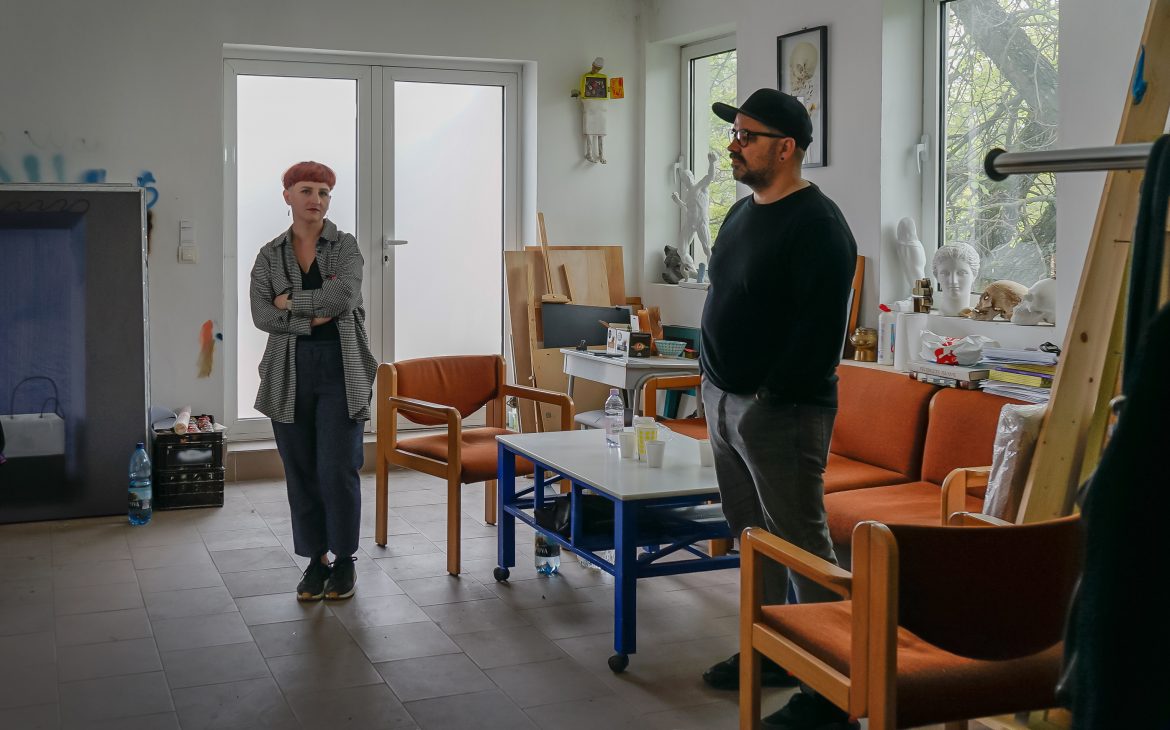
I worked in the room that Laurian had used as a workshop since high school. We both had only one wall to paint, the rest being taken up by stored works. Not infrequently, I would prop the work I was painting over the stored ones and work that way, especially when we both had to work simultaneously. Our work inevitably spilled through the hallways and other rooms, all stacked up so that there was only one narrow passageway to pass through.
In 2013, after six years of waiting, I received the first space, a workshop from UAP Arad Branch, which came as a lifeline. Also, in 2013, our first girl was born, and the room at home regained its destination as a living space. It doesn’t mean that we don’t work at home, but only that the workspace has been reduced to an office of generous dimensions where we continue to carry out our activity, but we started to practice oil painting only in the workshop. We both loved the studio on Mircea Stănescu Street, block ½, a 45 sqm space, on the 1st floor, in the city’s central area. It was, for both of us, the first space intended for painting, a room that had only this destination and existed only for this purpose.
When I took over the workshop, the conditions could have been better. The workshop was disconnected from the utilities, and the interior was unmaintained. We invested, reconnected to the utilities, changed the installations, painted, and used the space as a studio for eight years. After eight years, the opportunity arose to enter a new workshop in a new building, also belonging to UAP Arad, and it was tough for us to part with the seminar we already had, even if it meant moving into a new building because we were very comfortable with “our studio.”
Parting with that workshop was not an easy one, but, being the period after the pandemic, the detail that convinced us to leave it was the terrace of the new workshop. Besides this gorgeous terrace, there are other reasons why we are lucky to be in this space. Unlike the previous studios, which was a tenant association, where we have only one artist neighbor, the whole building is dedicated to artists, and we feel like we are part of a community. In addition, the space here is generous enough for both of us to have well-defined work areas.
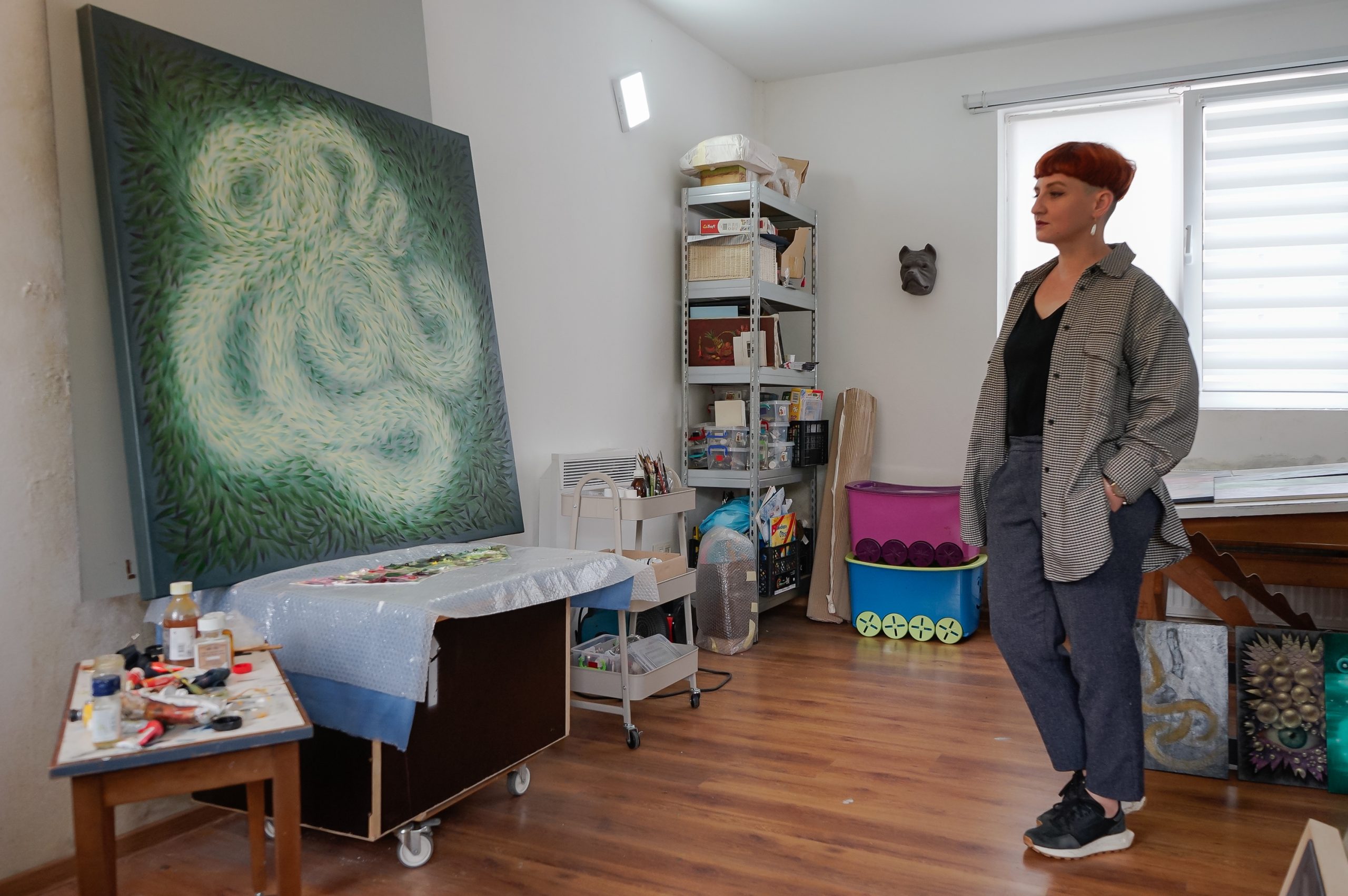
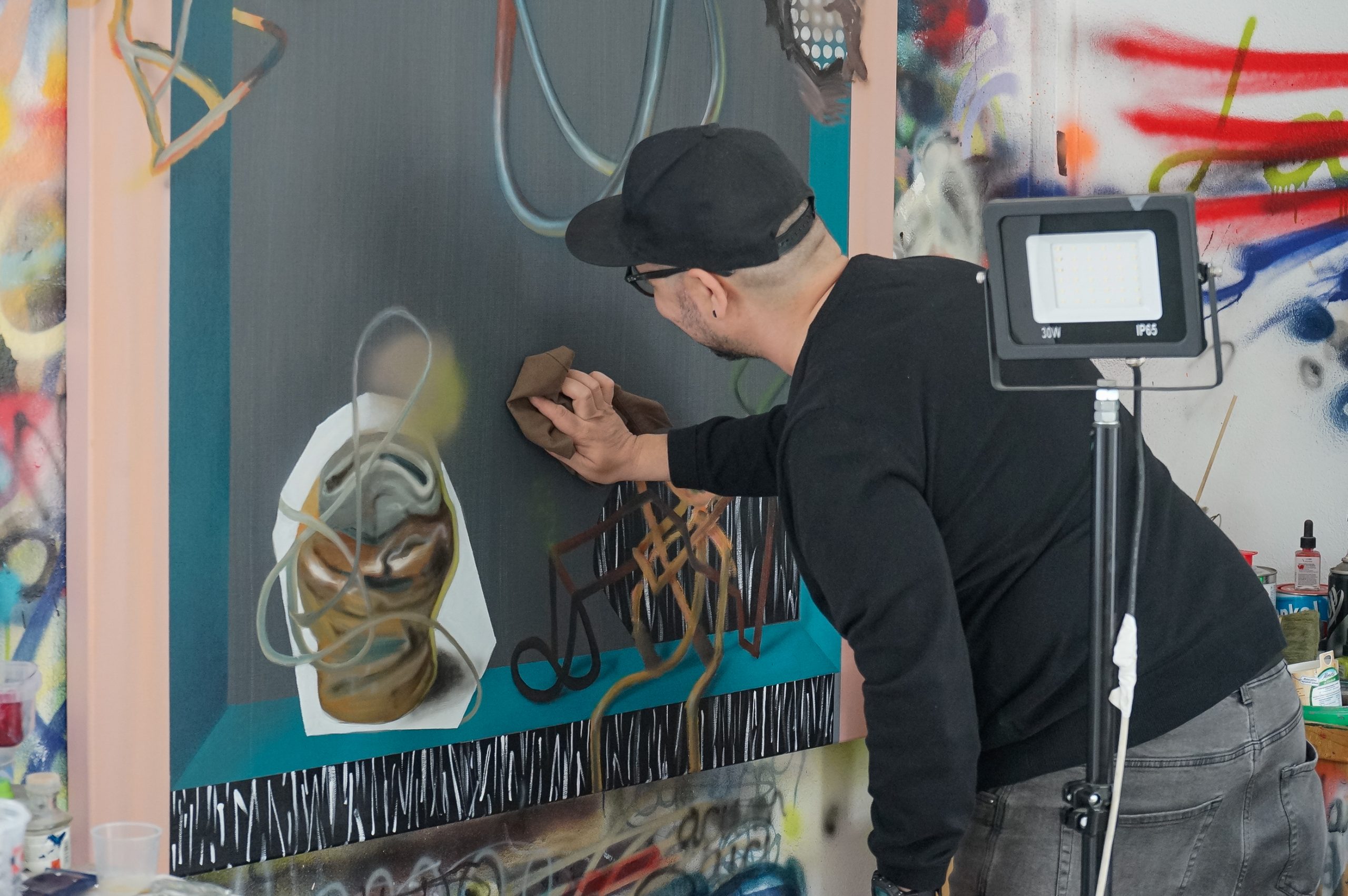
It is only possible to relate to the space you have available when you make a work. When working on specific dimensions, you must consider the area open to do the work when you produce it and the details related to the route it will have after completion. As time passed, we worked in different spaces and experimented, and we drew certain conclusions. Now we make many decisions directly related to the available area and the workshop’s location.
Laurian works on large scales and would most likely work on even larger scales if he didn’t have to consider all the logistical details. Considering that we are both active and concerned with our practice, we have to take into account the amount of work to be stored in the workshop in the next period and how this storage could affect us negatively.
It is not only about the results themselves but also about the way they are framed and especially about the boxes specially built for transporting the works, which are very bulky. The solution was designed to be disassembled for storage for these boxes constructed of wood and plywood created specifically for transporting three to five generously sized pieces. These boxes are a necessity, not a fad, considering that we both exhibit very often outside of Arad and not infrequently, our works have been damaged during transport.
Our relationship with the workshop is, therefore, as close as possible. Not only do we leave our mark on them, but they also leave their mark on us. All these spaces have made and continue to be part of us and our practice.”
Radu PANDELE: “I was never really able to work at the university because there was a lot of overcrowding in the studios, chaos, and parties. I remember always staying up late into the night by myself in high school. I felt quite comfortable painting at home too, but that was never an excuse not to work.”
In Cluj, in 2015, I rented a space, which turned into the Launloc space, where I held exhibitions in workshops about every two months. It was in an old mansion, in Gruia, with about six high rooms, three of which were workshops. The activity continued after I retired but ended when the owner sold the place.
In France, in 2016, when I went with Erasmus, it was great at the university because it was always accessible, and nobody worked there. When I returned to Bucharest with some friends, we rented a workshop cheaply in a space called Elisabeta. It was very dynamic, always events, and a fantastic community was there.
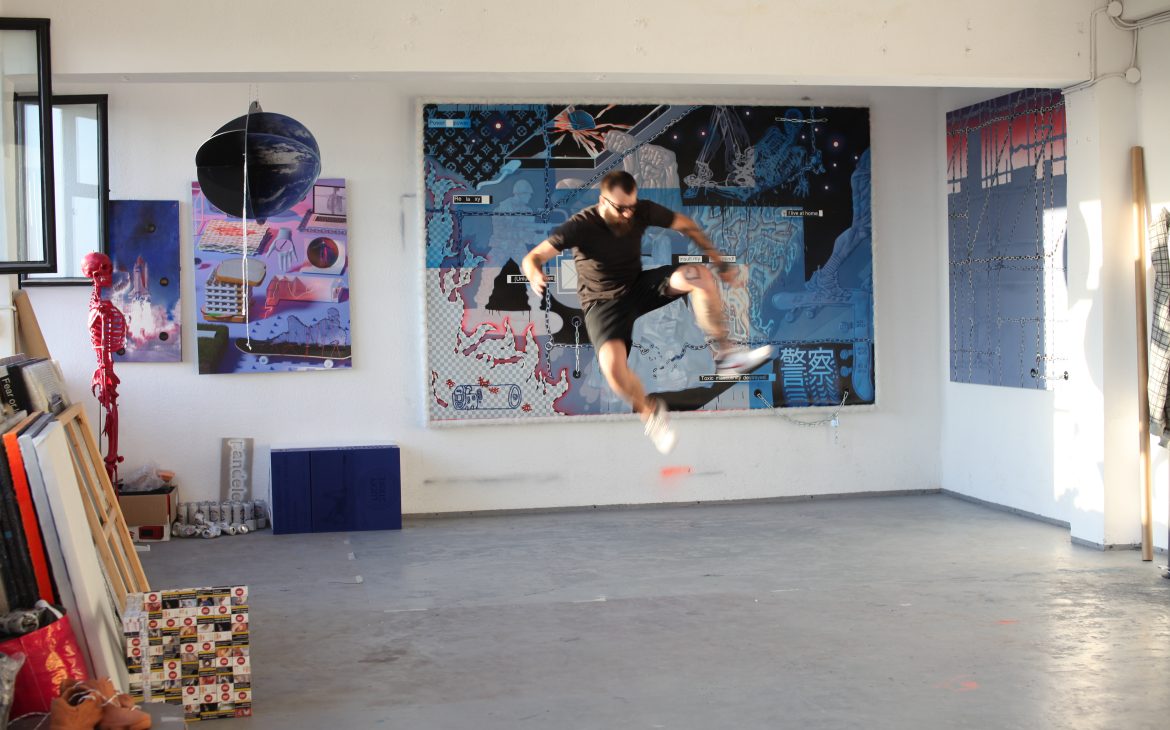
In my current workshop rented in the ISAF building in Bucharest, I invested a lot; it was in a terrible state; I installed the electrical system, painted the walls, and the floor, installed the door, double glazing, heating, etc. It seems normal to me to invest in a space where I spend more than half of my life, but abnormal that we are the only social category that pays for its work.
The studio is located in an industrial building abandoned in 1989, which has now become a peripheral micro-cultural center with many artist workshops, galleries, animation, photography, and architecture offices. I have had the workshop there since 2018, and although the rent is expensive, I enjoy an optimal view and a much larger area. I appreciate that I can make noise at any time of day. After four years, I have become very attached to this place, especially since I realized I was born opposite, at the Giulești Maternity Hospital. Because the owner of the building is kind of keeping me in suspense when we talk about the future, I lack stability and would like a place that I know has been mine for a long time.
Timisoara
Edith Torony: “I have felt the sacrifices you make as an artist to have a studio since childhood. My father is a painter, and I grew up in his studio, which we shared. Of the two rooms in the apartment in the block where I lived in Timisoara, one was supposed to be mine, but it had become a studio for financial reasons, so I slept with my parents and played in the workshop. It was fascinating.”
I remember building a house out of detergent boxes, even though the space was too small. As we grew up and needed more space, we moved near Timisoara, in Ghiroda, to our grandparents’ house, which was unfinished. Here our activities were not much appreciated by the rest of the family, although the space allowed us, so we ended up having the workshop in an unfinished bathroom. Then we moved to the hallway, where I took turns at the easels with my father or painted in my room, where I splashed all the furniture and the carpet.
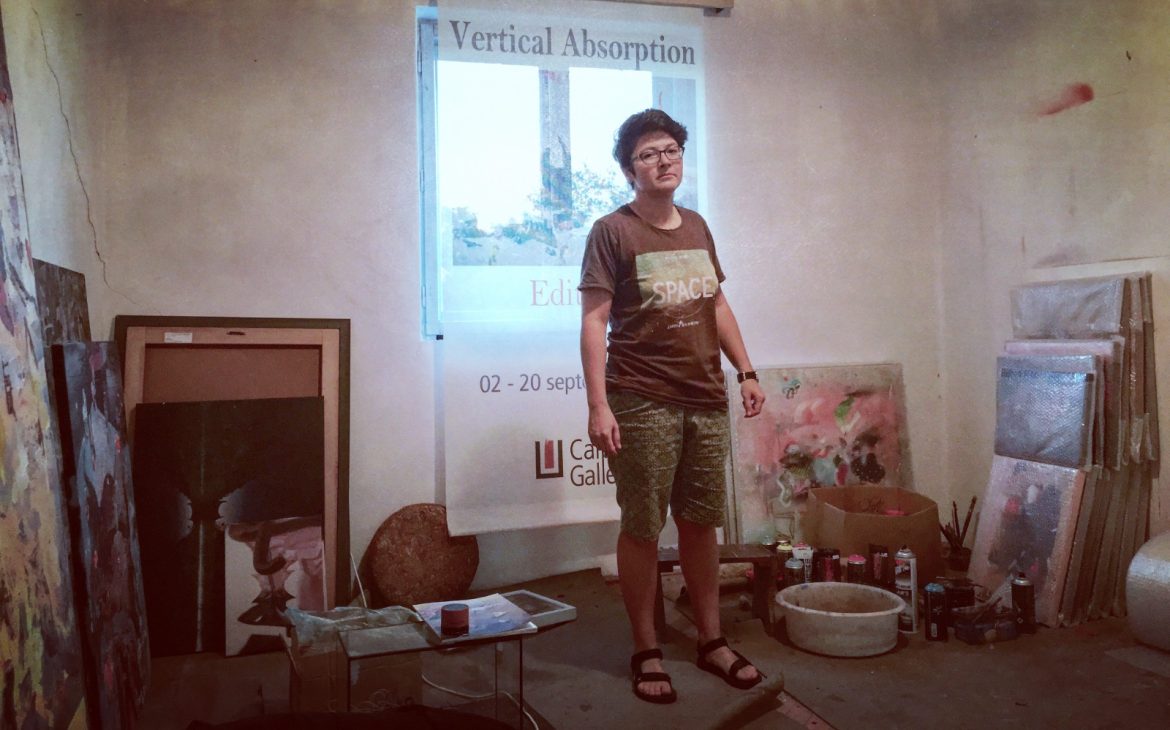
When I got to college, it was a dream; I stopped going home; I worked a lot there because there was good light, no one bothered me, there was enough space, and it didn’t matter if I got dirty on the floor, and I only went home late in the evening, when it was the last bus.
After my master’s degree, I received a space near my house from an aunt, so for several years, I worked there. I was not even interested in getting anything else because I had that space, for which I only had to pay for electricity.
I started working with galleries, exhibiting, and selling during this time. That was my first real studio, an unforgettable experience. Here I was able to unfold fully, to grow, to experiment. To be alone. It was quiet. One of the workshop windows overlooked our shared garden and had a gorgeous view; I loved sitting there smoking, watching the garden change with each season or day. I can still remember the smell and sound of summer storms from the chipped windowpane of my first studio. […]
As I started to sell, I converted two large rooms in my house into a workshop and work storage. So, from the summer of 2019, I could move and work in the new workshop.
Then in 2020, I inherited the house and converted almost the entire annex into a workshop. This space is where I still work today. At first, it looked like an art gallery. It was spotless and bright, with two side windows leading to the garden and one to the courtyard. A dream come true: I had heat and air conditioning but couldn’t get comfortable. It took some time to overcome the obstacle of that immaculate and sterile white of the new.
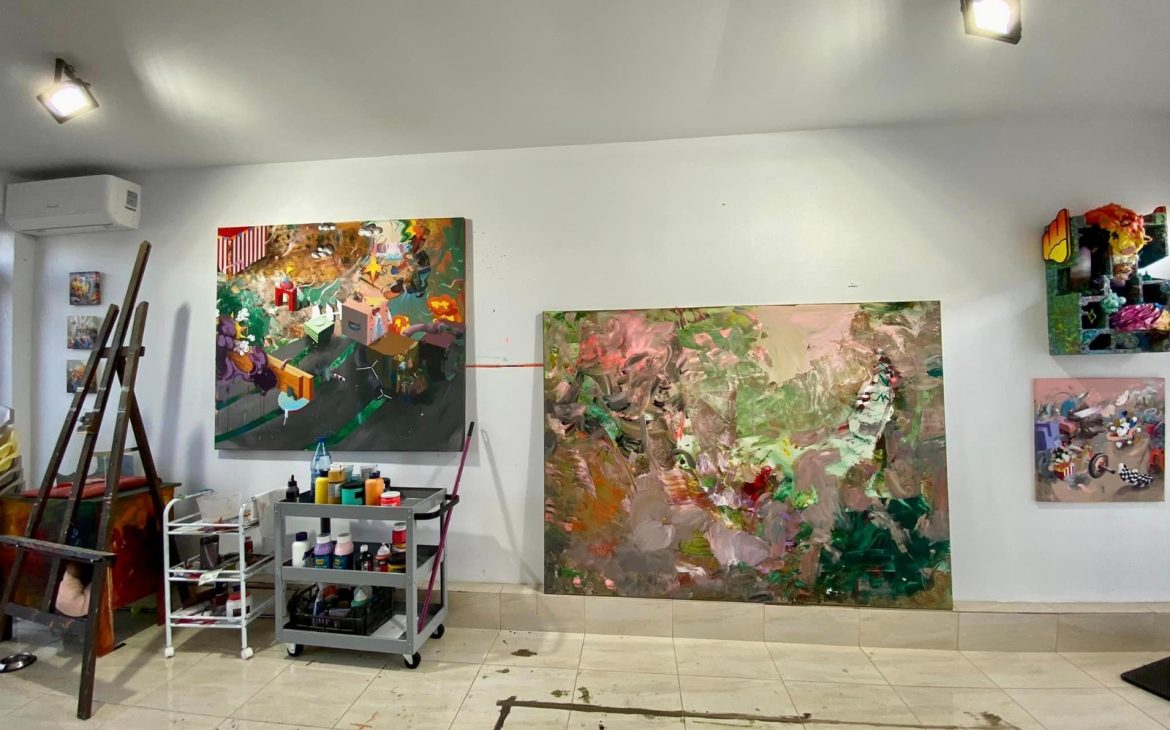
Sometimes I cover the window overlooking the garden with a banner from one of my exhibitions because it steals the view. When I work, I look for things inside; the outside jams me even though I initially draw inspiration from there. If you lack discipline, your home workshop can become anything but less of a workshop.
In my new space, I enjoy the coolness of the mornings and coffee, looking at the garden constantly transforming under the light of a new sunrise, but also the summer nights when I work at spotlights bathed in bright light having, on either side, two dark windows where the coldness and silence of the night entered. Unlike the old workshop, I feel more exposed; I am both an observer and an observed. That’s why I work best at night when through the big windows, I can barely make out anything from the impenetrable darkness; it’s like the whole universe is watching me.
Marius JURCA: “In 2014, immediately after completing my doctoral studies, I felt the need for a workshop and decided, together with the artist Livia Mateiaș to rent a space in the former Azur factory in Timișoara. Also, in 2018, we created the Digital: Canvas\ platform, an alternative space dedicated to digital art and content creators. We have created numerous One Day Show type exhibitions with artists from the country and abroad.”
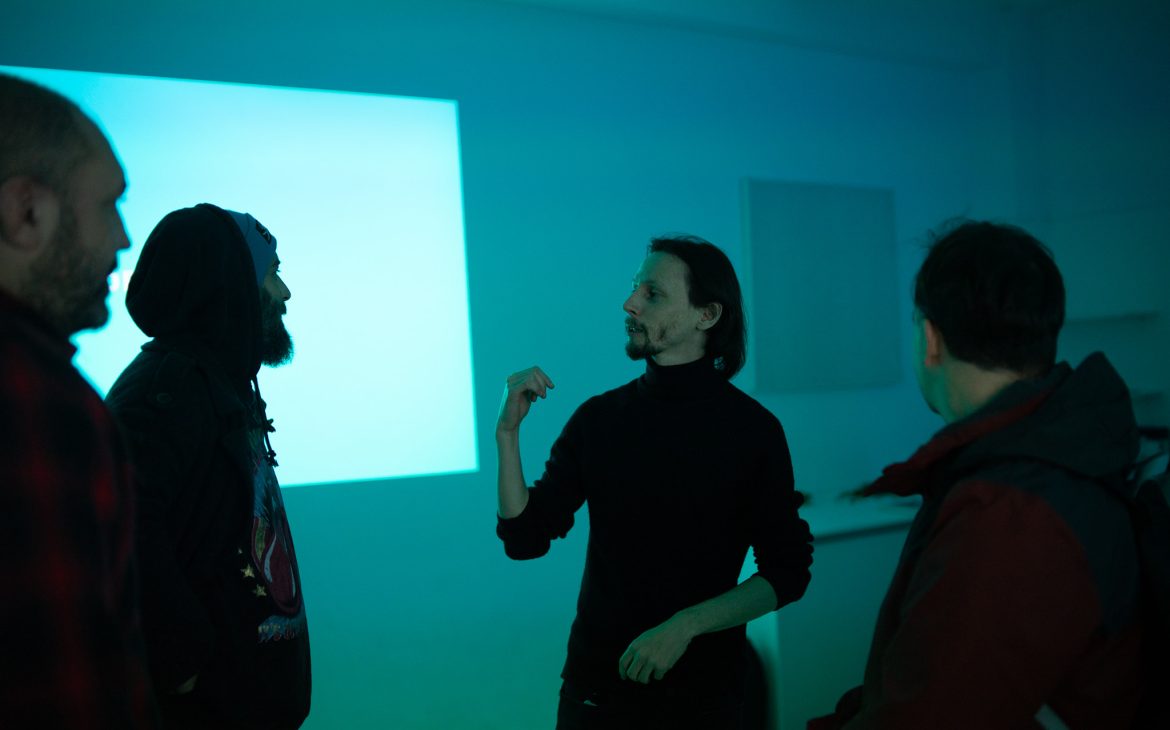
I created the Digital:Canvas\ platform because of the lack of exposure opportunities for artists who generated digital content in 2014-2018, both in Timișoara and at the national level, with very few exceptions. Therefore, having already collected a series of equipment (monitors, televisions, projectors, etc.), we decided to mount them directly in the space to offer especially young artists from the area of digital art, the opportunity to exhibit their projects in a dedicated space and without the care of the necessary technical equipment. Moreover, we also handled the design and promotion of events where required).
In the fall of 2021, twelve years after applying, I received from the management of the UAP Timisoara branch a workshop space in the Iosefin area, which I share with Livia Mateiaș, my wife, both artists. So far, we have restored and sanitized it to use it properly for our projects.
This workshop is essential for us because it allows us to develop our artistic approach further and, at the same time, to use the other space for organizing events and supporting young artists passionate about digital art.
Suzana FĂNTĂNARIU: “The workshops of the “Octav Băncilă” art high school in Iasi were spacious, marking the dream place of our becoming as future artists. For the students with grace, the teacher and director of the High School, Paul Ghiligor, granted additional access to work in these coveted spaces.”
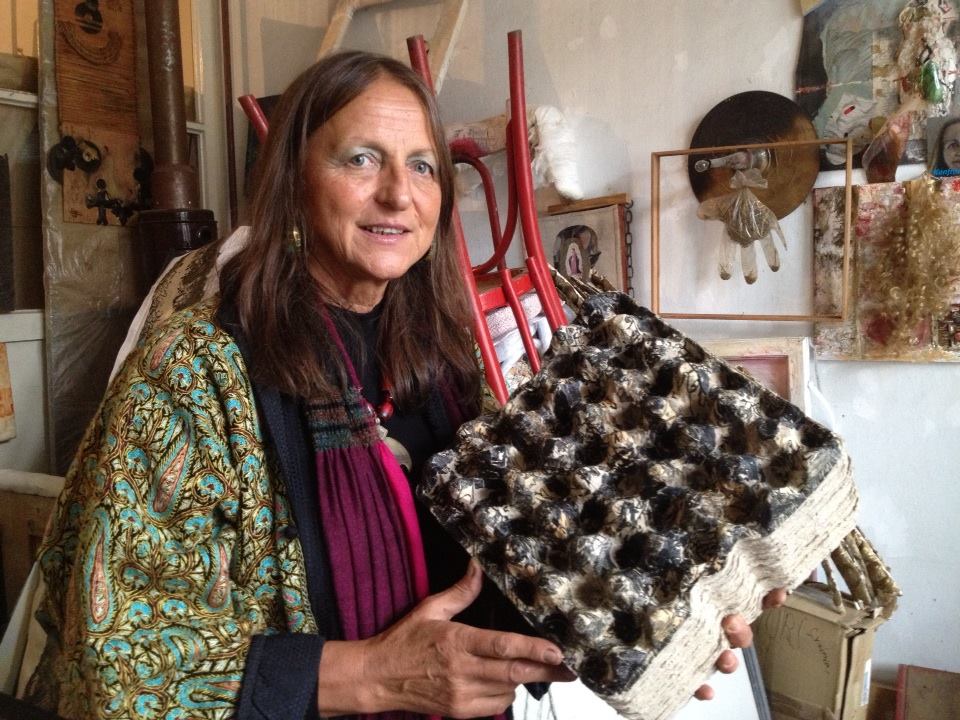
Being a student at the Institute of Plastic and Decorative Arts “Ioan Andreescu” in Cluj, the graphics department had a well-equipped engraving workshop where the life of an apprentice engraver placed between presses, printing inks, acid baths, lithographic stones took shape a long-term exploratory art genre. Professor Feszt Ladislau was the ideal teacher.
In 1975, as a graduate and teacher at the Art High School in Craiova, I had an inadequate workshop on the ground floor of an old building on Gheorghe Doja Street. After two years, I got a studio in the UAP Branch workshop building built by Peter Jacoby, a space shared with two other colleagues.
In 1986, a year after my transfer from Craiova to Timisoara, I received from UAP (president Victor Gaga) a workshop in a historic building, on Gh. Lazăr Street, no. 4, on the top floor, without an elevator, without heating, but during the 35 years, I have improved it with using my finance. The corridor and sanitary group are shared with two other colleagues: Constantin Catargiu and Alexandru Jakobhazy. Here I realized some individual projects: “Studio Life” (expo.), “Open workshop” within the Biennale Art Encounters 2022, etc.
In 2006, I won the Constantin Brâncusi scholarship at the Cité Internationale des Arts Paris, through a national competition, with the “Open Workshops” project. I worked and lived in the workshop destined for Romania for five months, an experience that marked one of the most prolific stages of my artistic career.
The project “La pas prin atelierele UAP din Romania 2023” is organized by the Nucleu 0000 Association in collaboration with UAP Romania.
Project co-financed by the National Cultural Fund Administration (AFCN)
Cover photo: UAP workshops and UAP headquarters in George Enescu Street no. 1, from Rozelor Park, Timisoara