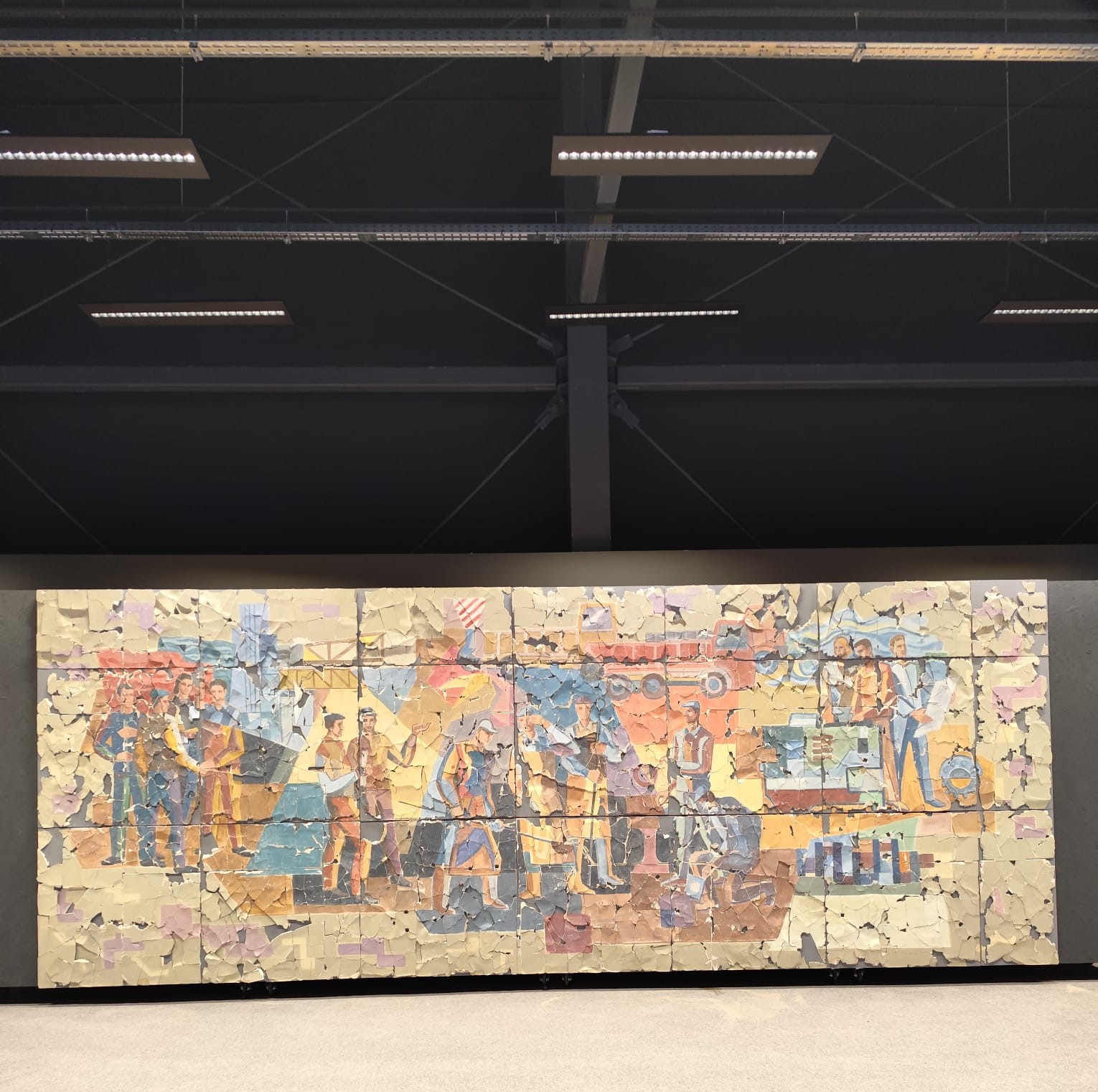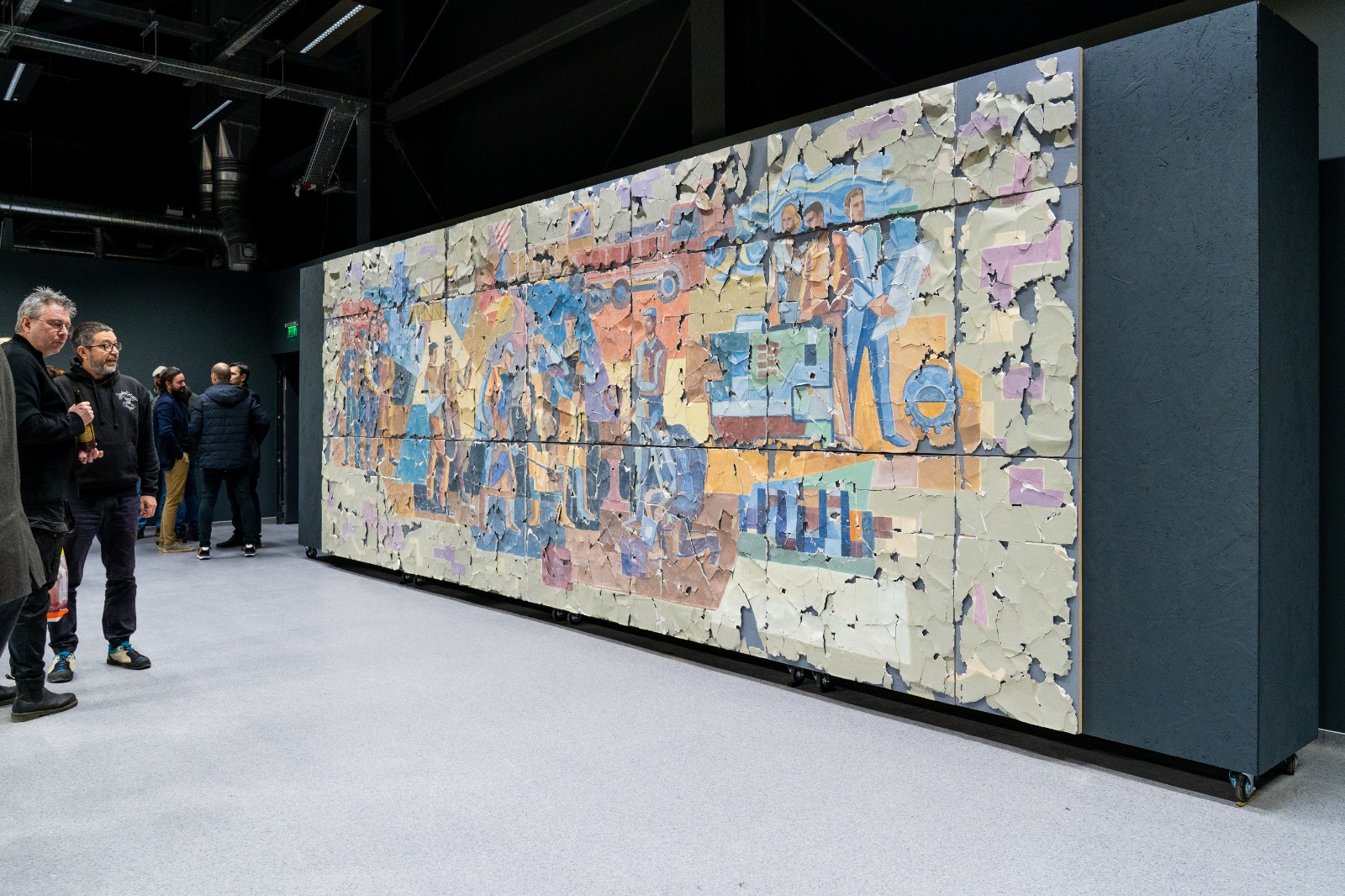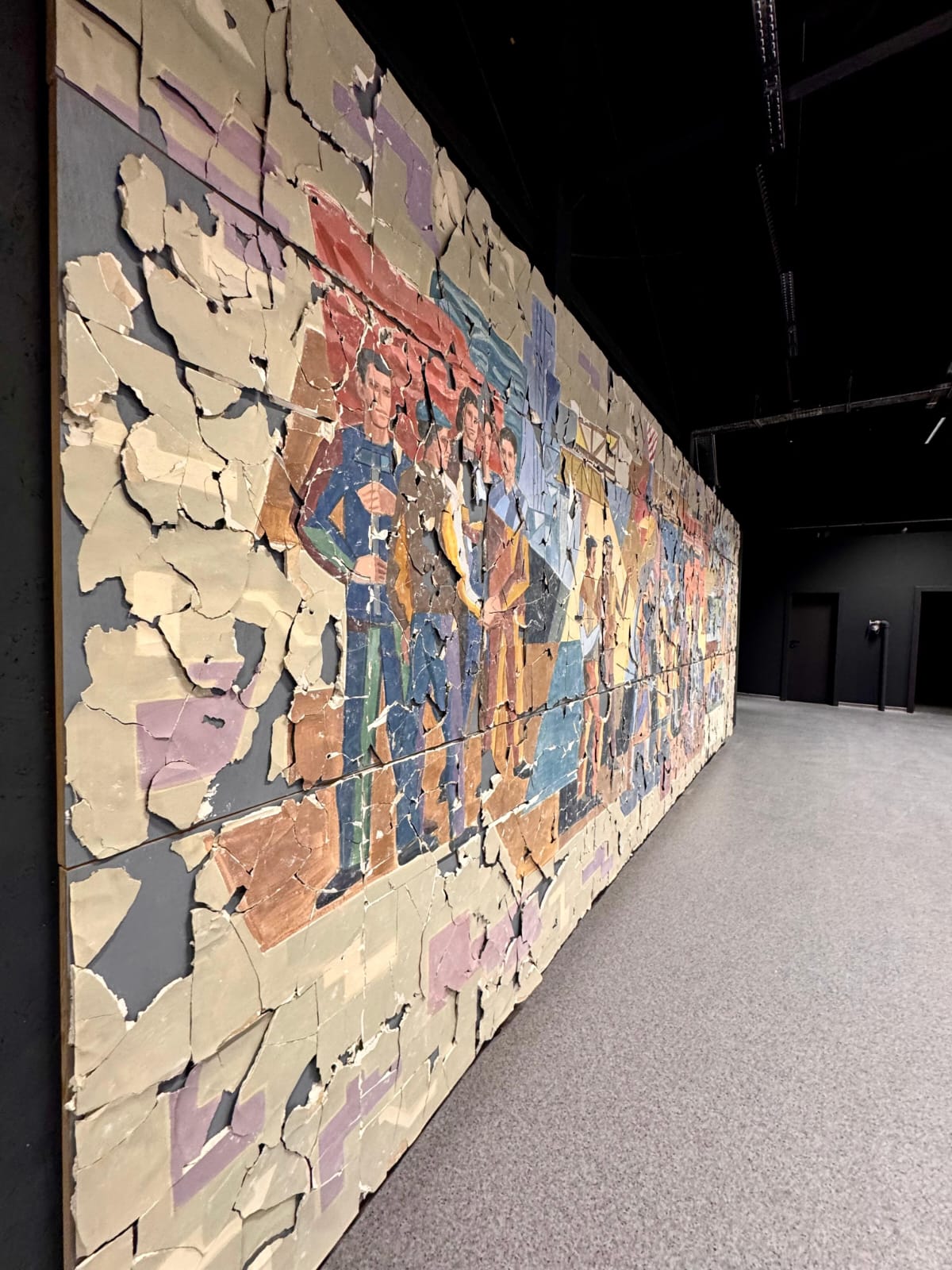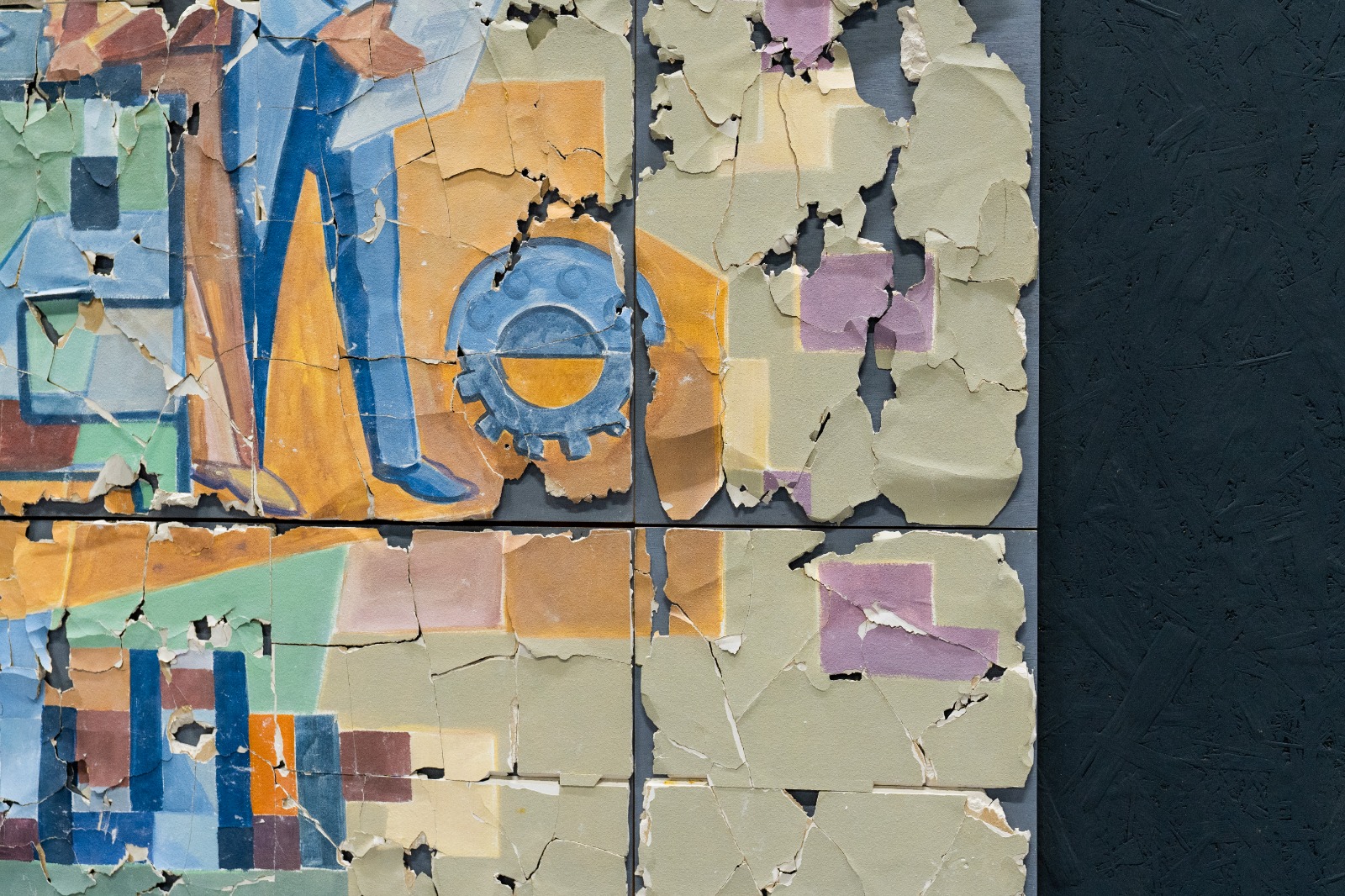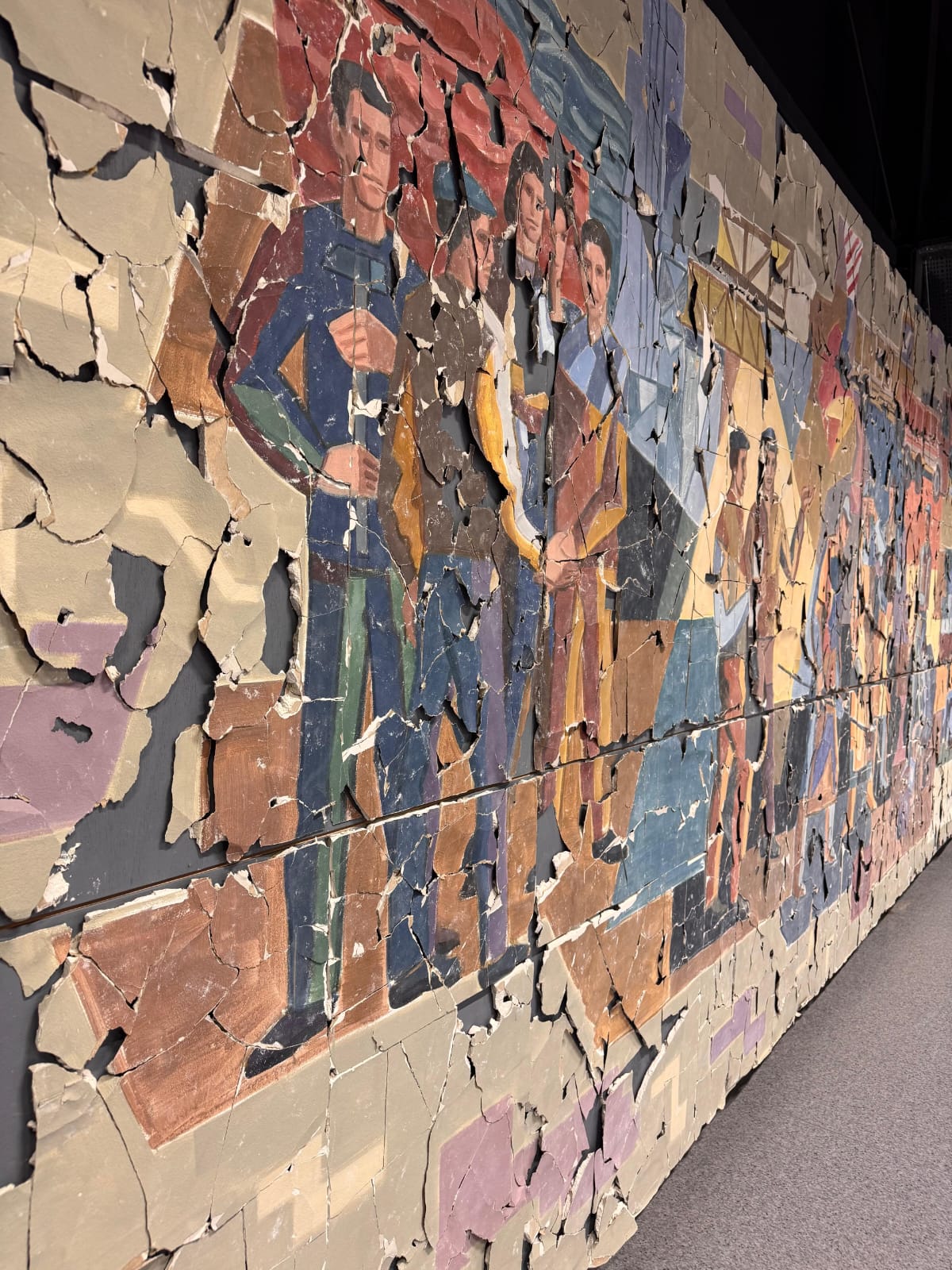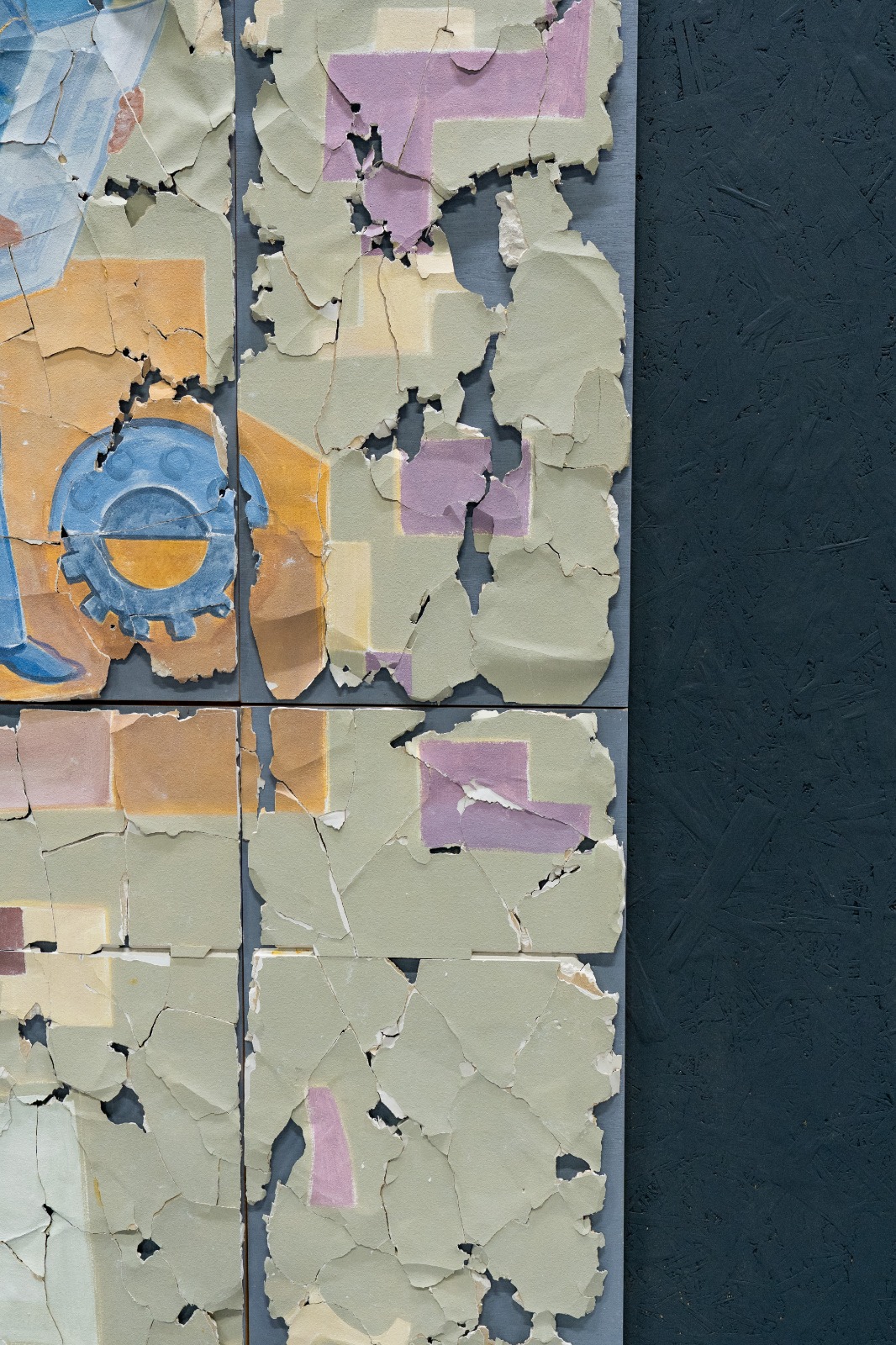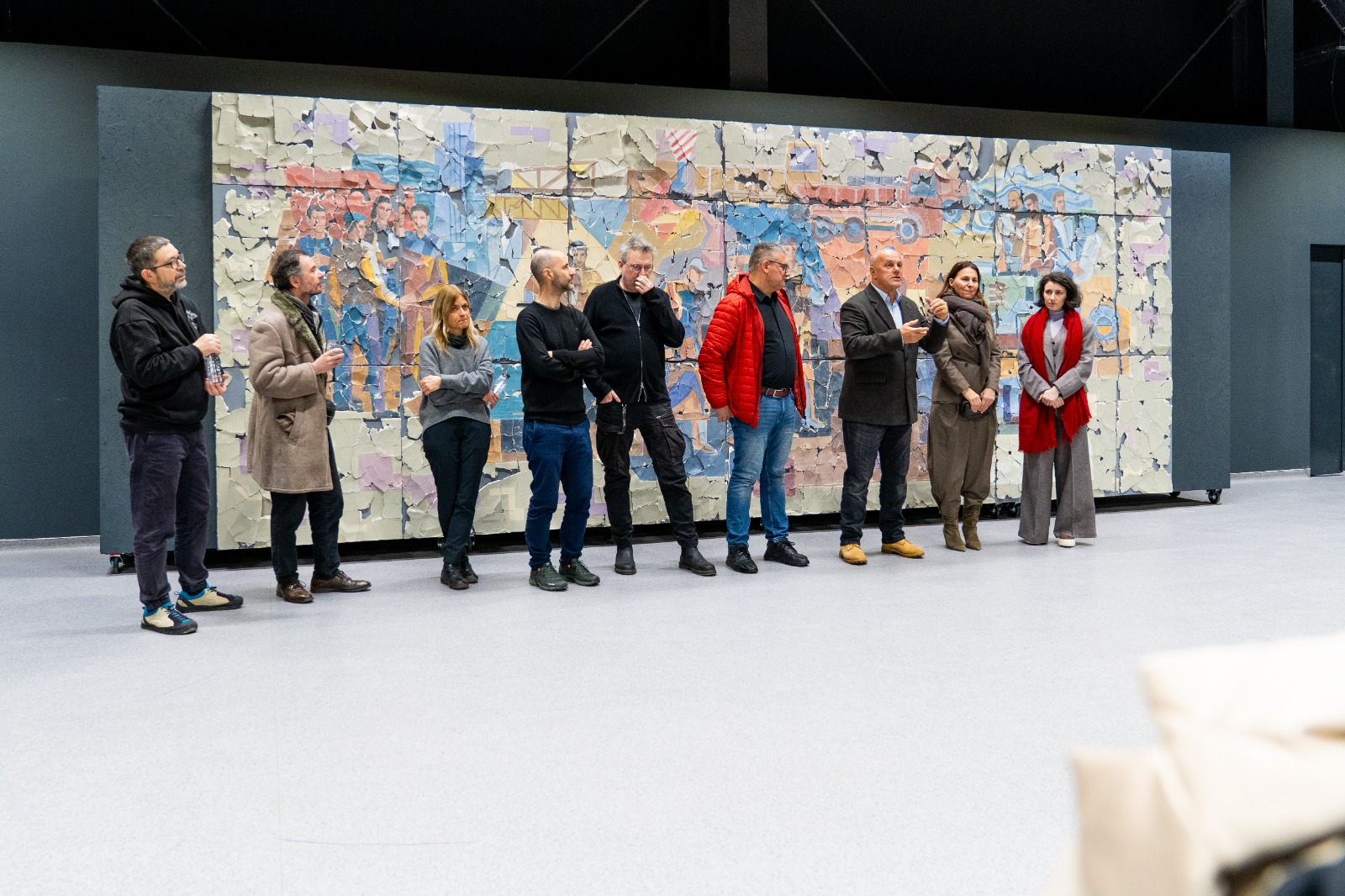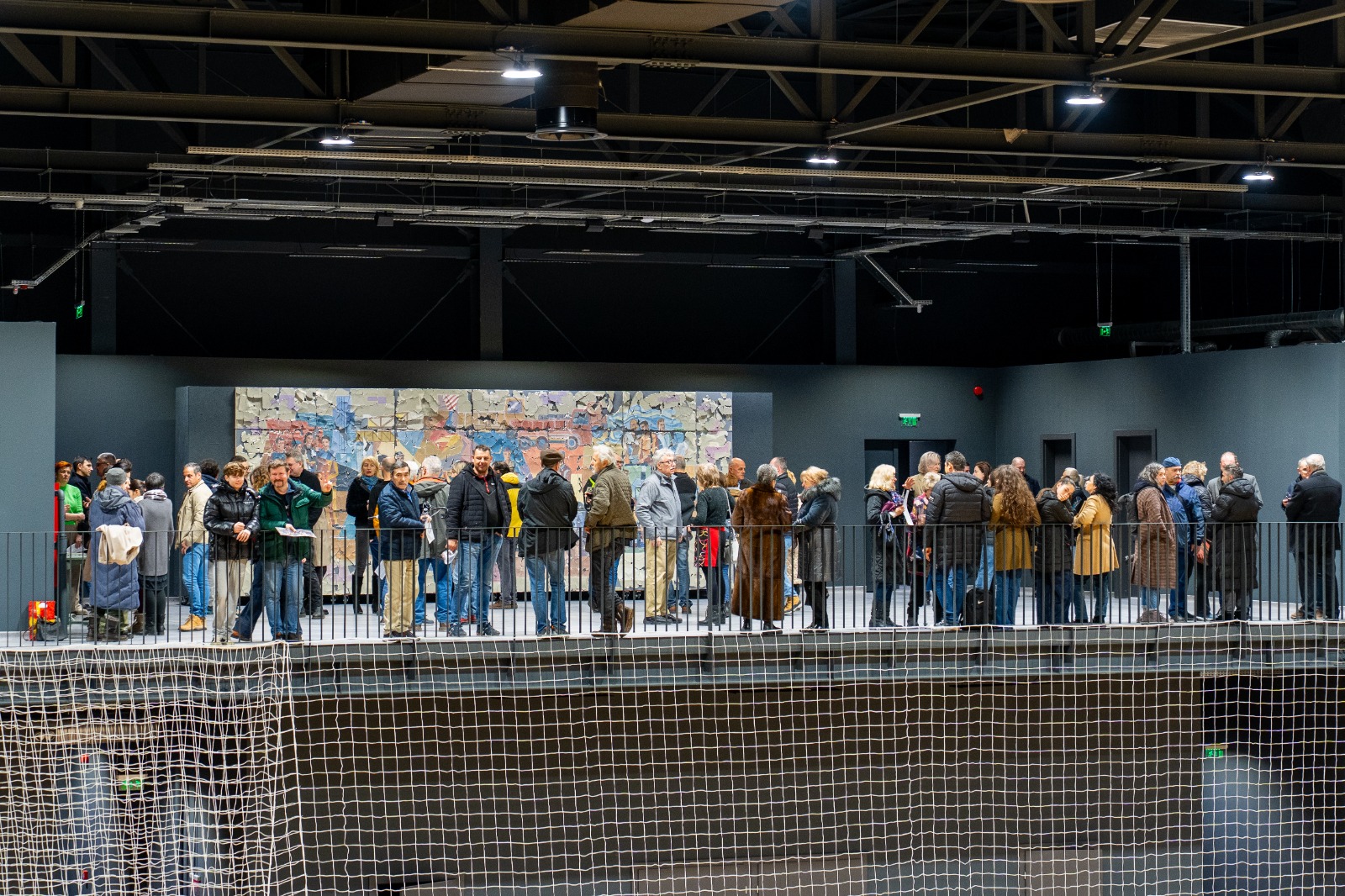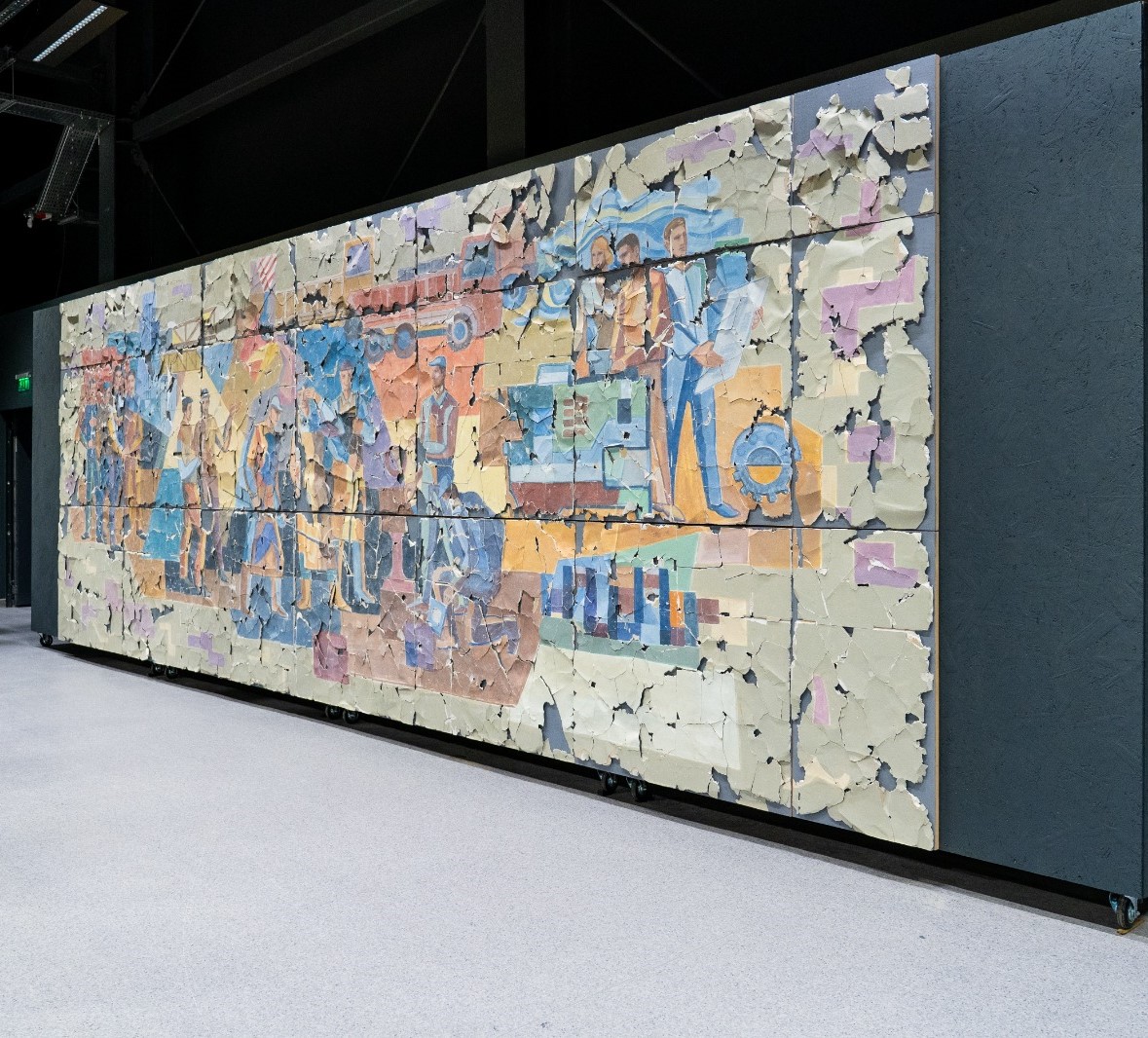
The Reșița Multifunctional Center opened on Friday, February 20, with the exhibition “A Reconstruction for the Past” an event organized in collaboration with the Plan B Foundation. The exhibition features a monumental work (900 × 250 cm) originally created by Șerban Savu and reassembled as a mosaic by Cristian Rusu, which was donated to Reșița.
The work speaks both to individual experience—how we reconstruct the future from fragments of the past—and to the transformation of a community such as Reșița, shaped by industrial history, transition, and identity redefinition.
Italian critic Pier Paolo Pancotto notes in the volume Cristian Rusu and Șerban Savu, Reenactment. Ricostruire il passato (Rome, 2024), translated into Romanian by Cristian A. Damian:
“Cristian Rusu (b. Cluj, 1972) and Șerban Savu (b. Sighișoara, 1978) both live in Cluj. The former is a scenographer and visual artist teaching at the Faculty of Theatre and Film, Babeș-Bolyai University, Cluj-Napoca, while the latter is a painter. Although different in individual and professional experience, both share the same cultural identity, knowledge heritage, and formative background.”
Both artists experienced youth under communism and witnessed the transformations following the regime’s fall—a slow transition during which their artistic formation unfolded in a context still relatively isolated from the international art scene.
The project “Reenactment. A Reconstruction for the Past” (2016) originated within Plan B Gallery’s 2015–2016 exhibition program, marking ten years of the Berlin-based space.
The starting point of the monumental acrylic-on-gypsum painting was the mosaic that once decorated the Steagul Roșu factory in Brașov—a symbol of socialist industry. Using available photographic documentation, Șerban Savu recreated the mosaic as a large-scale mural, after which Cristian Rusu, together with the same team of workers who had previously built the architectural structure designed by Mircea Cantor for the Berlin gallery, demolished the painting.
The work was broken into pieces, packed in ziplock bags (evoking fragments of the Berlin Wall preserved as souvenirs), sent to Cluj, and reconstructed in the gallery space as if it were an archaeological vestige.
The artistic gesture transforms the painting into a contemporary archaeological object. Demolition and reconstruction become symbolic acts: destruction as a form of preservation, fragmentation as a method of understanding, reconstruction as an act of taking responsibility for the past.
For Reșița—a city with a strong industrial identity and its own “symbolic ruins”—the work resonates deeply. The exhibition becomes not only an artistic event but also a space for reflection on collective memory and how communities reconstruct meaning.
Location: Reșița Multifunctional Center, Bld. Revoluția din Decembrie, no. 40.