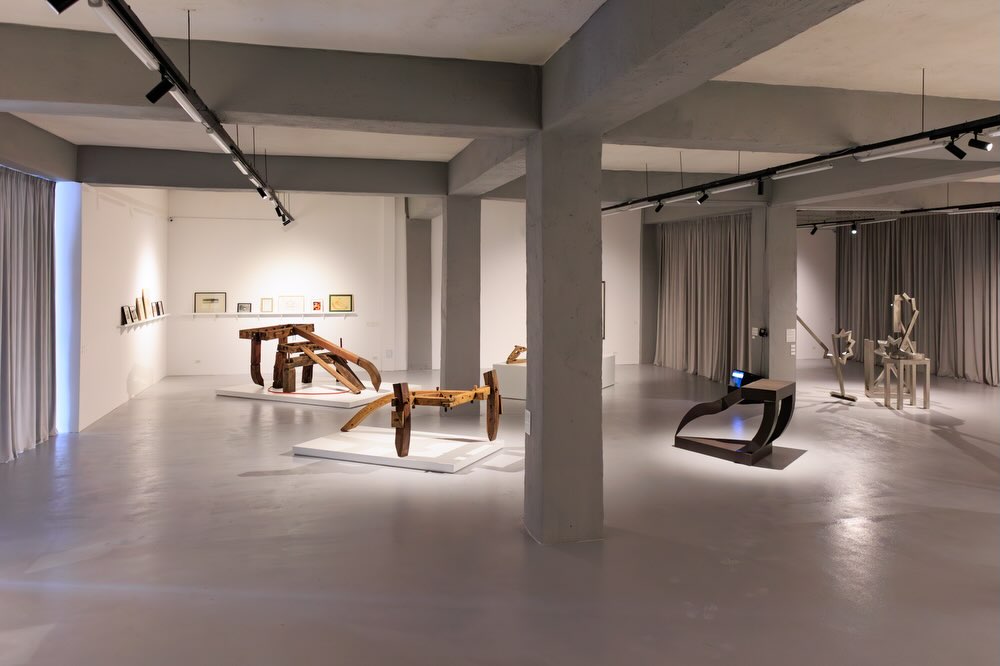
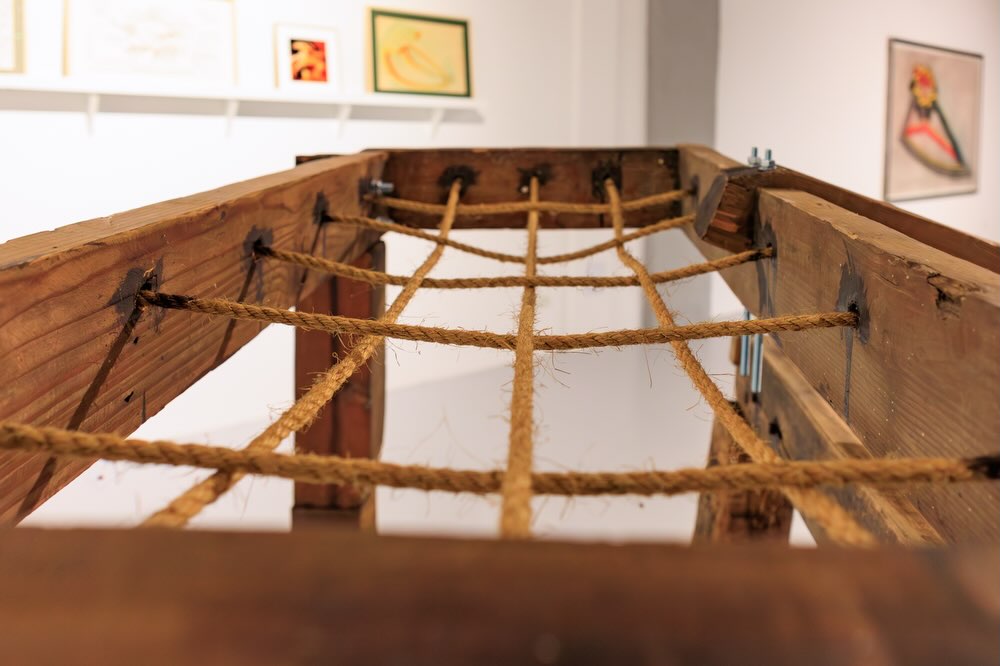
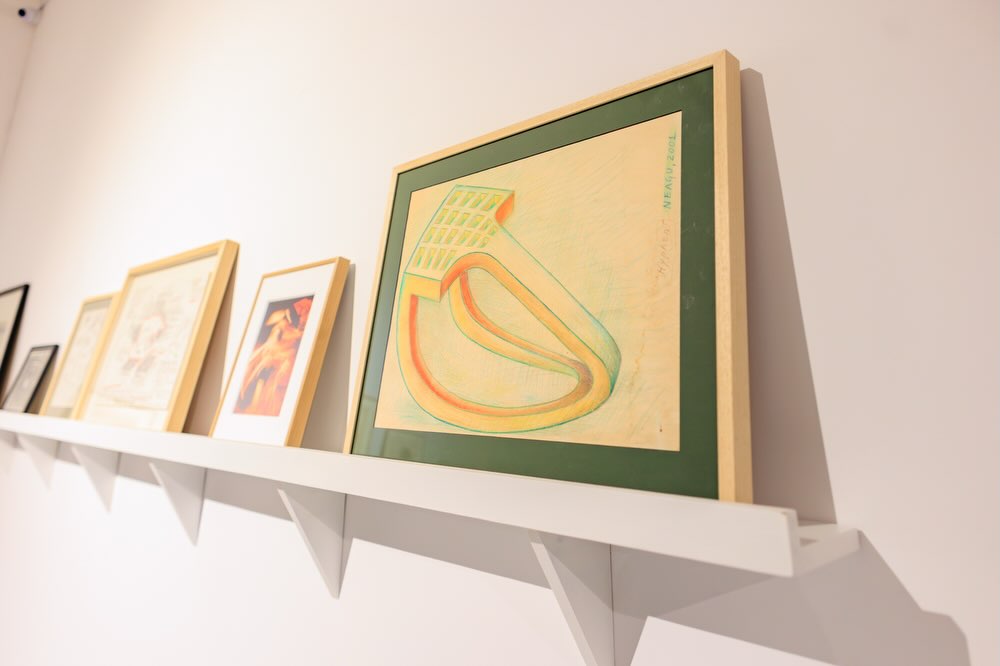
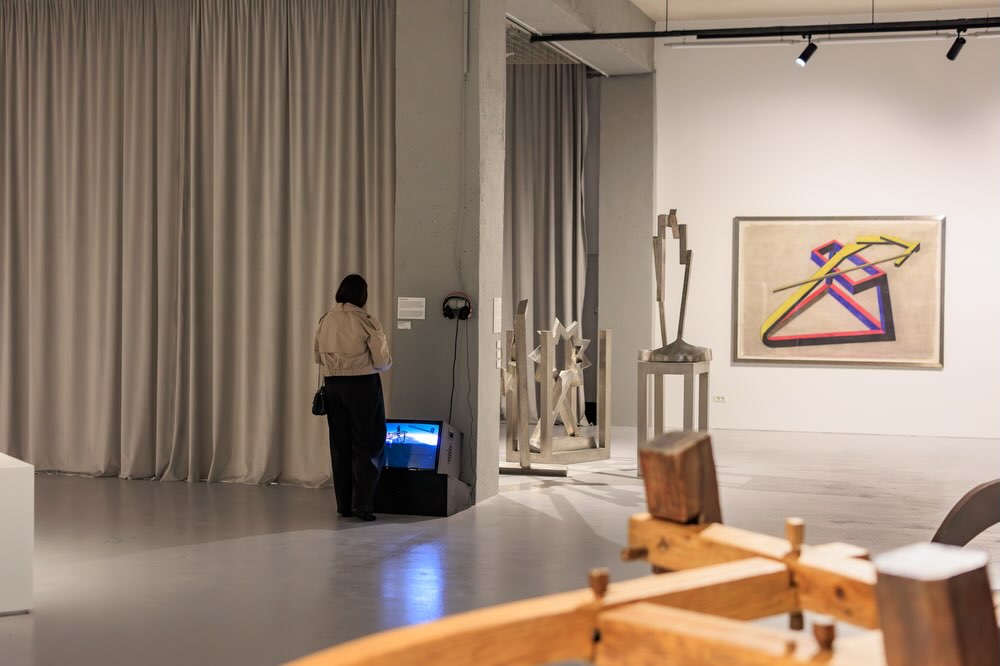
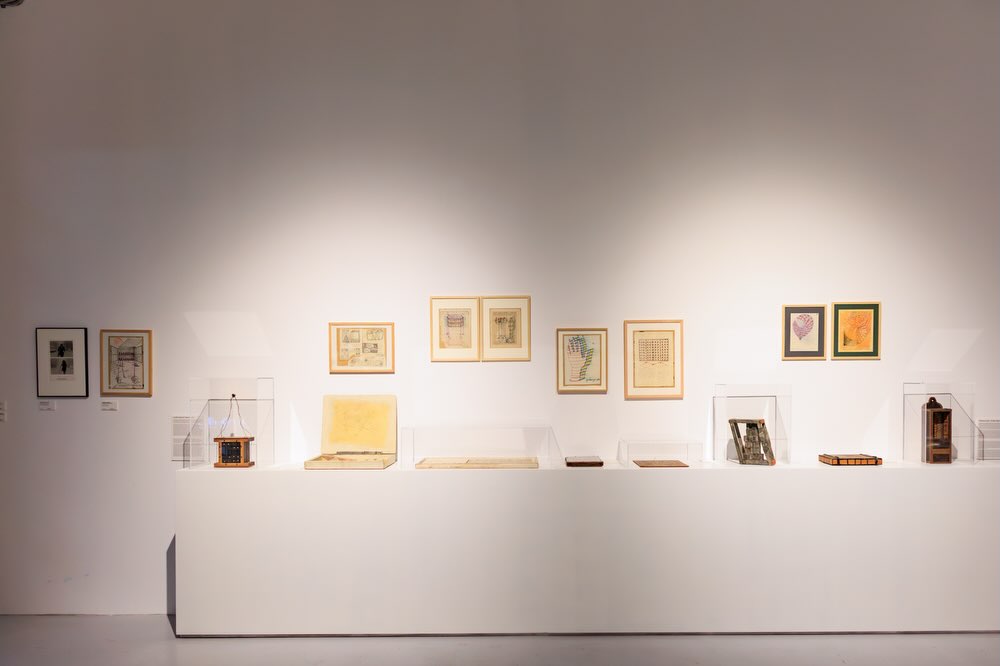
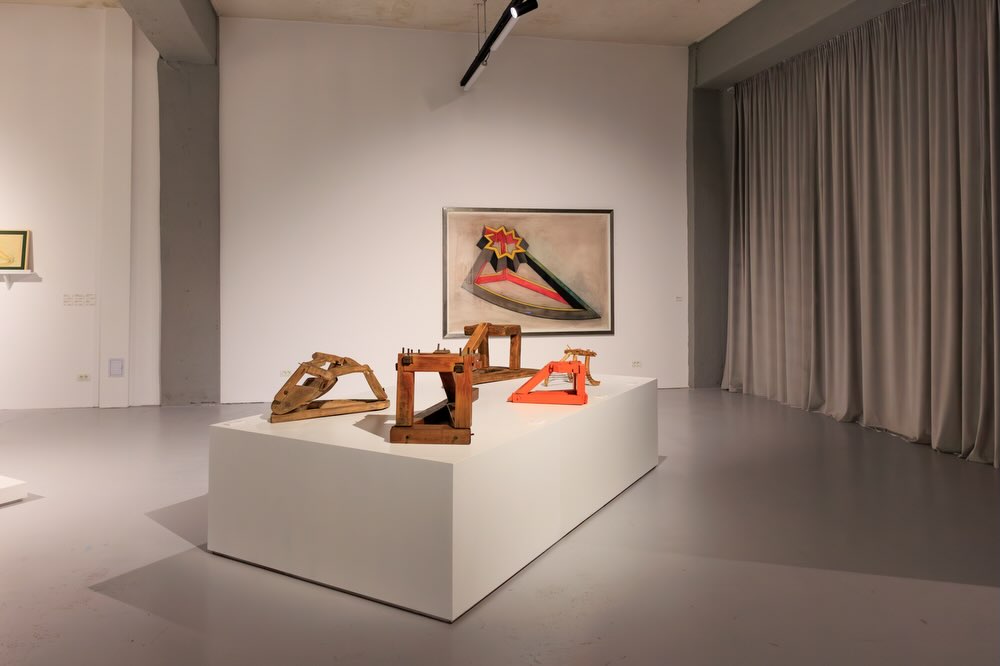
Curated by Magda Radu, the exhibition Paul Neagu. Generative Codes, presented by Artwill (54 Duetului St.), offers a broad and coherent insight into the universe of one of the most original Romanian experimental artists of the 20th century. Bringing together works that span his entire trajectory—from his early experiments in Romania to the conceptual and sculptural developments of his British period—the exhibition traces how Paul Neagu gradually constructed a complex artistic system, articulated around the idea of “generative codes.”
“Paul Neagu. Generative Codes provides a synthetic overview of Paul Neagu’s trajectory, from his experiments with tactile art, initiated in Romania and continued in Great Britain, to the development of complex artistic systems expressed through drawing, objects, performative actions, and later sculpture. Paul Neagu is an experimental artist, creating extensive constellations of works unified by the aim of achieving wholeness through ‘open axiomatic’ artistic formulas. He views art as a vector of communication and convergence, while also being deeply concerned with the physical, material concreteness of artistic expression, alongside the many philosophical and spiritual questions he attaches to the subjects he investigates. The exhibition aims to offer an exploration of Neagu’s theoretical and formal universe, presenting all his working media and stages, while emphasizing a central dimension of his practice: the importance of expressive formulas that evoke ritual—understood both as a communicative relay, a means of sharing collective experiences, and as a way of reaching inter- and transsubjective states with cosmological and metaphysical valences.
From the very beginning of his trajectory, Neagu created objects meant to interact with their surroundings, placing them in public spaces in Bucharest or staging veritable demonstrations reminiscent of magic performances. In performative sequences, these ‘boxes’ are opened to reveal their inner sections, composed of reticular structures, enigmatic objects, and kaleidoscopic arrangements. Shortly after this stage, encouraged by his contact with the international art scene, Paul Neagu formulated the Manifesto of Tactile Art, advocating for the reactivation of all senses in the perception of the surrounding world and of ‘artistic products.’ This direction generated ‘the idea of the concrete object—palpable, manageable, tactile, portable, perhaps agreeable or […] unsettling, yet as necessary as daily bread and as love in every breath.’
The overcoming of the subject–object dichotomy is further pursued through actions such as Cake Man, a happening organized shortly after Neagu settled in London, in which the part–whole relationship is explored through the symbolic decomposition and recomposition of the human body, conceived as an assembly of ‘cells.’ Within this collective action, the cells—made of wafers, baked and assembled with cream on site—are ritually consumed by participants. The series of cellular drawings deepen this dialectic of union and separation, highlighting the idea of totality, most vividly represented through numerous diagrams depicting the human body as a unified whole. The fragmentation and reconstruction of this whole are further explored during Neagu’s most intense experimental phase through the invention of the Generative Art Group, a fictional collective of artists, each with their own personality and mode of operation, engaged in various performative scenarios—individual or collective—exploring strategies of defamiliarization, anamorphic distortions, and metamorphoses.
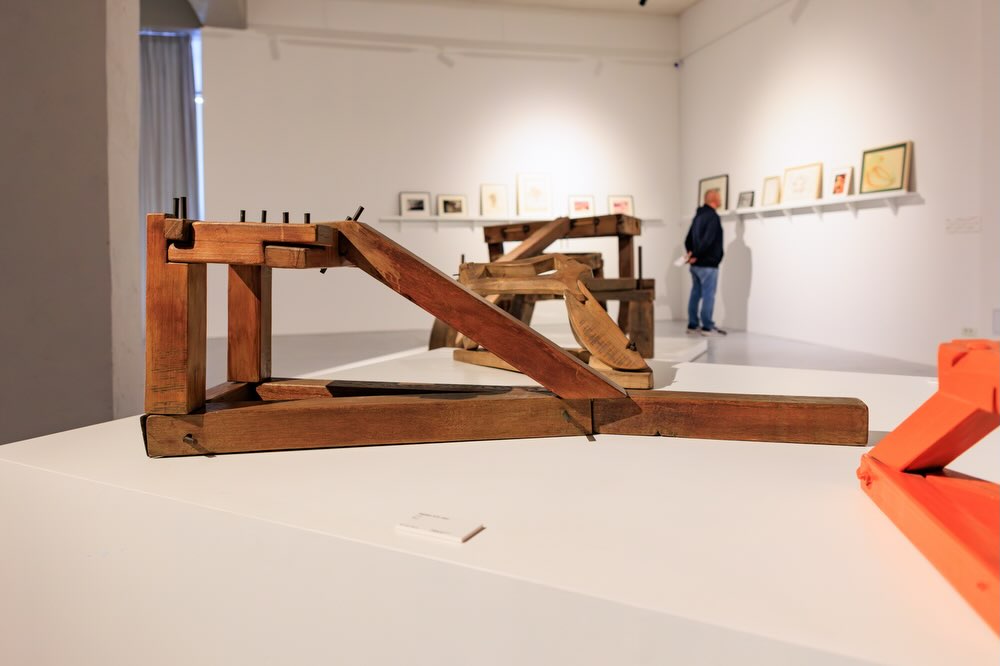
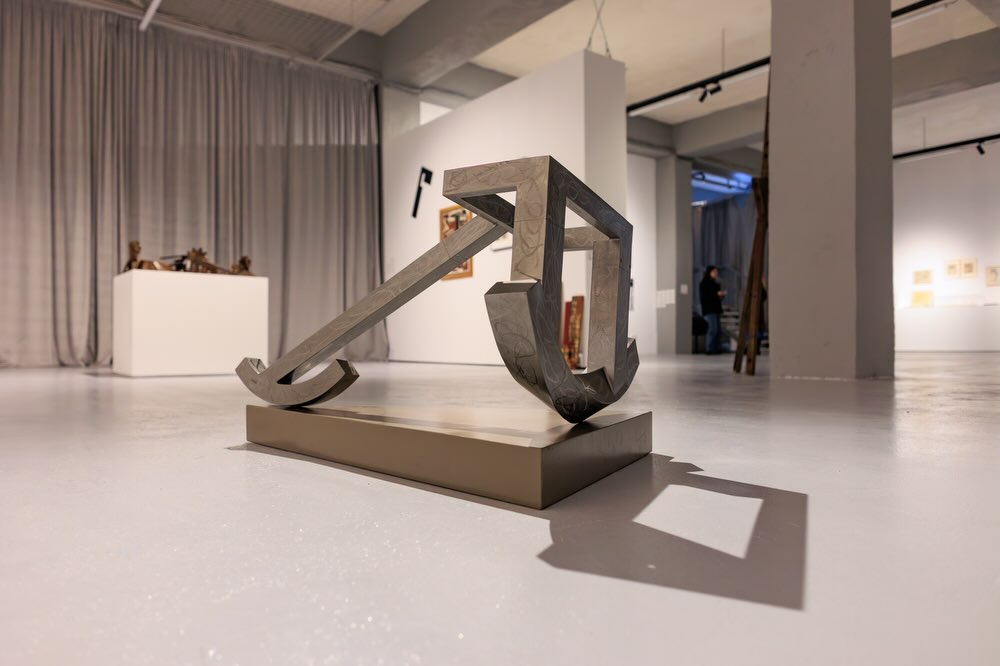
This investigation of the relationship between fragmentation and unification, accompanied by occasional esoteric undertones, is followed by an interest in sculptural vocabulary, inaugurated by Neagu’s major invention: the Hyphen—the bridge, the sign of both union and separation. The Hyphen, a tripod supporting a rectangular surface, incorporates within its formal structure the dynamism of the human body in its leap toward the transcendent. This entity represents the nodal point from which Neagu’s other sculptural projects develop, translated remarkably into both two- and three-dimensional forms. The Nine Catalytic Stations are each endowed with their own dynamic vectors, distinct force relations, varied materialities, and carefully balanced alternations between solid and void. According to Neagu, they behave like living organisms, dancing or interacting like an orchestra. As he once remarked, surprised himself by the subtle spaces drawn through their interrelations, these sculptures ‘began to speak on their own and to emit a music, an energy I had not even suspected myself, as their “creator”!’” – curatorial text
The exhibition can be visited until May 31, 2026, and is open to the public every weekend, Saturday and Sunday, from 10:00 to 18:00.