Author: Ana-Maria Gaga
Every year in December, to commemorate and celebrate Romania’s national day, various cultural events are inaugurated to remind us—and at the same time demonstrate—that we have reasons to be proud to be Romanian. The pride of belonging to the nation is most often conveyed through standardized models of “Romanian-ness” (seemingly objective), prestigious citizens, and the value of national symbols with unifying ambitions, such as the country’s flag displayed and fluttering.
During this period, when citizens are encouraged to celebrate and embody examples of what it means to be Romanian—examples of “Romanian-ness”—the exhibition The Wound, the Void, and the Anxiety, organized as part of the cultural project Red, Yellow, and Blue?, proposes a reflective and critical, rather than celebratory, perspective on the nation. It questions the way the nation is represented, rather than conforming to dominant narratives.
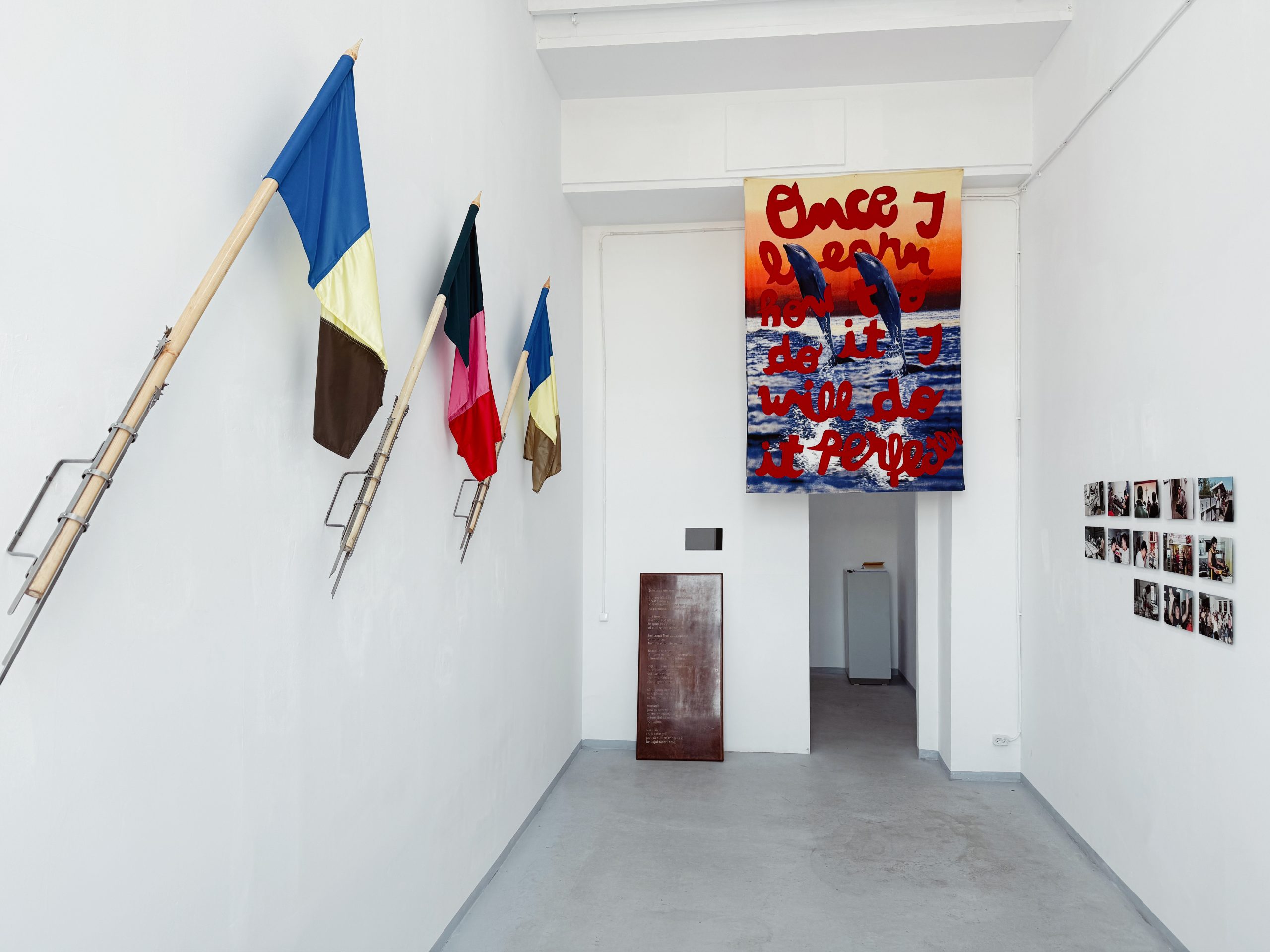
The exhibition, which opened on December 12 at Calciu Space (a gallery that is part of the artistic collective Atelierele Scânteia), confronts the public with the current realities of living in Romania. The works of the exhibiting artists address national issues by making visible perspectives that are less commonly presented or accepted—sometimes marginalized—but which remain more familiar to us than foreign, and do not entirely represent an “other.”
The Wound, the Void, and the Anxiety, the title of the exhibition, refers to its central motif, thetricolor (Romanian Flag): red, yellow, and blue—which, as it appears and reappears, is continuously reinterpreted and nuanced, both through the perspectives of the artists and those of the visitors. Within the critical space created by the exhibition, the marginalization of the individual becomes a collective reality, and the colors of the flag—re-signified and filtered through personal lenses—become elements for reflecting on the plurality of identity.
Benefiting from a diverse artistic collective with varied backgrounds, the exhibiting artists—Andrei Arion, Covrig, Dimitrie Gora, Lea Rasovszky, Mircea Topoleanu, Vitaly Yankovy, and Munir Zeeshan—approach the theme of belonging from multiple perspectives (sometimes with autobiographical undertones) that challenge us to rethink how we relate to the concept of nationhood and what precisely confers or revokes our right to belong to it.
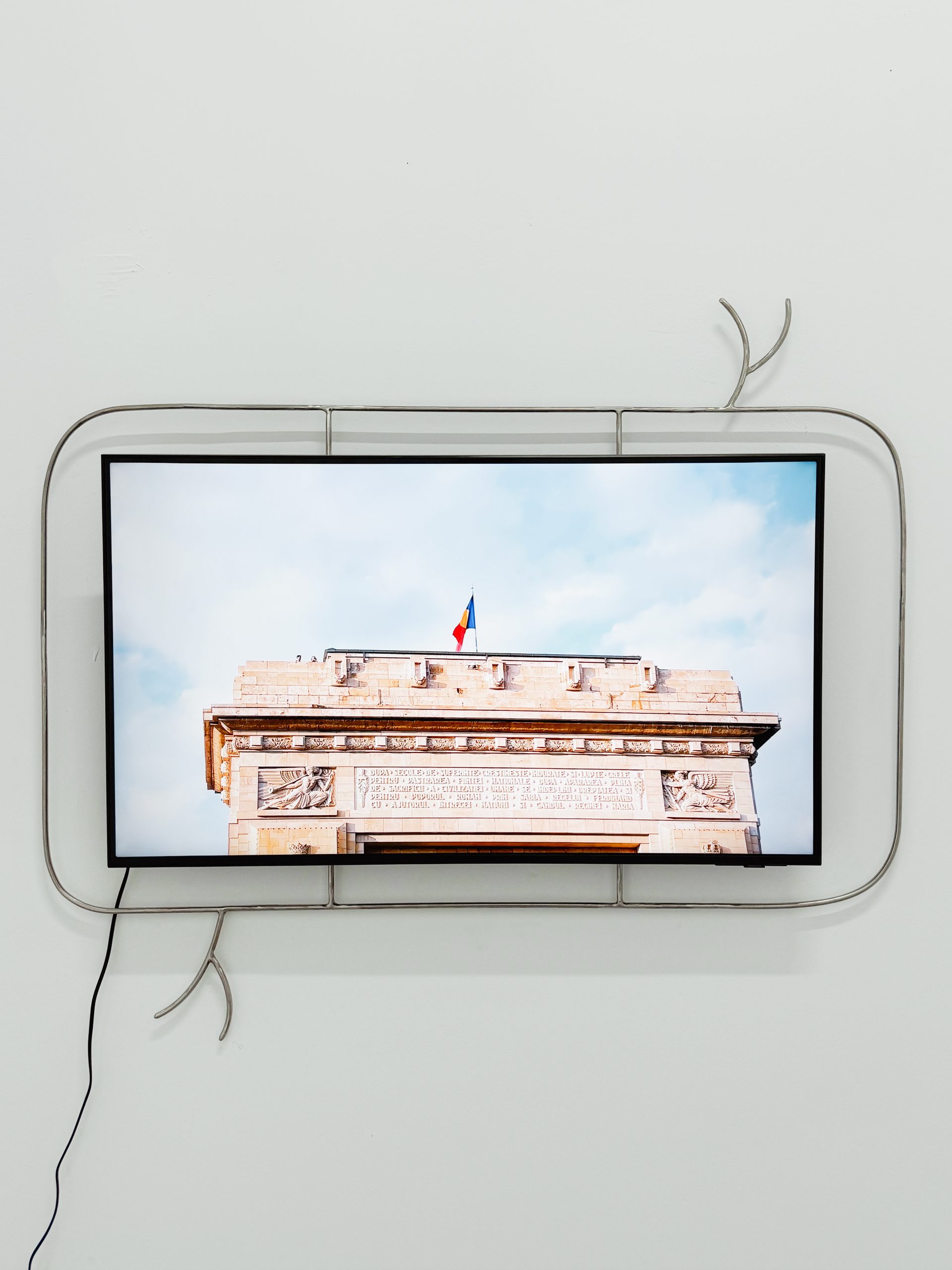
The works, employing a wide range of visual media and techniques, convey vulnerable and fragile positions—positions in which we realize that many of us find ourselves more often than we tend to believe. The first work, welcoming viewers at the entrance, already sets the tone for the symbolic-affective “decoding” of the flag. The video installation by the Ukrainian-born artist Vitaly Yankovy recontextualizes the unfamiliar through the familiar, drawing on a simple yet effective parallel between the Romanian and Ukrainian flags. This parallel highlights the similarity between the two: the image captures various instances of the Romanian flag in different official contexts, at times obscuring and at other times revealing the red of the nation to which the artist now seeks to “belong.” The interplay of focus and out-of-focus imagery reveals a space of hybridization for national symbols that had previously seemed so clear and stable.
Common elements, however, are not found only in the color symbolism, but also in language. On the evening of the opening, the space was also activated by a performance by the Ukrainian artist. Continuing the exhibition’s discourse and carrying forward elements of familiarity, the performance invited visitors to engage in a conversation limited to a list of 100 words prepared by the artist: homonyms or words that are the same in Romanian and Ukrainian. In this way, the audience was invited into a dialogue that reflects the position of an immigrant still unfamiliar with the language of their new country. The dialogue was, on the one hand, limited and constrained, yet simultaneously a creative and ideal scenario for communication. Ideally, most of the sentences and discussions initiated by visitors evolved into largely self-ironic political and social commentary. Perhaps, by suspending outdated political hegemonies that segregate us—as experienced through this performance—we can build new and creative spaces for coexistence and understanding.
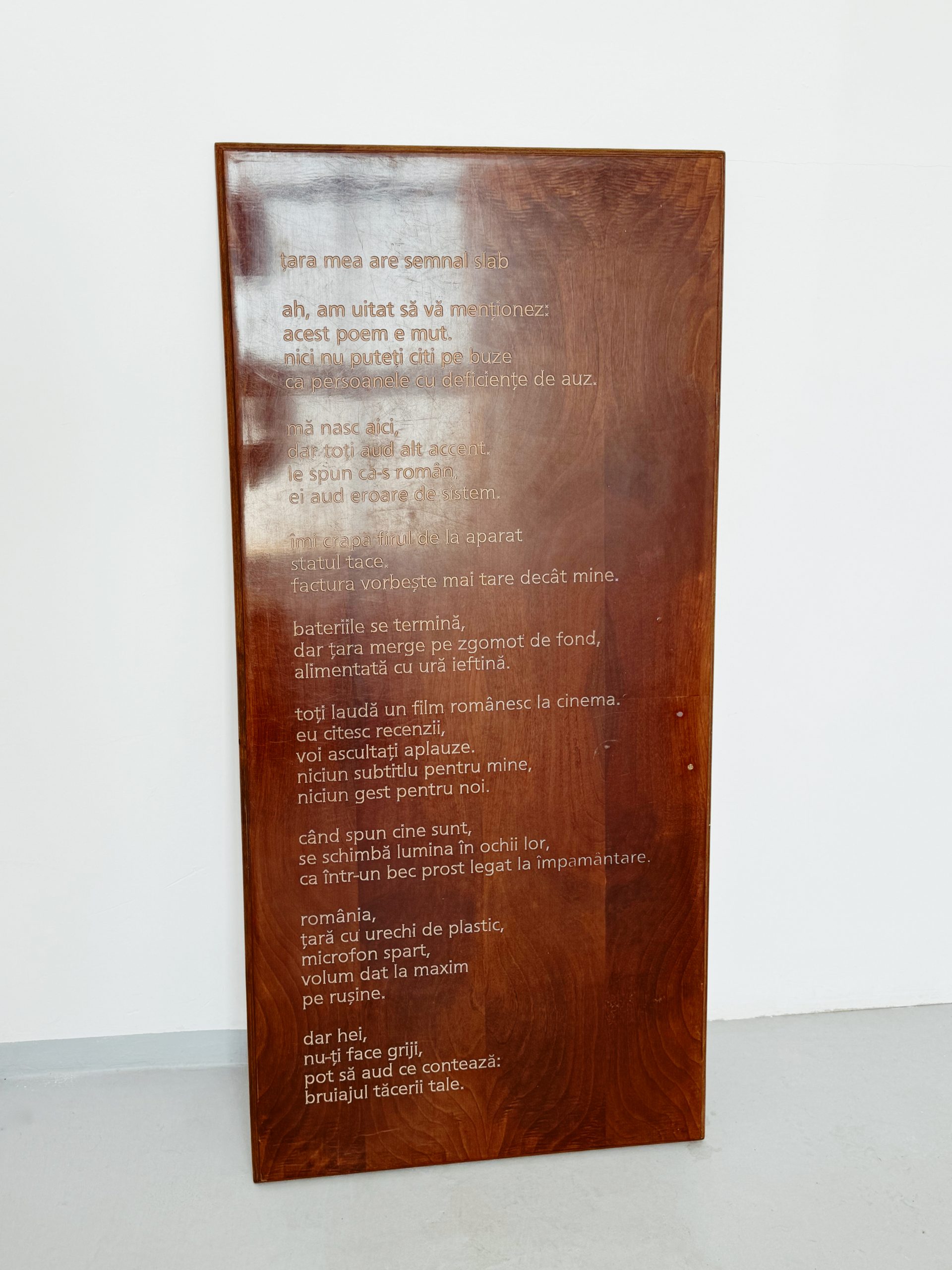
Dimitrie Gora’s work, a carved wooden panel reminiscent of a commemorative plaque on a monument, also comments on the barriers imposed by language and communication, and the exclusion certain groups suffer as a result. Xenophobic attitudes can, of course, be felt even by native citizens who do not fit the model of the canonical citizen. In My Country Has Poor Reception, the artist draws attention to the lack of visibility in Romania for people with hearing impairments, as well as their exclusion from certain social activities, exposing the disadvantaged position they occupy within their own country.
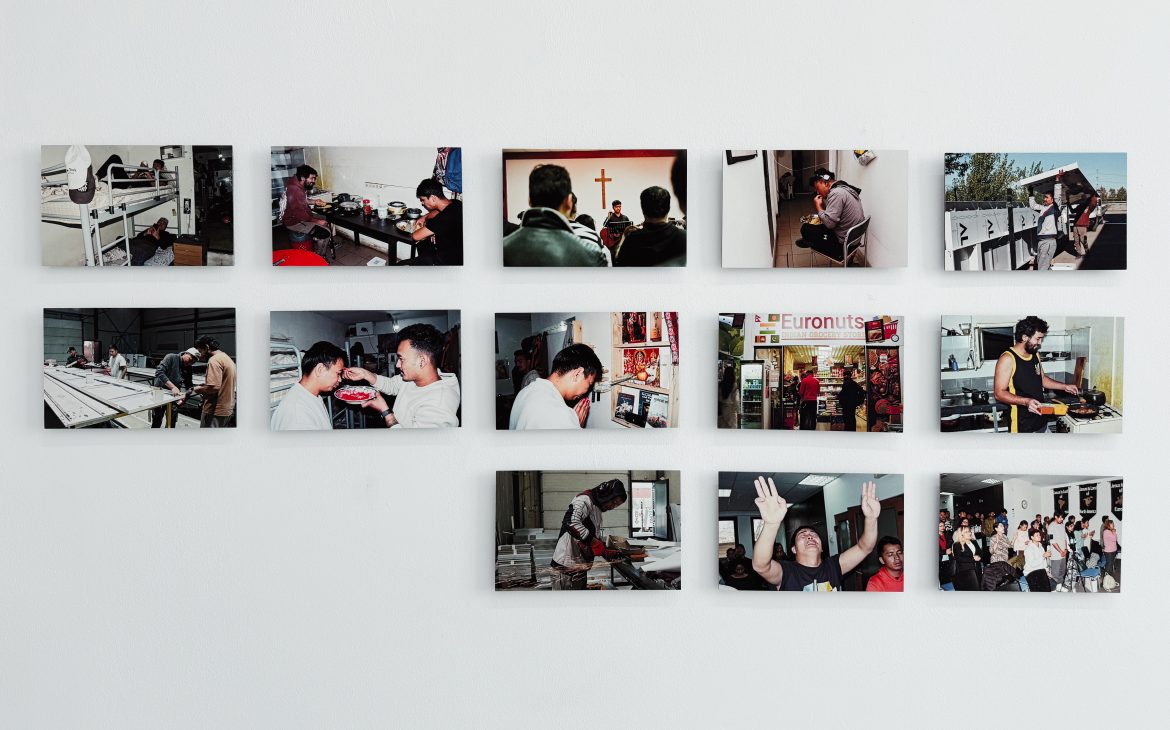
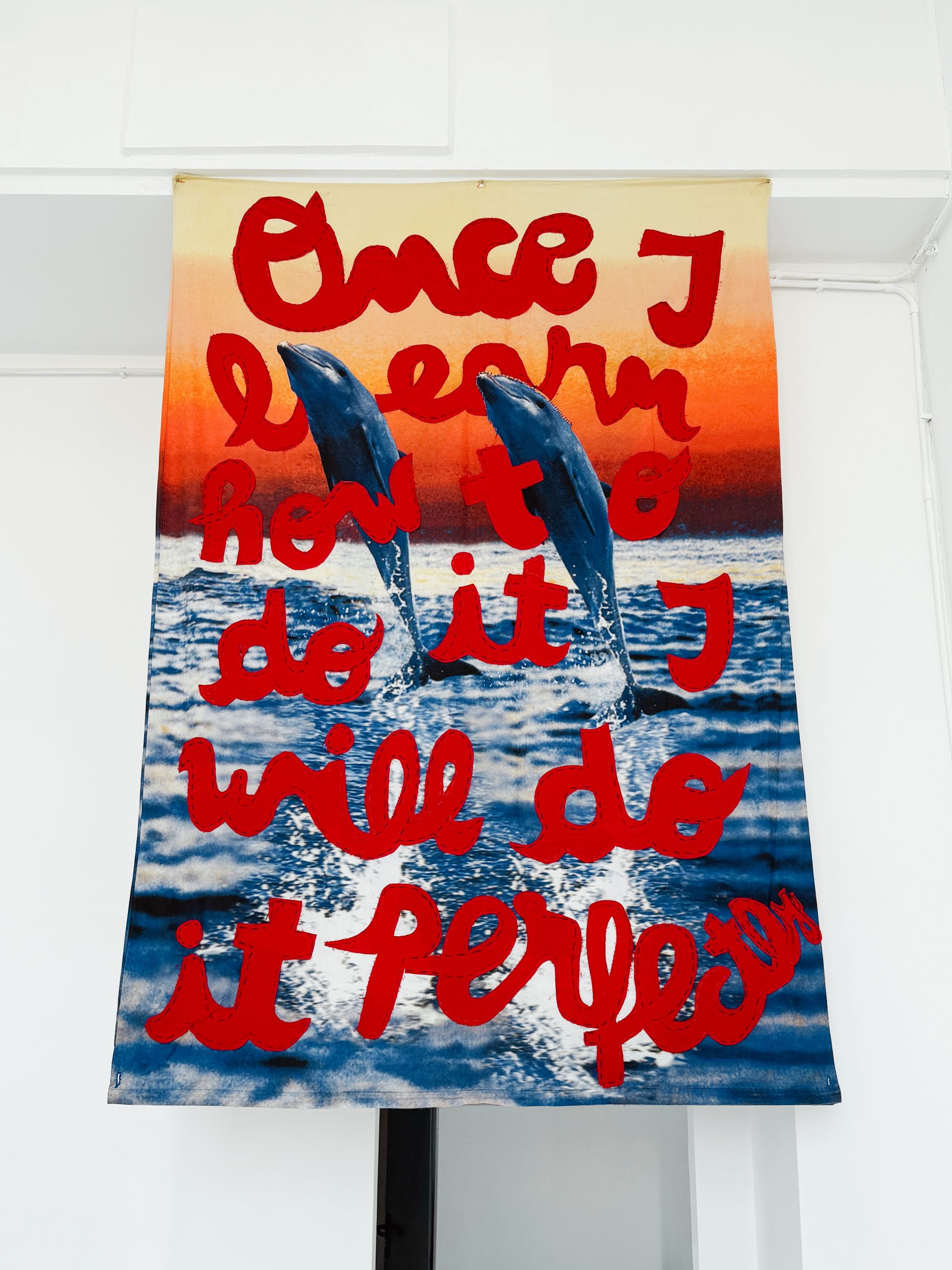
Other works, such as the photographs of immigrant workers and Covrig’s tapestry—Will I Ever Learn?—depict both the desire and the difficulty of trying to fit in and integrate where you are, yet not fully belonging. The tapestry, colored in a gradient that borrows the hues of the flag, is inscribed with a positive quote reminiscent of motivational posts—“Once I learn how to do it I’ll do it perfectly”—yet in this case, the seemingly naïve positivity reads more as a critical and realistic commentary on the effort to “learn” how to be part of a community.
Through their installation, other artists, such as Lea Rasovszky, have expressed not only protests and attempts but also disillusionment and the difficulty of coming to terms with Romania. The challenge of “bearing fruit” in a land with which it is hard to identify, even if one theoretically meets certain criteria and “belongs.” I no longer feel the thrill, that’s the problem addresses, through a caricatured and tragicomic (bittersweet) aesthetic, the disdainful feelings that many of us experience toward the uncertainty and lack of opportunities that lead us to reject and perceive this land metaphorically as “sick” and dirty.
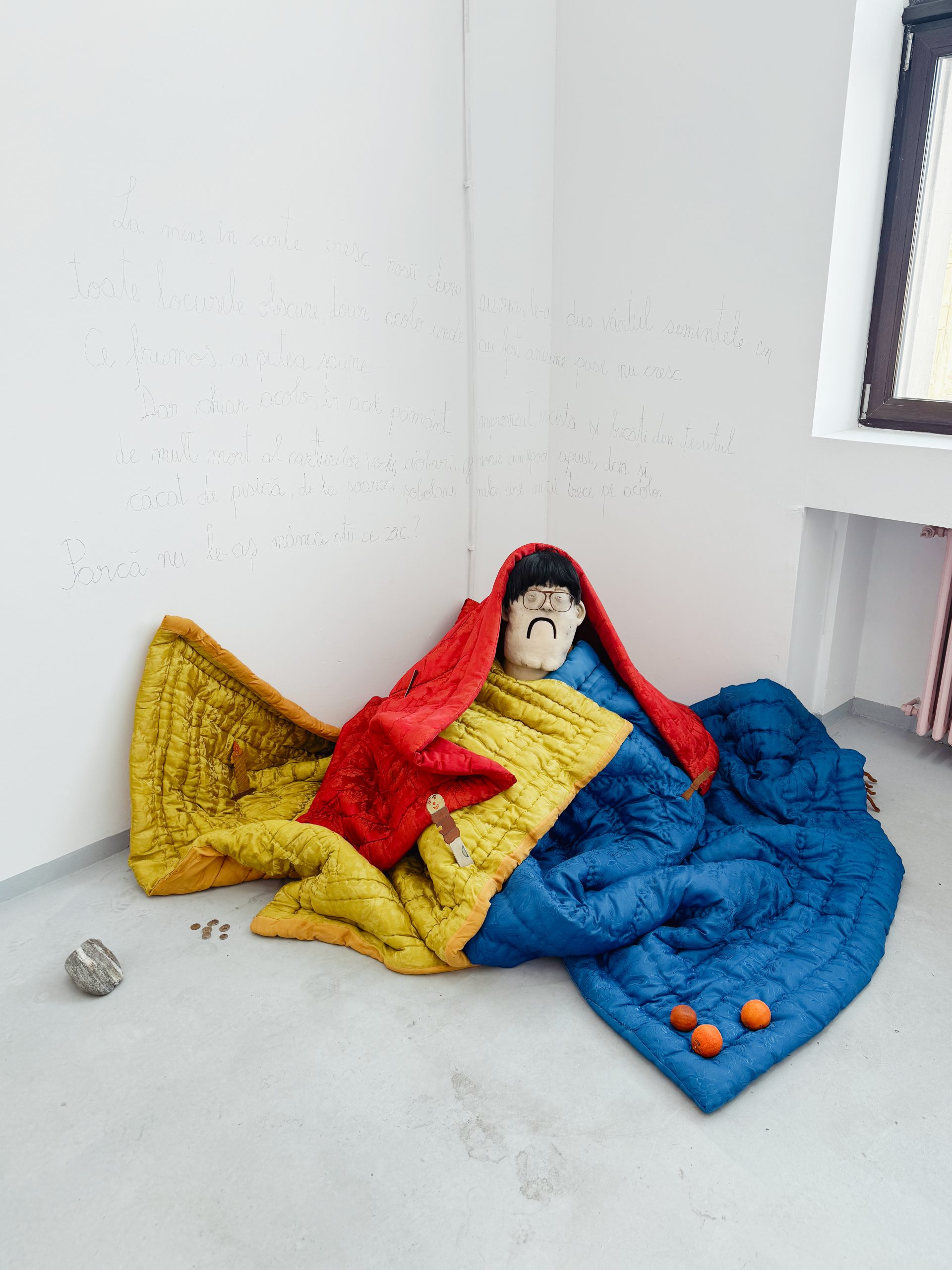
objects, hair. Photo by Adrian Maniu, edited by Mario Orlando.
In addition to the works on display, a catalog available for consultation at the exhibition (and soon to be published) complements the presentation, supplementing it with other artworks as well as critical texts on contemporary political phenomena that capture our attention and cause concern, such as “sovereigntist” ideals—which are often less “indigenous” than they claim to be.
The exhibition thus leaves us with the question—red, yellow, and blue? What do the colors of the flag represent? How do we define belonging? Do we try to belong? For whom does it matter? Perhaps many of these questions are answered from a privileged position that we are often unaware of.
Still, the exhibition provides several starting points for reflecting on nationalism and suggests that our position can influence and even redefine national symbols and discourses, which are far more artificial, fluid, and subjective than they may appear.
Cover photo: Overview of the exhibition “The Wound, the Void, and the Anxiety.” Photo by Adrian Maniu, edited by Mario Orlando.