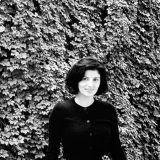
In this interview, Avi Cicirean, founder and art collector, discusses the need for dialogue and collaboration, making art more accessible to the public, and his ambition to transform Romanian Art Week, his latest project, into a platform with a lasting impact that connects the Romanian art scene with the international art world.
Held from October 17–25, 2026, the inaugural edition of Romanian Art Week brought together dozens of galleries, museums, artists, independent art spaces, curators, collectors, and cultural institutions through a programme of exhibitions, discussions, studio visits, and meetings held across the country.
Angela Izvercian: How did Romanian Art Week come about?
Avi Cicirean: Romanian Art Week emerged from a need I’ve felt for a long time: to bring together the extraordinary energy that exists within the Romanian art scene. We have very talented artists, bold galleries, passionate collectors, and institutions doing important work. Yet these worlds often operate separately, without enough dialogue between them.
I strongly believe in the power of connecting people, ideas, and communities. Romanian Art Week was conceived not simply as an event, but as a platform for dialogue—a space where different worlds can meet, exchange ideas, and discover what they can build together.
I wanted to create a space where Romanian art could become more visible, more accessible, and more present in the life of the city. The fact that Romanian Art Week has been part of the international Art Weeks circuit since its very first edition shows that we’re not simply building a local event; we’re connecting the Romanian art scene to a global cultural conversation.
We shouldn’t wait to be discovered. We need to become active participants in this dialogue.

A.I.: What can Romanian Art Week change in the way we perceive Romanian art?
A.C.: I believe the first change is one of perspective. We need to stop seeing art as something reserved for a small circle of people and start recognising it as a natural part of our contemporary culture. Romanian art doesn’t need to be validated exclusively from abroad for us to understand its value. It needs to be discovered, supported, and placed within relevant contexts.
Art is not only about what we see, but also about the conversations it generates. Romanian Art Week opens up these conversations across generations and disciplines, between artists and audiences, and between those who are familiar with the art world and those who are just discovering it.
Being part of the international Art Weeks circuit from the very first edition extends this dialogue beyond national borders. We’re no longer talking only about bringing Romanian audiences closer to art, but also about connecting Romanian creativity to the international art scene.
A.I.: From your perspective as a founder and collector, what is the greatest challenge facing Romania’s contemporary art scene today: artists’ visibility, public access, collaboration between institutions, or financial support?
A.C.: I believe all these challenges are interconnected. But if I had to choose one, I’d say what we lack is genuine dialogue across the ecosystem.
There is talent. There is creativity. There are also people willing to invest their time, energy, and resources. What we need to build more effectively are the bridges between artists, galleries, institutions, the business community, and the public.
Often, everyone does their job very well within their own world, but we don’t communicate enough with one another. And without dialogue, genuine collaboration cannot exist.
Visibility generates interest. Interest can lead to support. Support creates continuity. I see Romanian Art Week as a catalyst for these relationships: a place where we come not only to present art, but also to listen, ask questions, and build things together.

A.I.: What are your expectations for this first edition, and what has the experience taught you so far?
A.C.: For me, the first edition isn’t about proving how large an event can become, but about laying the foundations for a project that can grow sustainably. What matters most to me is the quality of the encounters and conversations we create: seeing people enter a gallery for the first time, artists reach new audiences, institutions begin talking to one another, and people from the business community discover that they can play an active role in supporting culture.
Success isn’t measured solely by visitor numbers, but also by the conversations that continue after the event ends. I’d like people to leave with more than images in their minds—with new questions, fresh ideas, and a desire to return.
A.I.: Contemporary art can sometimes feel intimidating, especially to a wider audience. What would you recommend to someone who wants to discover Romanian Art Week but doesn’t know where to start? What should they look for in the programme?
A.C.: Start without preconceptions and without the pressure to understand everything. You don’t need an art degree to walk into a gallery. You don’t need to know an artist for their work to move you.
I’d encourage people to explore, ask questions, and, above all, engage in dialogue. Talk to artists, gallery staff, and other visitors. Be curious. Exhibitions, conversations, and encounters all offer starting points.
I believe one of the biggest barriers is the feeling that you need to have the answers already. I see it exactly the other way around: good art makes you ask questions. Art doesn’t necessarily have to be understood immediately. Above all, it needs to be experienced.

A.I.: How can Romanian Art Week turn a passing interest into an ongoing relationship with artists, galleries, and cultural institutions?
A.C.: I think this is, in fact, the most important objective. An event can generate attention for a few days, but a meaningful project needs to build relationships that continue long afterwards. Romanian Art Week can become a gateway into the world of contemporary art, as well as an ongoing space for dialogue among the people who shape it.
People discover an artist and then start following their work. They visit a gallery and come back. They attend a conversation and become more curious. At the same time, artists can discover new collaborators, galleries can build relationships with new audiences, and institutions and private-sector organisations can identify opportunities for joint projects.
I don’t believe in projects that capture attention for a moment and then disappear. I believe in projects that continue to create value long after that moment has passed. I’d like Romanian Art Week to be the beginning of conversations that last throughout the year.
A.I.: How do you envision the next edition of Romanian Art Week?
A.C.: I imagine it as more connected, more visible, and having a greater impact. But I don’t believe we should grow simply for the sake of growth. The fact that Romanian Art Week has been part of the international Art Weeks circuit since its first edition gives us an important starting point, but also a responsibility: to build a meaningful project that grows from year to year.
I’d like to bring in more artists, galleries, curators, and international collectors and, above all, develop conversations that continue beyond the event itself. I believe Romania has the creative resources to become a point of reference on the contemporary art map. We need to connect these resources and build a shared voice without losing sight of each individual identity.
I don’t want Romanian Art Week to be just another week on the cultural calendar. I want it to be a platform that opens up conversations, builds relationships, and creates real opportunities for the Romanian art scene.
It’s not enough to be present on the international art map. What matters is becoming a relevant presence on it.


Credit image cover photo: Alex Gâlmeanu.